Categories
Audio Visual

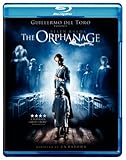
The Orphanage

The Orphanage (El Orfanato) (2007). 105 minutes, Warner Bros. Pictures de España Directed by Juan Antonio Bayona.

An atmospheric, intelligent, elegant and extremely scary horror film with an ending that will leave you gasping for air. Don’t watch this one late at night.

I love our Apple TV. An inexpensive device that you can rent high definition movies on, delivered right to your house for $4.99? I get both instant gratification and a geek thrill at the same time.

Since getting this Apple TV for our theater room about a month ago, we make a point to check out the new high definition rental releases. For example, last week we rented and watched Cloverfield and Before The Devil Knows You’re Dead. Both were fine films, and if I had all the time in the world, I’d review them as well.

At the same time, we also rented The Orphanage. We held off watching it, however, since it’s in Spanish, and we wanted to make sure we started watching it early enough that we could concentrate on reading the subtitles without missing anything.

It’s been months since I’ve watched a subtitled movie. It requires a bit of extra concentration to watch a movie in a language I don’t understand, since I must read the subtitles while trying not to take my eyes off the picture. And, I’ve still got to listen carefully, because subtitles only translate the main dialogue – not the surroundings, ambiance, music, etc.

Watching a spooky horror film in another language is even more involving (the last time I can remember watching a foreign horror film was the Dutch film The Vanishing, almost 20 years ago). Perhaps that’s why this one hit me with such a jolt. I had to concentrate whole heartedly on watching the film, and therefore I had to immerse myself completely in its little world.

The Orphanage is a Spanish film, directed by Juan Antonio Bayona and written by Sergio G. Sanchez. I call out both names because this film is incredibly well-written, the acting is fantastic, and it looks beautiful. This is a high-class effort from beginning to end.

The Orphanage begins with a flashback that takes place about 30 years ago. A young girl is one of six children at a Spanish orphanage, which seems… creepy. You can tell right away that something is wrong with most of the kids; one is blind, another has leg braces, another has some immense headgear that looks beyond orthodontic. As a girl counts off a game of tag, the phone rings, and via a closeup of adoption papers, we see that the girl counting down the tag game – Laura – has just been adopted. We never see the face of the woman who is talking on the phone, although it’s obvious that she works at the orphanage. A dissolve, and the girl Laura is waving good-bye, as she leaves the orphanage to start a new life with her new family.

The movie immediately moves to the present. The girl Laura, now a grown woman (Belén Rueda), is moving into the apparently long abandoned orphanage of her childhood. With her is her husband Carlos (Fernando Cayo) and their seven-year-old son Simon (Roger Príncep). Simon, it seems, has some invisible playmates. And it is soon clear to us – although not to Laura – that the playmates are the ghosts of the children that Laura used to play with.

Laura and Carlos plan to run the house as a small orphanage, caring for special-needs children. During an opening day party for the newly remodeled Orphanage, and after the revelation that Simon is himself adopted and has special needs as well, Simon disappears. And never returns.

Months go by. Laura hears sounds in the house. Bizarre clues appear. Is it Simon, trying to talk to her from the dead? Is it the spirits of the five missing children from her youth? And what about the strange old lady who showed up, claiming to be a social worker? Laura hires a team of psychic investigators, who bring with them the mysterious medium Aurora (Geraldine Chaplin). What Aurora discoveres gives a clue to what may have happened to Simon… and so Laura renews her search.

I really can’t say more than that. I will say that if you liked The Sixth Sense… you’ll like this. Stay alert, pay attention to everything that occurs (especially everything that young Simon tells his mother about his “imaginary” friends), and you’ll get one hell of a creep-out at the end, when you realize just what has occurred at… The Orphanage.

Man, I love movies like this.

Categories
Books Technology

Eating My Words: A Kindle Review

Kindle: Amazon’s New Wireless Reading Device, $359.00

Almost 6 months ago I wrote a post here called “5 Reasons I Don’t Have a Kindle“. I got a surprisingly large number of comments on this post, mainly due to it getting a bit of popularity on Digg.com. However, as I pointed out over and over again in response to the comments, that article was not a review of the Kindle. It was, instead, a post about why I hadn’t bought one. I had five specific complaints, and at the time, I stated that until and unless a new model came out that addressed at least some of my complaints, I wouldn’t be buying one.

Well, I lied.

Or rather: what a difference a few months makes. Stuck in Las Vegas a month ago, I had a week to kill and had not brought enough books with me to fill the time. I was going to search out a bookstore (not exactly common in Las Vegas), when I noticed an article on Engadget stating that, for the first time since its introduction, Amazon actually had Kindles in stock for immediate shipment. No more waiting list. Right then and there, having a Kindle to wirelessly purchase some books and magazines seemed like the absolutely perfect thing to me. And, I figured, if I hated it, I could just return it.

So I ordered it from my laptop in the hotel room for next day shipping. And the next day it arrived, right at the Mandalay Bay Convention Center Business Office. And that night I stayed up until 2am, using the Kindle. I think I bought six things on that first evening: a newspaper, three magazines, and two books. I didn’t hate it. And I didn’t return it.

Now that I’ve had a Kindle for a little over a month, I figure it’s time to sum up my thoughts. The Kindle is a lot better than I thought it would be. In fact, if you tried to take it away from me now, you’d have to pry it out of my hands.

What no one else was able to clearly communicate to me – and what Amazon itself does not adequately communicate, in my opinion – is that the Kindle is really a platform for reading. The device itself has a number of problems, no question about that. Some of those problems are maddening if you focus on them. But the overall software, the environment, the platform that is The Kindle – that’s what matters. That is what makes the experience of using a Kindle so damn good. If you’re a “Reader” – if you regularly read books and magazines – you will love a Kindle.

Wireless Purchase, Instant Delivery. This is the heart of the Kindle platform, right here. The Kindle gives readers instant gratification. Interested in a particular book? Go to Menu, select Kindle Store, find your book, and you’ve got it in under a minute. From anywhere. At anytime. Basically, if you’re in an area that a cell phone will work, you’ve got immediate, constant, instant wireless access to the Kindle store. No charge, no wireless subscription, nothing. It’s free and built into the device.

When I read about the Kindle, this seemed like a gimmick. Who cares, I thought. I could not have been more wrong. I was waiting in the airport, and wanted to read a newspaper. But, you know, you bring a newspaper on a plane, you’ve got to open it, unfold it, shove your elbows in your seat-mate’s face, parse through the sections… it’s a mess. With the Kindle, I bought that day’s New York Times. And had it on screen in about 30 seconds. I also bought Newsweek, The Atlantic, Forbes, and Asimov’s Science Fiction Magazine. All downloaded nearly instantly, right while I was sitting there.

And reading through the New York Times, I read a review of a book… and bought the book immediately, right then and there, while I was still reading the review. So, when I finished the review, I was ready to start reading the book.

Clear, Easy To Read Screen. Although I had seen e-Ink technology demonstrated, and had played with a Sony Reader in a store, the Kindle is the first time I’ve used it day in, day out. It’s amazing. There is no real “off” state. Whatever the screen is at the moment, that’s what it is. It draws no power to keep text on the screen – it uses power only when the screen refreshes with the next page of text. And the screen is the closest I’ve ever seen to the printed page. I mean, it looks almost like a laser-printed piece of paper. There are no “jaggies”, no reflections – it does not look like a computer screen at all. In fact, the first time I showed it to someone else, they stared at it for a second, and then said, “Holy shit… is that the actual screen?” It turned out that they thought it was a printed cover of some kind that I was using to protect the actual screen.

The Screen Should Be Bigger. Although you can adjust the font size to be as large or as small as you want, to my taste there simply isn’t enough physical space to put as much text on the “page” as I expect. Even at the smallest text size, it’s still not the same amount of text as you would get on the printed version of the same book. This is the Number One thing I want Amazon to change in a future version of the Kindle. There are other book readers out there that are already using the latest 8″ and 9″ e-Ink screens, like the iRex Iliad. These readers are able to do a page-for-page match to the printed version. Amazon should follow suit as fast as possible. I would pay… well…. a good chunk of change for a Kindle with a 9″ screen, that’s for sure.

Magazines and Newspapers. As of this writing, there are 19 newspapers and 16 magazines available on the Kindle. Magazines are available either via subscription, or by purchasing just the current issue. I cannot emphasize enough how very, very cool this is. You can read Newsweek, Time, Fortune, Forbes, The Atlantic, and several others instantly, right away. Without the advertisements. Without the subscription cards falling out. And when you’re done, you just delete it – no paper to through away.

Not Enough Magazines. In fact, the only problem I have with the Magazines feature is that there are not enough. I want The Economist, Entertainment Weekly, Wired, Rolling Stone. I want specialty academic journals. I want every magazine that has text articles to have a Kindle version. Since I got my Kindle, they’ve added a couple of additional newspapers, and tons of new books come out every week – but so far, not a single magazine has been added to the list. To me, this is one of the greatest features of the Kindle. For example, on my Kindle I’ve subscribed to both Slate and Salon. And every day, a new issue is waiting for me. I would subscribe to dozens more if they were available. I would cancel my print subscriptions and switch to Kindle versions for almost every magazine I read.

Blogs Don’t Work Very Well. In addition to Newspapers and Magazines, the Kindle also offers subscriptions to a wide variety of current blogs – 341 as of this writing. However, for the most part, this isn’t worth it. I tried a number of blogs, such as Ars Technica, Pharngula, Boing Boing, and Daily Kos. The main problem is that they aren’t complete. Ars Technica doesn’t contain the Articles section of the web site, which is where (in my opinion) the best stuff can be found. Daily Kos doesn’t include all the Diaries, which, once again, are the best stuff. You can’t see any of the comments sections in any blog. And Pharyngula actually crashed my Kindle for the one and only time, requiring me to open up the back and press the Reset button. After an initial spate of subscribing to a dozen blogs – it’s so nice to read things on that great e-Ink screen – I ended up canceling all of them. I was missing too much. In their current form, the Kindle version of Blogs just does not match up to the web version of the same blog.

Highlighting. Ever want to remember a particular quote from a book? I sure do (especially when I’m writing reviews). The Highlight feature allows you to move the scroll cursor to the first line, select Highlight, move to the last line, click, and the selected “Highlight” text is then placed in quote format in a Kindle book called “My Clippings”. With a full reference to whatever it’s from. This was another feature that I thought was “so what” when I read about it – but the first time I used it, I immediately understood its value.

Dictionary Lookup. Every run across a word in a book that you don’t know? Or one that you think you sort of know the meaning of, but you’re not completely sure? The Kindle has a built-in dictionary. Scroll the cursor to any line on the screen, and select “Lookup”. A popup window opens with the words in the sentence you’ve selected, with a mini-definition for each word in the sentence. Select the actual word you’re interested in, and you get the full definition. And then a single click of the scroll cursor, and the definition vanishes, and you haven’t left your book at all. I absolutely love this feature. It is simple and elegant. This is one thing that does not need to be improved on at all – it is just enough, and it works perfectly.

Other Sources of Books. I didn’t realize that there are lots of sources for free books for the Kindle. Most books that are in the public domain (that means the vast majority of literary classics and books from more than 75 years ago) are available for free from a wide variety of sources. My favorite is feedbooks.com, which has a single document that you can download directly to your Kindle. This document, in turn, contains a catalog of all their books that are already formatted for the Kindle. Just select the book you want – The Great Gatsby or Gone With The Wind, for example – and that book is instantly downloaded to your Kindle, just as if you’d purchased it directly from the Amazon Kindle store. Only it was completely free.

This is an area that I hope gets expanded on a lot. It would be great if, for example, companies started providing their product manuals in Kindle format (they can use the openly available Mobipocket format, which works transparently on the Kindle). Or all kinds of documents. It is so much easier to read things on the Kindle than it is on even the best computer monitor. Amazon should evangelize this capability and encourage anyone and everyone to make all their documents available in Kindle format. I can tell you right now that one of my “side projects” at work is going to be converting some of our product documentation into Kindle format. Maybe I can start a quiet little movement in this regard…

You’ll Need Light. One drawback to the screen is that it has no light source of any kind. Since the e-Ink display is not backlit , and since it does not draw power at all while you’re reading a screen of text, it is no brighter than a sheet of paper is. Which means you need a light to read by. For future versions, I sure wish they would design some sort of socket to attach a little reading light to. I use an Itty Bitty Book Light, and clip it on to the leather case that the Kindle fits into. This works mostly OK, but it does feel rather jury-rigged. And it adds a messy cable to the whole situation.

This drawback became very apparent when I was flying back from Houston a few weeks ago, and the reading light for my seat was out (thanks, Southwest). The only thing I had with me was my Kindle. And with no light, you can’t see the screen any more than you can see a book without light. So I had to sit in the dark, unable to read anything. Admittedly, physically printed books and magazines have exactly the same problem – but I expect an electronic device that costs almost $400 to be able to provide me enough light to read by as part of the bargain!

Turned Off During Takeoff and Landing. Here’s another drawback. On the same trip (but going out, when I had a light) I was annoyed by the fact that the flight attendants demanded I turn off the Kindle until we reached 10,000 feet – and again a full 20 minutes before we landed. Since the only thing I had with me was the Kindle, I had nothing else to read. If you’re in the middle of a good book or magazine, it’s very annoying to sit there for up to half an hour waiting for the OK to turn it back on. I can understand (sort of) the need to turn off devices that have some sort of communication capability… but you can easily turn off the wireless function on the Kindle with a simple switch, without affecting any other feature. Although it’s worth noting that because the wireless on/off button is on the back, you have to remove the Kindle from its leather cover in order to do that. The switch really should be on the top of the device, not on the back.

Why do the airlines require you to turn off these kinds of devices? I realize this is not Amazon’s problem, but maybe they can help lobby the airline industry. I love the way they say “FAA regulations state…” when they state no such thing. Each airline could choose whether or not to allow these sorts of devices – there are no regulations at all. But they choose to take a One Size Fits All approach, because they don’t want laptops flying through the air while a plane is landing. However, a 10-ounce Kindle that draws no more power than a watch is simply not in that category.

Previous and Next Buttons Are Awful. This takes a day or two to get used to. This is the one area where I really don’t know what the designers were thinking. The “Next Page” button runs down almost the entire right side of the device – and it’s angled in addition to that! So there is literally no way you can hold it on the right side without hitting the “Next Page” button by mistake. Your only option is to either hold it by the screen itself, or to finesse your fingers around the blank spots in the keyboard area. On the left side, the “Previous Page” button is almost but not quite as bad… at least it doesn’t run the entire length of the device.

To me, this is the single biggest design flaw of the device. When I turn the page of a book or magazine, I reach up and turn the top corner. So why didn’t they just put the Next and Previous buttons up at the top of the device, and leave the rest of it as a margin to hold on to – just like a real book? Instead, the entire margin area is eaten up by a giant Next button. This feature needs to be fixed right away. Even before going to a larger screen, Amazon needs to do a “1.1” quick fix redesign to change these buttons. It would be a trivial change, and yet would make a huge difference in ease of use. My guess is they expect people to rely on using the leather cover as the way to hold the device. Which leads me to my next point…

Leather Cover Is Poor. The leather cover – which thanks to the poor positioning of the Next and Previous buttons is an absolute requirement for reading – simply doesn’t attach very well. In fact, it doesn’t “attach” at all – it just sort of hangs on by use of a tab in the back that fits into a depression on the back of the Kindle. I found that by folding up a piece of paper and wedging it into the “clip” part of the leather cover, I could get the Kindle to stay attached to the cover most of the time. Unless you make a sudden movement, or try to read at an angle. This is another area where it seems strange that it doesn’t work better. How about a simple piece of velcro, or a sliding notch? I remember I had an old Palm Tungsten device that had a leather cover that slid into a slot along its left side. An approach like that would work perfectly for the Kindle.

Zoom For Illustrations Would Be Nice. For books with illustrations, it sure would be nice to have some sort of Zoom or Enlarge option. I was reading Your Inner Fish by Neil Shubin, which has quite a number of illustrations, including some detailed biology specimen sketches. Unfortunately, they were just too small to be able to make out the writing. I am aware that text is the primary function of the Kindle, but it would be relatively simple to add some sort of enlargement function to handle this special case.

It Plays Music But I Don’t Care. The Kindle is also able to play music – or so it appears. I’ve never tried it, and doubt I ever will. This seems pointless to me, and putting volume knobs and a headphone jack onto a book reading device strikes me as a waste of space and circuitry. It’s never going to be an iPod, which is what all my music comes from these days anyway. I say pull out the audio stuff and free up the space and power for more reading.

DRM is Tolerable. One of my primary objections to getting a Kindle was its use of DRM (Digital Rights Management) “anti-piracy” protection on all books. I put that in quotes because I consider DRM in all forms to be an insult to every paying consumer. I’ve paid for the book (or song or movie), so why are you treating me like I tried to steal it? However, I’m somewhat mollified by accepting the fact that anything on the Kindle is not really purchased – instead, you’re basically renting the book or magazine. If you want a permanent copy, go buy the physical book. I still think the DRM approach is wrong-headed, insulting, and detrimental to the long-term survival of these kinds of devices, but I’m willing to live with it for convenience’s sake at the moment.

In Conclusion…

Amazon… I’m hooked. You got me. I love it and I can’t live without it. But if you’d just put out a 2.0 version with a bigger screen, better Previous and Next buttons, and a decent cover attachment, I’d pay double what I paid for this one.

If you read for enjoyment with any regularity, you want the Kindle. Despite some of the criticisms I talk about here, this is a fantastic, wonderful machine. In fact, the only reason I’ve gone into such details about its mistakes is that the rest of the device is so damn good, the places where it falls down are that much more apparent. And let me reiterate again – focus on the entire experience, not just on the device itself. I hate to add to the hype… but the Kindle really does put a whole new spin on what “reading a book” can be.

Go get yourself a Kindle. They just dropped the price to $359, and they are in stock now. Happy Kindling!

Categories
Thoughts and Comments

My Uncle Roy

Roy John Henderson. February 3, 1945 – May 15, 2008.

View a web gallery of my photos of Uncle Roy.

This past Monday (May 19th, 2008), I attended my Uncle Roy’s funeral and wake. I was in Houston, Texas for business all that week, and I heard of Roy’s death the day before I left. Since Roy lived with his family in Austin, there was no question that I would attend. I told my boss that I would need to take a day off during the trade show, and made sure that I had a rental car. Early Monday morning, I left my hotel and drove to Austin.

Roy had been diagnosed with cancer only a month earlier, but it had turned out to be a type of cancer that could not be helped by surgery, and was resistant to chemotherapy. I never asked exactly what kind of cancer it was; it didn’t really matter anyway.

My parents had flown in to Austin the night before, and were staying with my Aunt Hazel. My father was Roy’s brother; Hazel, along with my other aunts Iris and Ruthie, were his sisters. I drove to Hazel’s apartment, and met my parents there. Together, the four of us then drove over to Roy’s house. We were met by his wife, Regina, and the day began.

Roy’s funeral and wake were unique to me, in that Roy knew he was dying, he had his wits about him all the way until the end, and he had made specific wishes and requests for his closing ceremonies. Every other funeral I have ever attended, the death was sudden and unexpected, and/or at the end of a very long life after a long and slow decline.

Roy was a very joyful man, a guy with a happy marriage and three wonderful kids, so it was no surprise that he had asked that his goodbye consist of a respectful church ceremony… followed by an all-out New Orleans-style wake with singing and dancing.

The church portion of the service was normal, I suppose. I could not understand the Pastor Emeritus’ sermon, which seemed to be a jumble of unrelated bible verses, but other than that, a fine and standard Lutheran ceremony. The wake afterwards, however, was a true Henderson-style shindig.

I have to admit that I don’t know Roy’s children – my cousins Ira, Reed, and Tamara – very well. They were born and came into the family after I had already left for college, so they were not a part of my growing-up relative visits. I’ve seen them only sporadically over the years, and I doubt they know me well either – except possibly from what they’ve heard from other people. But I do know they take after their father, and I do know that they had a lot to do with putting together this party.

A five-piece brass band, a tap dancer, a open bar, a huge spread of food, and every friend and relative were there in Roy and Regina’s beautiful old Austin back yard. When I arrived, the band was playing “Ob La Di, Ob La Da”. I stayed as long as I could, knowing that I had to drive back to Houston that same night. I left after a long congo line and napkin-wave following the band to “When The Saints Come Marching In”.

During the wake, Regina asked for anyone who had funny stories about Roy to step up and tell them – they had set up a video camera for that purpose. This seemed to be run by my cousin Ira (Roy’s oldest son), although that might not have been true in actuality. However, my mind was not in the right place then and there, and I was fretting about the long drive still ahead of me. And I felt somewhat embarrassed about speaking directly into a camera, in front of a lot of people I’d never met, and a whole generation of cousins and second cousins whom I barely know.

So on my drive back to Houston that evening, while whistling “When The Saints Come Marching In”, I thought of Roy. I tried to think of all the occasions I had met him over the previous 46 years, and what my impressions were. In my mind, Roy was always a larger, younger version of my father, with a big mustache and a huge laugh. As a child, whenever his name was mentioned, that’s what I immediately pictured: a laughing mustache.

Now, all the men on my Dad’s side of the family (and I am no exception) are known for our very hearty, very loud laughter. Even among a clan of loud laughers, however, Roy stood out as laughing the loudest. Even now, writing this just a little over a week after his far-too-early death, I can hear his laugh in my head. I cannot for the life of me remember all the jokes, nor all the reasons for all the laughing, but the laugh itself, I’ll never forget that.

As I grew older, I knew more about Roy. I knew he was my Dad’s little brother. I knew that when my grandfather died in 1950, my father was 10 years old,and Roy was only four. I know that Roy had little to no memory of his actual father, and I know that for at least a number of years, he looked up to my father as his surrogate, him being the only other male in a house full of women.

I knew that Roy was a lawyer, although I never did know exactly what kind of law he practiced. I knew he spoke spanish. I heard at least four different explanations for this during his lifetime:

  1. He learned the language in order to get back at some people who had cheated him in a business deal, or:
  2. He learned it because many of his clients spoke only Spanish and he had to communicate with them, or:
  3. He learned it because he was planning on getting into politics and you need to speak Spanish to win the vote in Texas, or:
  4. He learned it to impress his future wife Regina, who is of Cuban descent, and to impress her parents.

During the wake, however, my father told me that none of those were true: in actuality, Roy simply had a gift for languages, and knew at least four fluently by the time he graduated college. Spanish just happened to be one of them. He also told me that Roy had spent a year learning Vietnamese during his stint in the Marine Corps. I felt very odd hearing him tell me this, realizing that I had not known any of those facts about Roy during his life – only after his death.

But here are things I do remember.

In 1974, when I was twelve, I spent a day and night with Roy in whatever place he was living at the time (this was before he met and married Regina). I can’t remember why I was there; I guess my parents had dropped me off for some reason. We were about to move to Germany, to live there for the next three years, so we were going around and visiting all of my relatives before we left the country. I guess it was Roy’s turn that day. The odd thing is, it was just me – neither my brother or sister were there. I guess they were catching up with other relatives at the same time.

We spent a nice day together, walking around Austin, talking about not much, enjoying the weather. I think he was married to his first wife Nancy at the time, but she either wasn’t around or I just don’t remember her presence. They had no children, so perhaps Roy just enjoyed walking around with a pseudo-son for the day.

That evening, I was looking for something to read, and going through Roy’s shelves. There were a lot of “lawyer” books, and the novels all seemed way over my head and/or uninteresting to boot. However, there was one slim paperback… “Star Trek III” by James Blish, a collection of novelized episodes from the TV series. “Hey, you’ll probably like that”, Roy said, and handed it to me. I had never seen the TV show – it was too “grown up” for me, I was into “Lost in Space” – but the cover painting looked cool.

I stayed up too late reading that book, meeting Captain Kirk and Mister Spock for the first time and thrilling to their adventures, but was not able to finish it. The next morning, when it was time to go, I put the book back on Roy’s shelf. He pulled it back out, and flipped through it. “Did you finish it?” he asked. “No”, I said. “Well, then, you have to finish it on the plane and tell me what you think”, he said, and handed me back the book. I gave him a hug, and left with my parents.

Now, I don’t know why Roy had the one single Star Trek book on his shelf. I don’t know if he was a fan of the show, or if it was a gift, or if someone else had left it at his house, or what. And in all likelihood he didn’t think anything of giving a gaudy paperback TV tie-in book to his somewhat (!) nerdy twelve-year old nephew. But it meant a great deal to me at the time.

Later, while living in Germany, the american TV network that we got on the army base (“American Forces Radio / Television Service -AFRTS – proudly presents…”) began to air “Star Trek”, and I watched every episode. And I got a special thrill when they would air episodes that had been novelized in “Star Trek III”, and I would think of Uncle Roy. And as the years went by, and Star Trek went through all its various other incarnations and versions, I would always, for a split second, get a picture of a smiling Uncle Roy whenever I saw them.

How strange, the way the human mind works. Even now, when I see a promo of William Shatner for “Boston Legal”, Roy’s face briefly flashes through my mind.

Years later, while I was in college and the rest of my family was in Korea, I again stayed with Roy. This time it was with his wife Regina and their two small boys, Ira and Reed, along with 10-year-old (ish) daughter Tamara. (Tamara is actually Roy’s stepdaughter from Regina’s first marriage, but he always called her “my daughter” and she always says “my father”, so…). Now, at the time, I was a starving college student. For reasons that have long since vanished from my mind, Roy had a painting of mine that I had done a few years earlier, a still life of a fruit bowl (I think – I haven’t seen it in about 25 years and I don’t really recall exactly what the subject was). After dinner, he said, “You know, I never got around to paying you for that painting”.

Like I said, I don’t actually remember how Roy ended up with the painting – I have a vague recollection of him complementing it while visiting us, or maybe I brought it with me during a visit for some reason – but although there might have been some joking about “buying” it, I never really expected any money for the thing. But Roy insisted, and paid my $25.00 on the spot. He said it was an investment, a real bargain, and maybe someday he’s be able to sell it for much more, once I was famous.

I was 19 or 20 years old by this time, and I certainly knew bullshit when I heard it. He knew and I knew he was giving me some money to help out with school, but I was extremely grateful and took the cash. And I spent the night on a full stomach of Regina’s cooking as well.

Some years later, back at their house, I was very surprised to see the same painting, now framed, actually hanging on the wall. Now, I don’t know if since Roy knew I was coming, he frantically dug up the painting and hung it before I got there or not, but it was very nice seeing it there. And even though by this time I was not as poor as I had been, Roy repeated that it had been a bargain.

Roy was a great person to tell a story to. Also during this college time, and while Ira was a bouncing baby, I had a stress-filled flight home after Christmas vacation in Korea. I had to get back to Chicago by flying “‘space available” – army slang for hitching a ride along a plane that happens to be going where you want to go – and spent nearly a week attempting to do so. The full details are way too long and complicated to go into right now (maybe for a future post), but after the fact, it sure made for a good story.

When I told it to Roy, during a family gathering at my Aunt Ruthie and Uncle Carey’s house in Giddings, Texas, I thought Roy was going to die laughing. He laughed so hard he turned beet red, which of course encouraged me to pile on the details of my journey. “Oh, God, you have to stop, I can’t breath”, he shouted out between bolts of laughter. For years afterwards, whenever I would see him, he would demand to hear the story again. Surprisingly, he remembered details from my earlier telling that I myself had forgotten!

Over the last 10 to 15 years, I saw very little of Roy, only during the odd occasion when I managed to get to Austin. I remember meeting his sons Ira and Reed about 10 years ago for what seemed like the first time, since they were now grown – and the last time I remember seeing them, they were toddlers. It became apparent around that time that our families had something else in common, since Tamara turned out to be gay, just like me. (Well, not “just” like me… I mean, she’s a woman, and I’m a man, and… oh, never mind).

The last time I saw Roy was just after Thanksgiving of 2004, when his mother (my grandmother) Theresa Henderson had just died. I remember that Roy wasn’t feeling well, that something was wrong with his kidneys or liver or stomach or something, and he was looking a bit worn. And of course his mother had just died. But despite all that, he said, “So, Jonathan… what funny things have happened to you lately”? and drug some stories out of me. I remember that he asked me to tell him again about the time I got arrested on suspicion of making an attempt to assassinate Deng Xiaoping (yes, that actually happened – another future post), and I once again told him the story of that night in 1979.

Austin will never laugh as long or as hard now that Roy Henderson is no longer there to encourage it. But he does leave behind one of the absolute nicest families I’ve ever known. Regina, Ira, Reed (and Jade), Tamara (and Rachel), my heart goes out to all of you. My Uncle Roy will be missed. But he will never, ever be forgotten.
Categories
Audio Visual Books

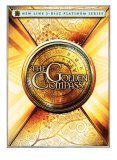
The Golden Compass

The Golden Compass (2007). 113 minutes, New Line Pictures. Directed by Chris Weitz.

A dismal, unsatisfying and confusing adaptation of a great book. Avoid this one like the plague, especially if you have read the book. Or even if you are planning on reading the book.

I should have known. When I originally heard that New Line was planning on adapting all three volumes of Phillip Pullman’s His Dark Materials Trilogy, starting with The Golden Compass, I thought, “Wow, that’s awfully gutsy for a major studio”.

You see, the trilogy covers the epic journey of a young girl on a parallel version of Earth, joined by various friends and opposed by numerous enemies. The action takes place on her own world, and then, after the first volume, on our world and then many other worlds. It culminates ina battle of the forces of good against… well, God and the Catholic Church, basically.

Yes, in His Dark Materials, God is an evil overlord who uses religion (specifically, the Catholic Church on our world, and its corresponding entity on other worlds) to control and enslave mankind. And the little girl Lyra, accompanied at the end by rebel Angels and others, finally succeed in destroying God and freeing the universe from… His Dark Materials.

Well, if that doesn’t have “Studio Blockbuster” written all over it, I don’t know what does!

The book(s) are about a lot more than that, and I’m summarizing it a bit loosely to make the point, but it is very far and away from Harry Potter or Lord of the Rings. The Golden Compass, the book that starts it off, is downright subversive in its appeal. It’s only after you’re into it for a 100 pages or so that you go, “Hey… wait a minute… what the hell…” as you start to realize that this fantasy story with talking animals, armored polar bears, and flying witches is really about A Lot More Than That.

Just as C.S. Lewis used his Narnia tales to teach a thinly-veiled allegory for Christianity, Pullman uses the three books including The Golden Compass to issue a thinly-veiled allegory for atheism (or really agnosticism, I suppose, since in Pullman’s works God is actually real, he’s just evil). It’s hugely popular in the non-U.S. parts of the western world, mainly in the U.K. and Australia, and reasonably popular among “weird kids” in the U.S.

Now, I personally loved The Golden Compass (the book!), as well as the other two novels that continue and complete the story, The Subtle Knife and The Amber Spyglass. But I’ll be the first to admit that it’s not suitable for everyone, and it definitely would offend and upset a large percentage of American parents. I mean, the people who protested Harry Potter actually have a solid argument about this series!

I guess New Line thought that if Harry Potter and Narnia were such big hits, they’d pull up another popular Young Adult Fantasy Series and give it a go. That’s what I thought when I heard they were going to adapt the books into big-budget films. I wondered what they would change…

The next thing I heard about the movie was some months later, when Nicole Kidman was cast in the part of the lead villain, Mrs. Coulter. I thought the casting was perfect. In the books, Mrs. Coulter is a beautiful, stylish, and deeply evil woman who actually tortures children. On purpose. And when they die (yes, children actually die in this series), she shrugs her shoulders and moves on. I thought Kidman would eat that part up.

But then Kidman said she would never act in any film that was not respectful of the Catholic Church and all that it stood for, and that “of course” all those elements had been “removed” from the film. I went back and re-read The Golden Compass. It seemed to me that if you just removed “those elements”, the story would not make any sense at all. And as it turns out… I was right.

The Golden Compass (the movie) is an antiseptic, by-the-numbers adaptation. Sure enough, all references to religion in any way, shape, or form have been removed. All tonal references to growing up sexually, or to the concept of a soul (“dust”, as it’s called in the novels) has been removed as well. Unfortunately, they weren’t replaced by anything.

So throughout this movie, we have no idea why anyone is doing anything. Why is Lyra given the golden compass? What is its purpose? Why does it matter that it tells the truth? Why does “The Magisterium” want to separate humans bodily from their animal other halves (daemons)? What are the flying witches? What are the armored bears? What is dust? None of these concepts or actions are explained in the film. Not even in a vague, comic-book-explanation kind of way. They are just… presented. Like someone made a PowerPoint summary of the plot of the novel in bullet points, and then they just filmed it.

Even the special effects look half-hearted and sterile. In this day and age, with CGI art being what it is, it’s not much of a challenge to make a talking polar bear or a flying witch. But to make such things look real and lived-in, especially when you’re supposed to be looking at actions on an entirely different world, takes real care and art. And apparently no one cared.

The whole movie looks like a video game, or, as Frank said while we were watching it, “one of those awful new Star Wars movies”. It never looks like anyone actually lives in it – it just looks… well, clean, crisp, and fake.

And by not explaining why or what anything is, the story just makes no sense. Here is my prime example: A linchpin of The Golden Compass is that on Lyra’s world, human minds (and souls) are split in half, physically. Half is inside your head, the other half resides inside an talking animal companion that is always at your side. This companion is referred to as your “daemon”. Every person has one. The types of animals are different, although usually the type of animal is representative of the overall type of person you are. Up until puberty, your daemon changes from one type of animal to another, as your personality forms. But once puberty hits, you daemon fixes forever on one type of animal. People know who you are, in a sense, by your daemon.

On Lyra’s world, the “internal dialog” that we have inside our heads is held instead with your daemon, all the time. All daemons, of course, talk. And there is a taboo, very strong, that you never, ever touch another person’s daemon. And, if anything happens to your daemon, it happens to you (and vice versa). If your daemon is killed, you die – and vice versa. And if your daemon is physically separated from you somehow, you would both die. After all – how could you live with half of your mind, or half of your soul?

All of that is very, very important to understanding even the basic plot of The Golden Compass. And almost none of that is explained in the movie. One key point about any scenes in the book is that there is always a certain amount of physical distance between people, so that daemons don’t touch when walking down a street, for example. Imagine a crowd scene where everyone is at least three or four feet apart from everyone else, so that their daemon has room to stand as well as not touching anyone else’s daemon. It would look quite cool if done right…

…but all of that is completely ignored in the movie. Daemons are there, of course, but most of the time they’re just thrown in as random CGI critters milling around people. Crowd scenes were obviously shot as normal crowd scenes, and then CGI animals were stuffed in around the edges. Sometimes you see people with their daemons, sometimes you don”t. No one pays any attention to them, and no one makes space for them.

And because none of this is explained or illustrated properly, the horror of what the church is doing to the children in the film – physically removing and killing their daemons while somehow leaving them alive with half of their minds – is also not explained. And so the horror is not felt. All we see is one child saying, “Where’s my rat?” and looking pale. In the book, this same scene is absolutely horrifying – because you realize that what the villains are doing is lobotomizing children so that they will become zombie slaves without free will. In the movie, however, it comes across as if they’ve just hidden a boy’s rat somewhere. Barely “evil” at all.

The whole movie is like that. Concepts from the book are kept intact, but all reasoning and explanation for them is dropped – probably because the filmmakers were afraid they’d offend somebody. As a longtime fan of the book, I was angry, annoyed, and very disappointed.

Frank, however, had never even heard of the book. HIs summation was that the movie was boring, sterile, and made no sense at all. We’d pause it every five minutes when he’d go “What the hell?” I’d try to explain it using the book version as a reference.. which was a losing battle.

Honestly, this film is terrible. Sure, there are some pretty visuals here and there, but that is absolutely all there is. It is so glaringly obvious that no one – not the writers, not the actors, not the producers – cared about the source material of this movie at all. I would be willing to bet that only a very few people involved even bothered to read the book.

Thankfully, this film tanked at the domestic box office. I fervently hope that they never make the rest of the series into movies. What in the name of all that is good would these people do to the climatic battle to overthrow God out of heaven in The Amber Spyglass, I’d love to know.

Don’t watch this movie. Don’t buy this movie. But if you love well-written, challenging fantasy, read The Golden Compass. And see the perfect version in your head, not on the screen.

Categories
Audio Visual

Across the Universe

Across the Universe (2007). 133 minutes, Columbia Pictures. Directed by Julie Taymor.

I am a huge Beatles fan, to begin with. There is no doubt whatsoever about that. This must be distinctly understood, or nothing wonderful can come of the film I am going to relate.

My fascination with the four lads from Liverpool can be traced directly to my friend Paul Trandahl, who began my indoctrination as a Beatlemaniac in 1981. Paul made sure I understood such important things as being sure to get the albums in their original British versions on high-quality vinyl with the actual Apple label, for example. Throughout college, Paul and I read every book on The Beatles as it came out (I specifically remember Shout! and All You Needed Was Love), listened to and discussed every song and every album, and watched every film.

During my senior year at college (go Northwestern Wildcats!), I was in an advanced screenwriting class. We had to do all sorts of writing exercises during the course, including overnight TV scripts, commercial spots, and even radio plays. One exercise we had was to create a screenplay based on some sort of marketing tie-in. And wouldn’t you know it, the assignment was to create a movie based on… Beatles songs! Miine was a very silly comedy called “And Your Bird Can Sing”, which featured a singing parrot that knew all the secrets of anyone who came into contact with it. As bad as it was, I felt that mine was one of the better efforts in the class. The professor, as I recall, was pretty disgusted with the lot of us, and said he hoped none of us ever sold one of those horrible scripts.

That was in 1984. And as far as I know, in the following 23 years, no movie based on any Beatles song ever came out. I guess the creative karmic stench from our class had wafted out into the ether. But then, last year, Across the Universe appeared. I didn’t pay much attention to it, other than noting it had received some decent reviews. However, one night a few months ago I was on the phone with Paul. During the course of one of our normal “whatcha doing” conversations (Paul lives in Los Angeles, I live in Fort Lauderdale), he said “So… have you seen Across the Universe yet?” When I told him I hadn’t, he said I had to see it. “It’s the Beatles movie we always talked about, and now somebody finally made it”.

I said I would definitely go out and see it, but somehow I never got around to seeing it in the theater. And then a few weeks ago it came out on Blu-Ray (as well as regular DVD, for that matter), so I was finally able to see it.

Paul Trandahl was right. This is the Beatles movie we’d always wanted.

Across the Universe is a musical – a full-on, lip-synced, dancing and everything musical, but all of the music is Beatles songs. The songs are all sung by the actors in the movie and in character and as part of the story, which is quite an achievement. But it doesn’t end there. Every character name, tons of background elements, events, passing characters and more are all taken from Beatles lyrics. This movie was made for anal Beatles fans – I’ve watched it twice now, and I don’t think I have caught every reference yet by a long shot.

The story takes place during the 1960’s. Although no dates are ever shown on screen, I’d say it goes from about 1964 to 1969 (in other words, the time the Beatles were on the world scene). The story follows two people on two different continents, and how their lives and loves intertwine during that tumultuous decade.

Jude (Jim Sturgess) is a young dockworker in Liverpool, England. He leaves his mother Martha and his teenage girlfriend – whom he promises to “write home every day, as I send all my loving to you” – to work as a deck hand on a freighter. He jumps ship in New York, however, and it is soon revealed that he is really trying to find his estranged father, a Yank that had an affair with his mother during World War II.

Meanwhile, Lucy (Evan Rachel Wood), a high school girl, sees her boyfriend off as he enlists to go and fight in Viet Nam. As he fights in the war, she reads his letters with joy, and sings how “it won’t be long, till he comes home, to me!”

Maxwell (Joe Anderson), Lucy’s older brother, is a student at Columbia University – where, coincidentally, Jude’s estranged father works as a janitor. And so, the night Jude comes to find his father, he runs into Maxwell (who gets by with a little help from his friends), and the wheels of destiny spin.

At the point where Jude and Lucy meet, and then go on a bowling outing together (“I’ve Just Seen a Face”), the movie kicks into high gear, and I will stop the plot summary and simply say that Jude, Maxwell, and Lucy live together through every major event of the sixties, and sing nearly 30 Beatles songs during the course of the film.

The absolute highlight is the middle of the film, beginning with “Dear Prudence” being encouraged to come out to play. The group (including, by now, Sexy Sadie and JoJo her guitar player) then stop by a pyschedelic book store to hear hippie guru Dr. Robert (Bono) hawking his new book, “I Am The Walrus”. Bono sings the John Lennon classic with great style as the group all pile onto a pyschedilic painted bus and zoom off cross-country to try and meet with Timothy Leary. And although they never see the good Dr. Leary, they do get to see the bizarre circus tent performance “For The Benefit Of Mr. Kite”. Mr. Kite (Eddie Izzard) takes them on the film’ absolute show stopper – a flat out animated acid trip rendition of this song from my absolute favorite Beatles album, “Sgt. Pepper’s Lonely Hearts Club Band”.

I’ve watched the “Mr. Kite” segment over and over, and it gets better every time. It manages to be creepy and scary in addition to being fun – exactly what an acid trip is actually like. Or so I have been told. Not that I would have any actual experience in such things, of course. Ahem.

Other sections worth special note are “Come Together”, where Joe Cocker performs as three separate characters, all singing this great song from “Abbey Road”. And “I Want You (She’s So Heavy)”, sung as a recruiting anthem for the Army. And “Revolution” as a breakup song.

Across the Universe is, of course, a love story, and I guarantee that you do get to hear “Hey Jude” before the end… and it fits in perfectly, both in the plot and thematically. Maxwell does indeed wield a silver hammer at one point (although the song is never sung), someone comes in through a bathroom window, and in the end, all you need is love.

This movie also looks and sounds great. The acting is decent. Perhaps more importantly, everyone (except Eddie Izzard, who “talk sings”) can sing well. The two leads are pitch-perfect, important since between the two of them they sing over half of the songs in the movie. The special effects and animations that pull off so many of the numbers are perfectly integrated. The costumes and settings feel exactly like the sixties. It’s also clear that everyone involved in the creation of this film, especially the writers and the director. are huge Beatles fans. Even the fictional record company in the movie, “Strawberry Jams”, is an homage to the actual label for the Beatles, Apple Records.

And now that the High Definition Disc War is over, let me take this opportunity to preach the wonders of Blu-Ray discs. This film in particular looks stunningly beautiful in full 1080p high definition.

If you like the Beatles (and especially if you love the Beatles), you’ll love Across the Universe. And even if you don’t care for the Beatles one way or the other, but you like musicals, you’ll enjoy this movie quite a bit. However, if the sixties and/or hippies scare you, stay away.

Now I’ve got to go and watch a double feature of A Hard Day’s Night and Help!. The Fab Four are so gear.

Categories
Books

The Appeal

The Appeal by John Grisham (2008). Doubleday, 355 pages.

It’s been a while since I have read a John Grisham novel. Looking at my bookshelves, the last one I see up there is The King of Torts (2003), and honestly I don’t remember a thing about that one at all. However, I’ve enjoyed a fair number of his books – A Time to Kill, The Firm, The Pelican Brief – pretty much all of them up until The Summons, which I found repetitive of his earlier stuff yet less entertaining. And apparently he’s written a number of non-legal fiction books since the turn of this century, which don’t interest me in the least. Frankly, Grisham is just not a good enough writer to be interesting outside of his milieu.

Even in the very specialized genre of legal thrillers, Girsham has always, to my mind, not stacked up to Scott Turow, who although far less prolific, is a much better author. Unfortunately for Turow, only Presumed Innocent really made its mark on the bestseller lists, and he has nowhere near the name recognition that Grisham has.

However, I was intrigued by the book blurb for The Appeal, and thought that maybe a few years away from legal thrillers might have tightened Grisham’s work up a bit. So I bought it the same day I bought Stephen King’s latest and called it a bestseller twofer.

The new Stephen King turned out to be a blast, and I’ll be writing about it here soon. The Appeal, on the other hand, has got to be one of the most turgid, stereotypical novels I have read in a long time.

The plot of The Appeal is quite good: A giant chemical company, guilty of illegally dumping toxic waste in a small Southern town, loses a lawsuit brought by a woman whose husband and son were both killed by drinking water in the same town. The woman’s lawyers have nearly gone bankrupt fighting the giant chemical company, and in a great victory, the jury sides with them against the giant company and awards damages of 41 million dollars. The head of the chemical company, who would rather lose billions that pay a dime to white trash, engages a secret consulting firm to change the makeup of the state supreme court – thus ensuring that the chemical company will win… The Appeal.

What a great story! How could that possibly not be fun?

Here’s how. Everything in this book is so predictable, it might as well have been an episode of Perry Mason. The good guys are so good that you want to slap them: A married couple, both lawyers, with two adorable children. They’re so determined to help the poor woman that they sold their home and ran themselves $400,000 into debt just to finance the lawsuit. The wife is actually from the same horrible little Southern town that the lawsuit victim is from. They run a colorful little law firm where everyone works for no pay because they’re all so… well, good.

The villain, on the other hand, is so evil he makes Darth Vader look like Santa Claus. He’s so evil that he literally does not care if thousands of people died from his waste, as long as he doesn’t have to pay them one thin dime. He willingly spends 8 million dollars on a horrible sculpture to keep his new trophy wife happy and to get a mention in the morning paper. To him, spending 3 million to change the state Supreme Court of Louisiana is not unethical or wrong in any way, and he gives no thought to it at all – it’s just business.

About every third page or so, I would actually mutter, “hooo boy”, under my breath. What, is the villain going to boil a puppy in the next chapter? Are the husband and wife lawyers going to take in some orphans? John Grisham may be many things, but believe me, subtle ain’t one of them.

And worst of all, the book ends… exactly the way it looks like it would end in the first chapter. There are no twists, no changes of heart. One character – the hapless sap whom the evil consulting firm targeted to be on the Supreme Court – does have a sort of, kind of, life changing moment near the end of the book.. which results in absolutely nothing changing at all.

Predictable at the beginning. Predictable all the way through. And predictable (and boring) at the end. This was really a letdown. I mean, The Firm was genuinely fun, had some conflicted characters, and had a great twist ending. Most of the other Grisham books from the 90’s were similartly engaging. But not this one.

Unless you like your reading safe, predictable, and very pulpy, avoid The Appeal like the plague. I’m sure they’ll make a movie out of it, which is bound to be better than this book. In fact, I’m looking forward to it… because it will surely be one of the few occasions when I’ll be able to say “Oh, the book was much worse!”

Categories
Thoughts and Comments

The 50th Post: Observations on Blogging

According to Ecto, my favorite blogging application, this is my 50th post since starting this blog almost exactly two years ago. By the standards of popular blogs, that’s pretty pathetic, and barely counts as being a “blog” at all. By my own standards, set inside my head when I started this web site, it’s also pathetic. I assumed that I would post at the very least once a week, and probably more likely two or three times a week. I assumed that I would have about 100 posts a year.

I also figured that I would make a little extra money from advertising. In fact, I have made a total of zero dollars and zero cents. This is due to two factors: One, almost no one reads this blog – other than a few friends and family, I get only a few hundred hits every month. ivexterm prospecto And two, I don’t really put any advertising on this site – the only ads are hidden ones, links within my various reviews. quanox dosis gotas I signed up for the “Amazon Associates” program, and have been meticulous about linking every single mentioned product to a matching page on Amazon. I also download and link images for each previewed product. The total result from two years of doing this? 2 clicks and 0 purchases.

So, if I were to go by metrics alone, then this blog has been a miserable failure and I should give it up immediately: I don’t post very often, no one reads it and it costs me money. But of course I’m going to keep right on writing here, because this is not about either fame nor fortune. customer forums on ivermectin for mange Instead, this is really about narcissism. I like doing this. I like writing here. I like reviewing things. I like seeing my words up there on the big screen. I even like updating my photo every six months or so.

I purchased the domain “jonathanhenderson.com” almost ten years ago now. I had originally wanted “jonhenderson.com“, but a musican by the same name already owned it. I also wanted “jonathanian.com”, as I had always wanted to have a website called “The Jonathanian” – like “The Bostonian” or “The Washingtonian”. However, it turns out there’s a musician whose name is actually “Jonathan Ian“, and he owns that site. Apparently a lot of musicians share my name. So, “jonathanhenderson.com” was what I ended up with.

For years, I just paid to renew the domain name and never did anything with it. I had vague ideas about starting up some sort of reviewing site, but never had the time or the inclination to really do anything about it. In January of 2000, I made a point to stop using “Jon” and always use “Jonathan” for all new contacts I made. Since I took a new job within weeks of that new year, it was easy to do. I had already been going by “Jonathan” at grad school for several years by then (too many “Johns” in the classrooms), and it seemed a natural thing to do. Now, eight years later, only my old friends from Los Angeles – and of course my partner Frank – still call me “Jon” anymore.

So, “jonathanhenderson.com” seemed more real to me as the years went on. In 2004, I finally leased server space with 1and1.com, and moved the domain there. Still, I didn’t do anything with it other than put a few family pictures up there. Early in 2005, I used the domain to host a mini-site about the construction of our swimming pool, including blueprints, photos, and a time-lapse video of the pool itself being built. As of this writing, that site still exists under the “PoolCam” heading in the upper right of this site.

And finally, in 2006, I decided to give blogging a try. My very first post was a short article about how to get MP3s onto the Motorola SLVR cell phone. I posted it as a reply on a few Motorola forums, and got a few responses.

About a month later, I bought a real copy of Movable Type 3.2, installed it on my LInux server, and set about making this site in more or less what it is today. I tried out some of the hosted services for one or two posts, and just didn’t like them. I’m too much of a technology control freak, I guess, to use a completely hosted service. I like to be able to get my hands dirty in HTML whenever I feel like it.

My goal with this site was to review every book I read, every movie I saw, and every TV show of note that I watched. In addition, I would chime in with political views and personal anecdotes when I felt like it. I figured I would write an “article” here every other day or so.

Now, to put this in perspective: I read, on average, two to three books a week. If the only thing I did was just review every book I read, that alone would be three posts a week. Obviously, I’ve never come even close to that. I also usually watch three or four movies a week – many that I’ve seen before, of course, but that wasn’t supposed to count for the purposes of this blog. So there’s another four posts. And then I watch three or four television shows regularly every week (more when American Idol is on the air three times a week, like it is now). Another three posts. Now we’re up to a grand total of 11 or 12 posts a week, and that doesn’t count any “thoughts” I might have. Let’s round it up to 15.

So, I would need to post 15 times a week to this blog (on average) if I were to keep up with my original goal. And let’s add one last note to this. A quick perusal of my blog, and anyone can clearly see that the vast majority of all my posts occur at around 1 or 2am in the morning. That, of course, is because I work full-time, and I write all of these entries late at night. To keep up to my hypothetical schedule, I’d need to stay up until 3 or 4 in the morning, every day of the week.

Ain’t gonna happen.

Instead, I will continue to post here when I feel like it, about whatever I feel like. As time goes on and I get better at this, perhaps my output will increase. Or perhaps it won’t. But whichever way, I’ll have achieved the real goal of this blog: to enjoy myself and to hone my writing skills.

Over the past two years, there have been some posts that I’ve really liked, and a few that I don’t. The worst entry I’ve written yet has to be “Things I Don’t Understand About Getting Old“. Reading it now makes me cringe. I’m not sure what the hell I was trying for with that one; I think I was trying to write a “humor column”, but man did it not work. Honestly, it doesn’t even sound like me when I read it now.

My favorites have been the few personal anecdotes here and there. I very much liked my story about my failed night dive, “An Underwater Scare“. I got lots of comments when I got picked up on Andrew Sullivan’s site one day in regards to my ferrets, which led to “The Wacky Florida Ferret Freak“, another of my better efforts, I think.

And I’ve enjoyed the reviews. Those are why I started this blog in the first place, and what the majority of my posts are all about. Since I work in the technology field, I have an urge to write more gadget and tech reviews, but every time I start one, I seem to find a better one has already been written somewhere else. And there are lots of movie and TV reviews out there as well. So, I will try to concentrate more on reviewing books.

What have I discovered about myself in keeping this blog? Mainly that I’m a lot more conceited and opinionated than I thought I was. Reading back through these posts, I think I sound much more snobby than I ever imagine myself to be in real life. I seem to talk way too much about cars I have or used to have, material possessions I have or want, etc. I also sound a lot more cynical in writing than I am in real life – or at least, I think I do.

And enough. It’s well past midnight again, and the MacBook Pro has got less than 50% battery left. So let me end this by promising to post more often, but not to the level that makes me insane. And to review more books, but not everything I read. And to comment more on technology, but try to bring something new beyond a “me, too” review. And… maybe to try not to sound so damn smug all the time.

And above all, practice my motto: Embrace Change, Question Authority and Think for Yourself!

Categories
Books

Benjamin Franklin: An American Life

Benjamin Franklin: An American Life by Walter Isaacson (2003). Simon & Schuster, 590 pages.

I’ve always been fascinated by Ben Franklin. I first read a children’s biography of him when I was about 8 or 9 years old; I remember that it was illustrated every three or four pages with a black-and-white sketch. I can still clearly see the drawing in my head of the 18-year-old Franklin arriving in Philadelphia, eating a loaf of bread as he walked down the street. Although topics such as bastard children and political rivalries were, of course, glossed over in this 60-page Scholastic version, nevertheless it made a big impression on me. For years afterwards, I would recognize sayings from Poor Richard’s Almanac, and I actually signed a letter once as “Silence Dogood” (I didn’t realize that it was supposed to be a woman’s name).

I never learned much more about Franklin, however, until I read Walter Isaacson’s biography of Franklin a few weeks ago. I had read his recent biography of Albert Einstein, Einstein: His Life and Universe, and enjoyed it quite a bit. So I figured his previous book on Benjamin Franklin would probably be good as well.

My only real complaint about this bio is that it seems too short in some places and too long in others. For example, Franklin’s young life is glossed over pretty quickly, leaving me wanting to know a lot more. On the other hand, there are over a hundred pages covering Franklin’s stay in France during the battle for America’s independence, which felt like it could have been covered a lot quicker.

The book follows the same format as Einstein, with each chapter bearing a title and a range of years. For example, the title of Chapter Four is “Printer: Philadelphia, 1726-1732”. Chapter Twelve is “Independence: Philadelphia, 1775-1777”, and so on. This structure helps the reader navigate the periods of Franklin’s life, while also providing a discreet framework for this book. If only real life followed such a neat pattern! It also helps the reader anticipate what’s coming next, and the table of contents by itself serves as the briefest outline of Franklin’s life.

Isaacson restricts himself to material that is widely available on Franklin, relying heavily on Franklin’s personal correspondence, writings, and letter written to him and about him at the time. This is not one of those biographies where the writer is trying to push some secret agenda or attempts to prove some bizarre theory. This is just a good, old fashioned, extremely well-written story of the life of Benjamin Franklin.

And in reading it, I identify even more strongly than ever with “B. Franklin, Printer” (as he always signed his name). Franklin was a great believer in self-improvement, education during and throughout life, and in experiencing new and different things. He delighted in traveling, meeting new people and hearing new ideas.

Franklin viewed religion as something useful and practical for making people behave better, even though he personally never belonged to any religion. In fact, although he often spoke of the importance for young people to attend church and “trust in providence”, he himself was almost agnostic, at least as far as Christianity was concerned. Towards the end of his life, he said about Jesus Christ: “I have doubts as to his divinity, though it is a question I do not dogmatize upon, having never studied it, and think it needless to busy myself with it now, when I expect soon an opportunity of knowing the truth with less trouble.”

Perhaps my favorite takeaway from this book is the astonishing evidence of Franklin’s everyday practicality. Franklin was the original pragmatic realist. Rather than focusing on the lofty or abstract virtues that can be heard from a pulpit, Franklin constructed his own set of personal, practical virtues that he endeavored to perfect in his own character, which he referred to as The Moral Perfection Project.

He set up for himself a program of self-improvement, whereby he would concentrate on one of his Virtues for one day, practice it to perfection, and then move on to the next virtue on his list the next day. When he reached the end of the list, he would start back at the beginning. Franklin felt that by doing this, over time he would get better and better at recognizing his own faults and correcting them before they were expressed. I found this imminently practical method very refreshing, even though it’s been over 250 years since he compiled his first list of them.

Here are some of Franklin’s 13 Virtues that he thought were desirable. For each he added a short definition, to help him practice each:

  • Temperance: Eat not to dullness, drink not to elevation.
  • Silence: Speak not but what may benefit others or yourself; avoid trifling conversation.
  • Order: Let all your things have their places; let each part of your business have its time.
  • Resolution: Resolve to perform what you ought; perform without fail what you resolve.
  • Frugality: Make no expense but to do good to others or yourself (i.e., waste nothing).
  • Industry: Lose no time; be always employed in something useful; cut off all unnecessary actions.
  • Sincerity: Use no hurtful deceit; think innocently and justly, and if you speak, speak accordingly.
  • Justice: Wrong none by doing injuries, or omitting the benefits that are your duty.
  • Moderation: Avoid extremes; forbear resenting injuries so much as you think they deserve.
  • Cleanliness: Tolerate no uncleanliness in body, clothes, or habitation.
  • Tranquility: Be not disturbed at trifles, or at accidents common or unavoidable.
  • Chastity: Rarely use venery but for health or offspring, never to dullness, weakness, or the injury of your own or another’s peace or reputation.


Note how he worded that last one; Franklin’s definition of “chastity” is much looser than any preacher would have written, that’s for sure. And yet even that is evidence of his practicality – Franklin recognized sex and sexuality for what it is, and believed that it was a normal part of life, to be enjoyed in its own place and time and in proper moderation.

I thoroughly enjoyed this book. It’s well written and a joy to read. The life of Ben Franklin flows off the page and into the mind and heart of the reader with little effort. After finishing it, I certainly look forward to whatever biography Walter Isaacson writes next.

But much more importantly, I have learned a great deal about one of my childhood heroes, and in doing so Benjamin Franklin has now risen to be one of my adult heroes as well.

Categories
Audio Visual

Hairspray

Hairspray (2007). 117 minutes, New Line Productions. Directed by Adam Shankman.

A fun, colorful musical with likable characters, enthusiastic acting, great dancing, snappy tunes, and an overall joyful tone. A “feel good” movie in the best sense of the term.

Hairspray is the wholesome (well, not “Disney wholesome”, but wholesome nevertheless) story of a plus-sized teenage girl in the early 1960s who dreams of stardom in local afternoon television. Every afternoon “when the clock strikes four”, Tracy Turnblad (Nikki Blonsky) and her best friend Penny Pingleton (Amanda Bynes) tune in to “The Corny Collins Show”, a teen beat dance show that’s sort of like a Baltimore version of American Bandstand. Tracy hopes to win the heart of teen dreamboat Link Larkin (Zac Efron) , who’s a dancer on the show. Her mother, agoraphobic laundress Edna (John Travolta in drag and a fat suit), and her father Wilbur (Christopher Walken), the owner of his own joke shop, have differing opinions about Tracy’s quest for local fame and romance. This being a musical, Tracy makes her dream come true – but not without learning a lot of lessons taught in song and dance about love, race relations, and being a Size 60 in a Size 2 world.

In her quest to learn the latest dances, Tracy befriends a black student, Seaweed (Elijah Kelley) and his mother, Motormouth Maybelle (Queen Latifah). Mabel hosts the once-a-month “Negro Day” on The Corny Collins Show, the only day that black people are allowed to be seen on local television. But even that once a month is one time too many for the evil station manager Velma von Tussle (Michelle Pfeiffer), who wants the show to exists only as a spotlight for her daughter Amber (Brittany Snow). Before the movie ends, rest assured that The Corny Collins Show will be integrated, true love will find a way, and you’ll be humming at least two or three snappy tunes in your head for the next few days.

I have enjoyed Hairspray in all three of its incarnations – the original 1989 John Waters film starring Ricky Lake and Divine, the 2002 Broadway musical with Harvey Fierstein, and now (the subject of this entry) this new 2007 version – a movie version of the Broadway musical. This new one is definitely my favorite.

From the first scene of this movie, I could tell I was going to enjoy it. Hairspray opens with a shot that echoes the opening shot of West Side Story: the camera starts high above the city of Baltimore. A drum beat begins. A few notes chime in. The camera moves closer in, down into a row of apartment buildings. It glides down the street as the music gets louder, into an apartment. We see a teenage girl waking up, getting dressed (all in tasteful extreme closeups of her hands, her hair, etc). Then, in one shot, the girl turns around, and we see her face for the first time as she sings, “Good Morning, Baltimore!”, the opening number.

As she sings about the joys of the city (“the rats on the street / all dance ’round my feet’) while dancing on her way to school, the film establishes the time period via a newspaper (May 1962) and its faux technicolor tone. Right away I was reminded of the extreme, over-saturated technicolor feel of Seven Brides for Seven Brothers and other movie musicals of the 1950s, with their color-coordinated outfits. Everything color in Hairspray is fully loaded, something you just don’t see in movies nowadays. And even though it’s not shot in actual Technicolor (I doubt that would even be physically possibly anymore), it has that same deep color feel.

This movie has no slow spots. And unlike most Broadway-to-Hollywood adaptations, almost all of the songs came over intact. The only two songs from the Broadway version that I missed were “Mama, I’m a Big Girl Now” and “The Big Dollhouse”. Two new songs were added, “The New Girl In Town” and “Lady’s Choice”, both of which fit in perfectly fine. I strongly suspect “Lady’s Choice” was added just so that teen heartthrob Zac Efron (of High School Musical fame) would have a additional solo number (the other being “It Takes Two”).

John Travolta, all decked out in a female fat suit to play Edna Turnblad, is surprisingly good. He plays the role somewhat tongue-in-cheek, as it is meant to be, but with just enough realism and feeling that Edna comes across as a real character that we can root for. When she jumps out onto the dance floor to join in the show-stopping finale “You Can’t Stop The Beat”, I complete forgot that it was a man in a fat suit (despite him throwing in an hysterical visual homage to his role in Pulp Fiction) and thrilled to see Edna get her groove on.

I’ve seen this movie three times now, and it is so much fun. As a bonus, the two-disk “Shake and Shimmy” special edition (I have the Blu-Ray high definition version, but I understand the regular DVD set contains the same materials) includes a ton of behind-the-scene footage and interviews. There are full documentaries on choreography, casting, costuming, and sets. Plus there is a wonderful documentary that traces the development of the Broadway version from conception to opening night, including differences between the stage musical and this movie version.

You just have to see this movie. Seriously, it is a blast from the first minute to the last. It’s fast, funny, and timely. They don’t make many good musicals any more, but this one is a welcome respite. For those who enjoyed the newest “High School Musical” , as well as those that enjoyed the Judy Garland and Mickey Rooney musicals of the 30s, Hairspray absolutely fills the bill. You can’t stop the beat!

Categories
Technology Thoughts and Comments

Goodbye Mini, Hello Hybrid

Sadly, I am shallow enough to define myself by my possessions. I love reading and books, so I have amassed a reasonably large library (currently a little over 3,000 volumes) that includes a fair number of first editions, limited print runs, and leather-bound collector’s copies. I love watching movies and television, so I built myself a home theater complete with projector and surround system. I love to swim, so I had a swimming pool built in my back yard. tippmix kalkulátor I own dozens of t-shirts with pithy sayings on them like “Eat Well, Stay Fit, Die Anyway”. And until yesterday, I drove a custom-built Mini Cooper to show the world my sense of style.

I loved that car. For 44,000 miles I drove all over Florida in a tiny English/German automobile, racking up a fair number of speeding tickets in the process. Despite its looks, the Mini is really a sort of sports car – its tight handling and powerful engine make it the ultimate car for cornering at high speeds. I identified with the car so much that I kept a scale model of it, in the exact same colors as the real one, on top of my desk at work. I had every intention of driving that car into the pavement. I figured that, years from now, when the engine finally gave out, I would convert it to an electric car and still have something fun to show off.

So why am I talking about it in the past tense? Because yesterday I traded in my lovely Hyper Blue Mini Cooper S for a dark blue 2008 Honda Civic Hybrid. I do like this new car – it’s comfortable and hi-tech in a way that no car I’ve ever owned has been. Its styling is sleek and modern. But even I have to admit that, compared to the Mini, it is somewhat on the plain side.

I got the Honda Civic Hybrid (that’s “HCH” to aficionados, I am told) mainly because I’m redefining myself a bit, at least in terms of how I drive and how I want to present myself to the world when I’m driving. After I got out of my sixth speeding ticket earlier this year, I realized that my driving habits had gotten out of hand. Although I’ve never been in an accident with the Mini, there is no denying that I always drove way over the speed limit, and I often set the cruise control at 85, even 90 miles an hour. What little fuel efficiencies the Mini might offer were never realized thanks to the way I drove it.

About two weeks ago, I started trying to drive more reasonably. As I got control of my constant speeding, I tried to pay more attention to conserving fuel. After all, good friends of mine are risking their lives over in Iraq to keep the price of gasoline low – I certainly owe it to them to burn as little of that blood money as I possibly can. I found that although I could definitely get more miles to the gallon, the Mini is just not a very good vehicle to maximize fuel consumption. It’s just a little too revved-up, and it’s not very aerodynamic.

So I began thinking about getting a new car. And with a week off for the Christmas / New Year’s holidays, Frank and I starting making the rounds of the car dealers. I drove Toyota’s Prius and Camry. I tried Volkswagen’s Beetle and Rabbit. And then I got to Honda, and tried the Civic Hybrid.

The Civic Hybrid was the only one that made me feel completely comfortable, both physically and mentally. Physically, it’s a extremely nice sedan, with comfortable seats, sleek styling, and just about the best instrument panel I’ve seen. The “mental” part comes from being able to easily and clearly monitor my miles per gallon, and the somewhat smug joy that comes from driving a hybrid (and yes, I have seen that episode of South Park).

I was told there was a waiting list. I was told I’d have to order that actual car way in advance. I was told that most people wait six weeks to 3 months to take possession of theirs. But when I said I didn’t need any financing, thank you, I’ll just pay cash along with my trade-in, I was told “So do you want to drive this one home today, then”? Apparently cash in hand trumps a waiting list. online nyerőgépes játékok ingyen

I don’t love this new car the way I loved my Mini – at least not yet – but I sure do like driving it. I love getting 41 miles to the gallon (and that should go up to 45 to 50 once the car is broken in, according to the many posts I have read from other owners). egy kínai bukméker meggyilkolása teljes film And it’s almost creepy to sit at a stop light in total silence, and then have the car roll forward with just a touch on the accelerator, still in perfect silence.

I suppose that in a sense, I’ve traded in style for technology. But in another sense, I think this is just another step on my journey towards merging my morals and politics with my actions and spending. Almost two years ago, we added solar water heating to our house, in what we hoped would be the first step towards reducing our total fuel consumption. Now I’m driving a hybrid car.

Huh. I guess I’m still defining myself by my possessions. I’m just working on some new definitions.