Categories
Books

Diary of a Wimpy Kid

Diary of a Wimpy Kid (2007) by Jeff Kinney. Amulet Books, 218 pages.

Diary of a Wimpy Kid: Rodrick Rules (2008) by Jeff Kinney. Amulet Books, 218 pages.

I like to laugh. I think most people do. Have you ever seen Mary Poppins? There’s a number in that movie called “I Love To Laugh“, with Ed Wynn as Uncle Albert. In the sequence, everyone’s laughing so hard that they float up to the ceiling of the room and have a tea party there. As a child, I thought that was the best scene in the entire movie, and I used to listen to that song on the soundtrack record over and over.

I love to laugh.

And oh man, was I laughing hard over these two books. I read the first volume, Diary of a Wimpy Kid, late at night in bed. Several times I woke Frank up because I was shaking so hard with laughter. I finally had to get out of bed and go sit in another room, so I could finish the book without disturbing him. Or waking up any of the animals with my loud peals of laughter. The second volume, Rodrick Rules, is equally funny.

Diary of a Wimpy Kid purports to be the diary of 7th-grader Greg Heffley. The series originated as a web comic (which it still is, and which you can find here) which went day by day through Greg’s life. The printed versions are rearranged, edited, and updated versions of the web comics, printed in logical sequence and somewhat streamlined. (And with an eye towards avoiding any possible copyright problems: For example, in the web version, Greg reads “Encyclopedia Brown“, a childhood book series familiar to everyone. But in the printed version, it’s been changed to “Sammy Sleuth” so as to not overtly invite lawsuits.)

Author Kinney is primarily a cartoonist. He started the series because he needed a venue to show off his cartoon art, and he didn’t have a portfolio. By necessity, he had to write some material to go with his cartoons, so he came up with the idea of an illustrated journal of a fictional 7th-grader (which I have to assume is at least somewhat based on the author’s real life).

Every page in the books has at least one cartoon, and the whole book is printed as if it’s in a boys’ neat printed lettering. Greg, his best friend Rowley, his evil older brother Rodrick, his painfully annoying younger brother Manny, Mom, Dad, and all the teachers and other kids at school make up the characters.

I understand these books are very popular with the tween set. I’m not sure what it says about me that I found them so funny I practically choked while reading them. Either my sense of humor is extremely juvenile, or I maintain a reassuring dialogue with my inner child. Or, maybe this is just plain funny stuff to anyone of any age.

Here’s a little preview:

First of all, let me get something straight: This is a JOURNAL, not a diary. I know what it says on the cover, but when Mom went out to buy this thing I SPECIFICALLY told her to get one that didn’t say “diary” on it.

Great. All I need is for some jerk to catch me carrying this book around and get the wrong idea.

The other thing I want to clear up right away is that this was MOM’s idea, not mine.

But if she thinks I’m going to write down my “feelings” in here or whatever, she’s crazy. So just don’t expect me to be all “Dear Diary” this and “Dear Diary” that.

The only reason I agreed to do this at all is because I figure later on when I’m rich and famous, I’ll have better things to do than answer people’s stupid questions all day long. So this book is gonna come in handy.

That’s from the first page and a half. Laugh along as Greg runs for class treasurer, since he believes that will allow him to control all the money in the school. Thus he can get the girls on his side and punish the jocks. Or when he and his friend Rowley go trick or treating, even though they’re obviously too old to pull it off. Or when Greg is forced to take part in his school play, “The Wizard of Oz”, as one of the apple trees – only to discover his teacher has written a new song just for them, “We Three Trees”. Or taking drumming lessons from his insolent teenage brother. Or spending the weekend with his clueless Grandfather. And so many, many more.

The cartoon illustrations are hysterical, and if there isn’t a desk calendar of them yet, there should be.

At around $10 a volume, this is some of the most economical laughter you’re going to find in these recessionary times. Kinney has said there will be five volumes total, so I have three more to look forward to.

And remember: Beware of the Cheese Touch.

Categories
Politics

President-Elect Barack Obama

Frank and I had settled in for a long night of watching election returns. We had both arranged to take off work the day after the election, since we figured we’d be up into the wee hours of the morning glued to television and internet. Frank had said numerous times that he thought the election was going to be nail-bitingly close.

And, of course, living in Florida, we feared the worst for the balloting in our own state. ivermectin virus

So, there we were on November 4th, 2008, on the couch and all settled in for an evening with CNN and NBC, when right at 11pm Eastern Time – just as the polls closed on the west coast – they called it for Obama. Brian Williams broke the news on NBC, starting with “We are going to have young children in the white house once again…” Barack Obama won by over 300 electoral votes. And with well over 50% of the popular vote. (The final results ended up being 364 electoral votes for Obama, 163 for McCain. The popular vote was 53% Obama, 46% McCain.)

We started screaming and jumping up and down. We danced with the dog. We danced with the ferrets. Frank yanked open the front door and shouted “We did it! Hah!” to the empty street. We raced around, jumping on the couches, throwing pillows into the air. I kept repeating “I can’t believe it, I can’t believe it”.

Frank said it was like the end of Star Wars, when Luke blows up the Death Star. “Great shot kid, that was one in a million”. It was exciting and such a huge release. I looked at Frank and said “It’s over. Bush. Cheney. All of the criminals in the white house. The whole shit heap is gonna come crashing down now”.

We listened to the speeches. McCain’s concession speech – which was excellent, no question about it. “If he had talked like that the whole time, he might have won”, Frank said. “Well, that and if he hadn’t picked Palin”, I said in agreement. We both had said we could have lived with McCain as President – but we could not live with the possibility that Sarah Palin might end up in that office should something happen to McCain.

And then the cameras moved to Grant Park in Chicago, an area I know well from my years living in the Windy City. The President-elect looked tired but happy in his acceptance speech that night. It was a moving speech. His family looked so typically American. And then the Bidens came out, and the stage was a mixture of ages and races. As they all gathered together and waved at the crowd, we both smiled. “That’s America”, Frank said. “That’s exactly what it looks like now”. I agreed, adding, “You can’t even tell whose family is whose. There’s just no way to know.”

I could (and have!) listed the many, many reasons why I think Barack Obama should be, and deserved to be, our President. But that night, watching the stage, I think the reason he is our next President was on that stage: He looks like America, circa 2008. His family looks like the families I know. On that stage, I saw black and white adults, black and white kids, and colors that were shades in between. That is America. And that, more than any other reason, is why Barack Obama won. ivermectin manufacturer stock

Now, I’ve followed politics closely ever since the 6th grade, when I had to do a report on Watergate for a Current Events class at A.P. Hill Elementary School in Petersburg, Virginia. That year, when I was eleven years old, I first started to watch the evening news and read the morning newspaper. It was the first year that I read articles in Time magazine. I became fascinated with Richard Nixon that year, and by the time I finished my report, I had grown to loathe him. I felt a tremendous sense of righteous indignation. Ever since then, I’ve had the political bug.

Never in my life has a presidential election affected me as strongly as this election of 2008. I’ve posted articles and links on numerous sites, I’ve written emails to friends and relatives, I’ve donated money, bought t-shirts, bumper stickers, car magnets, and limited edition prints. I tried to attend one of Obama’s rallies, but the forum only held 22,000 people and I was one of the 10,000 left in line outside. I watched every debate. I read articles and blog posts from both sides of the aisles. I watched the Sunday morning talk shows, Anderson Cooper, and Jon Stewart religiously.

I have written here many times about how strongly I feel about learning, and reading, and writing. I am proud beyond reason to have a President who is a man of learning, a man of reading, and a man who has written two books that are not just good, they’re very good. A man who is proud of being “elite” in the best sense of the word. A man who earned his way into two top universities and worked as a professor for 12 years teaching constitutional law. This is the type of man we should be looking up to. This is the type of man who should be President of the United States of America.

So it goes without saying that I am rooting for him big-time. I fervently hope that Barack Obama is a decent and good President. But of course, I have no idea what the future will bring. I don’t know what accomplishments or failures the Obama administration has in store. ivermectin 6mg tablet uses in telugu There will be future scandals, future wars, future economic failures and future crises. And I’m sure there will be a “something-Gate” in Obama’s future as well, probably more than one.

In most of the presidential elections in my lifetime, I’ve voted against someone. Only a few times have I voted for someone. And only this time did I proudly, enthusiastically, and joyfully vote for someone. I have always been proud to be an American, even in her darkest days. But I am especially proud now.

Barack Obama told us “Yes We Can”. And, well… Yes We Did. Yes we did.

Categories
Books

The Age of American Unreason

The Age of American Unreason by Susan Jacoby (2008). Pantheon Books, 356 pages.

Remember the term “Highbrow“? You don’t hear that much anymore. Nor its companion, “Lowbrow“. And never, ever do you hear “Middlebrow“, which was all the rage during the 40’s and 50’s. Nowadays, people use words like “elitist” and “trailer trash” to connote one end or the other of the culture spectrum… when they bother to discuss it at all.

But Way Back When, folks like Virginia Woolf used to write reams about how Middlebrow culture was going to destroy society, by keeping people away from the good Highbrow stuff. Unfortunately for Virginia and all of her friends who used to write long-winded articles for The New Yorker, that’s not at all what happened. Instead, Middlebrow culture vanished almost entirely, and Lowbrow increased its share accordingly.

In a nutshell, that is what The Age of American Unreason is about: How Middlebrow culture has nearly ceased to exist. Reading this book is what prompted my post on elitism a few weeks back.

The book’s first chapter grabbed me right away: “Just Us Folks”. In this introduction to the book, Jacoby outlines how our national discourse has fallen dramatically over the past 70 years. She points this out by excerpting a few of Franklin Roosevelt’s fireside chats, in which FDR spoke eloquently and candidly about the issues facing the country. He did not speak using eighth grade words, or patronize to his audience. He described complex problems and the complex solutions that would be required, and assumed that the citizens of the country cared enough to listen carefully. And would carefully discuss and vet the solutions he proposed. And that is pretty much what happened.

But nowadays, politicians try to fall over themselves in showing how “folksy” they are. Instead of speeches to “My fellow citizens”, they makes speeches to “my friends” or “regular folks”. The complexities of our problems are buried and simplified; our leaders demand nothing of us and expect even less. They assume that their listeners are ignorant, and in doing so, create a self-fulfilling prophecy of ever-downward expectations. So rather than engender a lively discussion of our banking and credit system, and the myriad little things we should do to shore it up, and the pros and cons of each and their possible long term effects… well, they just say that the whole industry needs a “bailout” and that these things just happen.

Jacoby descirbes how reading for both pleasure and education continues to drop every year. She illustrates this by pointing out how the entire country used to breathlessly await the arrival of the latest serialized chapter of the latest Dickens book – but now, if people here of an interesting book, they wait for the movie or video game version. She believes that this change actually affects our cultural ability to remember things:

Memory, which depends on the capacity to absorb ideas and information through exposition and to connect new information to an established edifice of knowledge, is one of the first victims of video culture. Without memory, judgements are made on the unsound bias of the most recent bit of half-digested information.

Jacoby also believes that the rise and embracing of fundamentalist religions has greatly contributed to the decrease in the reasoning capabilities of many Americans. Since any fundamentalist approach to faith (she argues) requires that its adherents never question any of the tenants of said faith, they cannot learn how to read a text critically. And when she uses the term “critically”, she uses it in the classic scholarly sense of the word: carefully analyzing a text to see what it means.

This chapter reminded me of a childhood Sunday school class. When I was in the 4th grade or so, we were reading and discussing the story of Jonah and the whale (beginning around Jonah 1:17 and continuing to about Jonah 2:10). We read the story critically – what was the message of the story? What was the lesson? What is God telling us in this story? When someone in the class (not me!) asked how Jonah could survive inside a whale’s stomach for three days, what with stomach acids and all, our teacher chuckled and said the story was not a literal factual story, but was instead a parable – like the parables Jesus used on the mount – and we were supposed to discover what the story was telling us about God by carefully reading the story. We were taught how to “read between the lines”, which is the first time I remember hearing that phrase.

That kind of Sunday school teaching, I am sad to say, seems to occur less and less nowadays. Jacoby believes that this fundamentalist approach (mostly in Christian faiths in the U.S., but also in Muslim and Jewish faiths in other parts of the world) greatly contributes to the lack of formal reasoning in adults of our era. And yet, almost no one ever addresses this issue when we talk about education (or religion, for that matter):

One of the most powerful taboos in American life concerns speaking ill of anyone’s faith – an injunction rooted in confusion over the difference between freedom of religion and granting religion immunity from the critical scrutiny applied to other social institutions. Both the Constitution and the pragmatic realities of living in a pluralistic society enjoin us to respect our fellow citizens’ right to believe whatever they want – as long as that belief, in Thomas Jefferson’s phrase, “neither picks my pocket nor breaks my leg”. But many Americans have misinterpreted this sensible laissez-faire principle to mean that respect must be accorded the beliefs themselves. This mindless tolerance, which places observable scientific facts, subject to proof, on the same level as unprovable supernatural fantasy, has play a major role in the resurgence of both anti-intellectualism and anti-rationalism.

The book moves on to cover the rise of pseudoscience: how various scientific-sounding ideas became pop culture sensations. One prime offender is the completely non-scientific idea of “social darwinism“. This is the notion that human interactions are similar to, or even caused by, biological evolution – i.e., that “survival of the fittest” is either a goal to strive for in society, or else is a cause of behavior that cannot be changed.

The chapter on this subject is fascinating, and shows how most Americans don’t understand what the term “science” really even means. Darwinism is strictly a genetic, scientific, biological process: It has nothing to do with psychology, culture, nationalism, religion, or any other aspect of human behavior at all. And yet more and more we see the terms “evolution” and “Darwinism” used in discussions that have nothing to do with biological speciation over time.

Another chapter talks about the “Red Scare” of the 50s, and how this was another attempt to make scary any sort of “high falutin’ book learning”. After all, if you’ve read The Communist Manifesto, so the argument went… then you must have instantly believed it and become a “fellow traveler“. For years, people were afraid to even read the book – for fear they’d be accused of actually being a communist. This, in turn, led to more questioning of “suspect” reading habits and learning in general. It starts with an accusation of treason if you read one certain book – and expands into a suspicion of people who read any books.

And if you think this is esoteric and doesn’t really happen in real life? Well, as I write this, on the eve of the 2008 election, for example, one candidate is claiming the other is a “socialist” and a “Marxist” – and it is pathetically obvious that the accuser has never read Marx and has no idea what a “Marxist” even is. To them, these are just scary words to throw at an opponent. And I’m sure if you suggested to Sarah Palin that she should at least read Marx and study his writings a bit before she uses such terms… well, I’m pretty sure she’d dismiss such a suggestion out of hand.

My favorite chapter, however, and the one that I think is the true heart of the book, is the chapter on Middlebrow Culture. Here Jacoby writes about all the little things that we used to do to educate our families: The Book-of-the-Month Club. Encyclopaedia Britannica in the home, carefully purchased one volume at a time. Attending lectures on important subjects. Visiting the art museum to see the popular pieces. Seeing the ballet, the symphony, or the opera when they came on tour to your town. And so many others in this vein.

Ironically, Highbrow culture used to frown and dismiss all of this Middlebrow stuff as dumbing down important topics for a mass audience. Jacoby’s main argument here was that the end result of these attacks were the virtual elimination of Middlebrow culture entirely, and the rising up of Lowbrow culture to become the common “Pop Culture” we have today.

In short, Susan Jacoby has written an eye-opening book about the rise of anti-intellectualism and the decline in reasoning. If you, like me, are worried that our current embrace of ignorance combined with arrogance is a deadly combination… then I urge you to read The Age of American Unreason. The book is written in a witty academic style that, true to its premise, never dumbs down its approach, but doesn’t skip opportunities for humor at the same time.

I think Virginia Woolf would probably approve. I know Franklin Delano Roosevelt would.

Now stop reading this and get out there and vote.

Categories
Thoughts and Comments

Early Voting in Florida

normalcoloronblue

Yesterday I spent 2 hours voting. Since I live in Florida, The State That Doesn’t Know How to Hold An Election, I figured I had better take advantage of the new early voting. And since Gov. Charlie Crist (who seems remarkably thoughtful for a Republican) had extended the polling hours to 7am to 7pm, I figured I could get my voting done in the afternoon, without having to take more than a few hours off from work.

For those who are wondering what it was like, or who want detailed information about exactly what is going to happen when you vote here in Florida, this post is for you. Most everyone else will find this as dull as a plastic knife on an airplane food tray.

To begin my voting odyssey, I left work at 3:30pm and drove to my local Early Voting Polling Place, the Weston Branch Library. There were about 100 people in line outside of the library. I could tell there were more people waiting inside, but no idea how many or how long the line was. I went to the back of the line and settled down to wait. It was 4:25pm when I took my place in line.

My “line-mates” were a good group of people. melyik a legjobb online fogadóiroda By a clearly understood yet unspoken social rule, we did not discuss politics. We related jokes, talked about the local schools, talked about each other’s jobs, and the like. The line moved in lurches and jumps: we quickly figured out that the poll workers were bringing people inside in groups of 20 or 30 at a time, then waiting until that group was done, and letting in the next group.

After about an hour, we were let into the library foyer, where we now queued up in a “Disney” style rope line that switched back on itself several times. A poll worker told us we would wait here, and be let inside the library itself in groups of ten. We were told to use our cell phones or whatnot now, because once inside the library proper, we had to behave as one does inside a library, and shut up.

Another half-hour and my group was inside the library proper. The line formed right next to the Mystery section. The retired flight attendant in my little group of 4 made a crack about how funny it would have been if the line formed in the political books section. bukméker stratégiák This engendered a number of additional cracks up and down the line about Hannity, Coulter, O’Reilly, and Al Franken books. But once again, everyone was careful to just mention the names – not their allegiances to any of them. We were then Shushed by a library staffer.

Two at a time, we presented our IDs and voter registration cards to a pair of workers at computers. My worker asked me to verify my address, checked it against my identification, and then printed out a receipt for me. I moved over to the right, next to an industrial-sized laser printer. I waited for another five minutes or so until my personalized ballot printed out, and the next poll worker took my receipt, checked it, and handed me my ballot. Across from me was another printer with another worker; they were doing two voters at a time, and I’d say it took the printer about one full minute to print out each four page ballot.

I examined the ballot; it was printed on thick paper stock, and looks very much like a standardized test you’d take, such as the SAT. Bar coded information was at the top and bottom; I assumed this was some sort of digitized verification that I was the owner of that ballot. This led me to wonder… since each ballot is printed out individually, and handed directly to the receipt-holder… does that mean my actual ballot can be directly linked to me? I thought balloting was supposed to be anonymous.

Then I was led to the penultimate area, where, screened off from my fellow man, I could fill out my ballot using a black pen. Fill in the ovals completely! I voted for Barack Obama for President, Debbie Wasserman Schultz as my representative, and No on all of the propositions on the ballot, including the onerous and insulting Proposition 2. It took me about five minutes to fill out the ballot in full, making sure all of my ovals were clearly filled.

I noticed that the tables we were using were the same tables that used to hold the electronic voting machines; the machines themselves were gone, and the empty holes filled with plywood. So at least the state is getting nice stands for all that money they paid for faulty electronic voting machines…

The very last step was to take my completed ballot over to another line of poll workers, and feed the ballot myself into a tray scanner. I watched the monitor on the device, feeding each page of my ballot in carefully. As it completed each page, a confirmation message appeared on screen. After all four pages were fed in, I was done.

The man running the scanner applied an “I Voted Early” sticker to my shirt, thanked me for voting, and I walked out the door at 6:30pm, 2 hours and 5 minutes after I got in line. Outside, the line was even longer than it had been when I arrived.

All told, there were about 10 poll workers inside, and another three or four outside managing the line. The process was smooth and efficient. I have no suggestions or even ideas about how they could make it go any faster.

And yet… that line has been the same length since early voting began. And this is just my local office. If we are any indication, turnout for this election is going to be absolutely record breaking. And no matter if my guy wins or not, the more people who vote, the better off we are.

I sure hope Florida doesn’t screw it up again this time. But if they do, don’t blame me – I voted early. And don’t blame the people running the polling places – because they sure seemed to be doing a pretty smooth job. And there won’t be any hanging chads, since these ballots are on paper filled out with pen.

Five more days to go. Yes we can, folks. Yes we can.

Categories
Audio Visual

The Big Bang Theory

The Big Bang Theory. Mondays on CBS, 8:00pm ET/PT

As a genre, the sitcom has seen better days. For the past four years, since both Frasier and Friends went off the air in 2004, the only sitcom I’ve watched with any regularity is The Office. I’ve seen a few here and there that seem to be pretty good (30 Rock, How I Met Your Mother) but just not quite catchy enough to pull me in every week. And, of course, numerically speaking, there just aren’t that many on the air anymore. During the ’90s, my friends and I used to gather every Thursday night for 4 sitcoms back-to-back, followed by an episode of ER. No more.

A few months ago, my friend and colleague Donnie Page expressed amazement that I was not watching The Big Bang Theory . He said that not only was it flat out hysterical, but that the characters were so up my ally he felt that I should have had something to do with the show. So, during the summer, Frank and I purchased a few episodes on iTunes and gave them a spin.

After the first two episodes, we ended up buying the entire season. And watching each episode two and three times. And waiting and waiting and waiting for the new season to start to give us new episodes.

The Big Bang Theory reminds me, thematically, of Frasier, one of my all-time favorite sitcoms. Many of the same elements are there: characters who are much more intelligent than average, an unrequited love affair that promises to add humor as the show continues, a surrounding cast of interesting friends and family, and a workplace environment with unlimited possibilities for future plots and characters.

If you haven’t seen it, or haven’t even heard of it, The Big Bang Theory centers around two roommates, Leonard Hofstadter (Johnny Galecki of Rosanne fame) and Sheldon Cooper (Jim Parsons). Both are theoretical physicists working at a university in Pasadena. Sheldon, the brainer of the two, is so socially maladjusted that he borders on being autistic. Leonard, almost but not quite as smart as Sheldon, is pretty much a classic geek – but otherwise normal. In addition to the two roommates, their best friends Raj Koothrappali (Kunal Nayyar ) and Howard Wolowitz (Simon Hedberg) add to the nerdy mix.

Across the hall from the two physicists lives Penny (Kaley Cuoco), a typical blond actress / model who works at a local restaurant while waiting for her big break. From the day she moves in (the first episode, “Pilot“), Leonard is completely smitten with her. Many of the episodes deal with Leonard trying to look good in front of Penny, in hopes of establishing a romantic bond.

So, that’s the situation in this situation comedy. What makes it so funny, however, is how well this is all written. The writers go to great lengths to ensure that all of the dialog is scientifically accurate, down to the scribbles on the blackboards. All four of the guys are major geeks, being fans of comic books, science fiction, computer and role playing games, and everything related. Various episodes have seen the gang attending a Renaissance Fair; trying to outdo each other in a Halloween costume; bidding on a prop from the movie The Time Machine ; and getting non-geek Penny hooked on online gaming.

Most of the spit-your-milk laughs come from Sheldon’s inability to understand human interactions that don’t directly involve him. In one episode, Sheldon cannot understand the point of giving someone a birthday present. He protests that it does not make any sense to spend money for someone on their birthday, and then have that person spend money to buy you a gift on your birthday. “Why doesn’t each person just keep the money and call it even?” he asks Penny. Howard whispers to Penny, “Just tell him it’s an obligatory social convention”. When Penny does this, Sheldon nods and says “Fair enough”, and goes off to buy the present – but first requires detailed instructions about exactly how to fulfill his “social obligation”, so as not to violate any of the rules.

In any properly developed sitcom, the characters need to be consistent and well-rounded. The Big Bang Theory takes care to do this. Last season, there was an off-hand remark that Howard rides a scooter (this in response to his claim that he “rides a hog to work every day”). Sure enough, this season, when showing Howard driving Sheldon to work one day, he’s on a red scooter. Raj’s parents in India have made several cameos by appearing on video during Instant Messaging sessions. Sheldon’s mother and sister from Texas has visited. The writers keep pretty good notes; we’ve only caught a few slip-ups in continuity, mainly regarding the descriptions and number of Leonard’s past girlfriends.

I’ll leave this by summarizing two of my favorite episodes from Season One (both available either on iTunes or on DVD):

In “The Cooper-Hofstadter Polarization” (episode #9 from Season 1), Leonard and Sheldon are invited to a physics conference to present a paper together. Sheldon, however, is reluctant to share credit in public for an idea he thinks is his alone, and also doesn’t see the point of having to present the work before other scientists: he thinks they should simply take his word for it. When Leonard decides to go by himself, the war is on. The episodes ends with the two getting into a geeky shoving and fighting match on stage at the conference – which, of course, Howard videotapes and uploads to YouTube as “Physicists Gone Wild!”

In “The Bat Jar Conjecture” (episode #13 from Season 1), the gang are preparing to compete in the Physics Bowl. Sheldon, not aware of the concept of team play or sportsmanship, cannot understand why he alone can’t answer all the questions. After an extemely annoying practice session, they boot Sheldon off the team and replace him with Leslie Winkle (Sara Gilbert), fellow physicist and occasional girlfriend of Leonard. As it turns out, Leslie considers Sheldon her “nemesis” and delights in destroying Sheldon’s ego during the competition.

This season has turned out to be just as funny and consistent, and a pleasure to watch each Monday night. We of course Tivo the show and watch each new episode a couple of times over several nights. Yes, it’s that funny.

And I haven’t even mentioned the fantastic title sequence, complete with a theme song by Barenaked Ladies:

Our whole universe was in a hot dense state,
Then nearly fourteen billion years ago expansion started. Wait…
The Earth began to cool,
The autotrophs began to drool,
Neanderthals developed tools,
We built a wall (we built the pyramids),
Math, science, history, unravelling the mysteries,
That all started with the big bang (Bang!)

So, if you’re not watching it yet, and you like a good laugh, change your channel to CBS on Mondays at 8pm. Or set your Tivo. Or buy the set of DVDs. Or log on to iTunes and click “Buy”. Or go to CBS’ web site and watch an episode online.

It’s the 21st century, you know, and now that we’re living in the future, we can laugh at any time of the day and in many different ways.

Categories
Technology

MacBook Pro

Apple MacBook Pro. 15″ Display, 2.53 Ghz Core 2 Duo Processor, 4GB RAM, 320 GB Hard Drive.

Since Apple moved to using Intel chips 3 or so years ago, our household computers have moved to Apple Macs completely. Neither Frank nor I own a single running Windows-based PC anymore (not counting functional but unused machines currently taking up garage space, that is). Between the two of us, we currently own four Macintosh computers:

  • One MacPro tower. This is my “Big Mac”, my primary work machine, and it’s also our home media server. This is the first iteration of the Mac Pro, from the fall of 2006. This is the oldest active computer in the house. It’s loaded with 4 disk drives totalling 3 TB in a RAID configuration, and 8 GB of RAM.
  • One 24″ iMac, current aluminum and glass version. This is Frank’s main computer.
  • One MacBook Air. This is Frank’s laptop, although I use a lot – for example I’m writing this post on it.
  • One MacBook Pro. This is my laptop, which I use at work as well as at home. This machine is the subject of this post.

Frank and I are both mad technology mavens, so we replace our computers often. The list above is the current list; we have also purchased and then sold (eBay: the gadget freak’s best friend) two white MacBooks, a white 24″ iMac, and two Mac Minis. Thus the absolutely true argument I present at the Apple Store when they ask why I don’t want to buy Apple Care: Because I rarely keep a computer for even a full year. The staff person always laughs when I say this, and I assure them I’m completely serious. As long as I am employed and have a working credit card, I will continue to have the latest greatest computer(s) as soon as they are available. That’s just who I am.

So, obviously, I don’t base my decisions much on price. I have decided for myself that Apple Macs are the way to go. To me, these are the BMWs or Mercedes of the computer world. I have work colleagues who shake their heads at this; don’t I know, they say, that I could get the equivalent computer from Dell or HP for almost half that price? Heck, I could get two Dell laptops for the price of one Apple! How can I justify this ridiculous “Apple Tax“?

To explain, I’ll continue with the car analogy, since I’ve gone that route as well. Look, a Honda is a great car. There is absolutely nothing wrong with them. They’re a great bargain and extremely reliable. As far as what they do – put gas in, drive them around, go to work – they are “identical” to a BMW in the same engine class. So why, for example, would I drive a Mini Cooper when I could drive a Honda Civic for almost half the price? Or why drive a BMW 325i when a Honda Accord can be had for, once again, half the price?

If you’re basing your decision on features alone, working through a checklist – then you’ll get the Honda. And if you’re looking for a computer on hardware features alone, working through a similar checklist – then you’ll get a Dell or a Gateway or an HP. But… there are other things harder to put a price on, things like Quality, Style, Usability. These… qualities… are what you’re paying all that extra money for. And very simply, it’s either worth it to you, or it’s not. If those things are worth it to you, then the checklist is only the first part of the equation, and only half of the process. The second part is a judgement call… how much are you willing to pay, and how far are you willing to go, for Quality, Style, and Usability?

To me, Apple Macs are the ultimate in personal computers. They’re solid, stylish, high-quality devices that go beyond just the list of the hardware components that they are constructed with. They’re a pleasure to use. Every tiny little detail, down to the slowly pulsing glow of the “on” light, has been carefully and lovingly thought out. The hardware and the software are designed together, to act as a seamless integrated system.

All of the above is a long introduction for why, Wednesday night, I drove to the Boca Raton Apple Store and bought a brand-new MacBook Pro to replace… my existing MacBook Pro. Tuesday of this week, Apple announced their new, updated line of MacBook laptop computers. The showcase of the announcement was the new MacBook Pro, which features a high-power graphics card, a new carved aluminum body, a large glass trackpad, glossy display, and beautiful styling. You can read full reviews of the new machines here and here, and watch Apple’s complete presentation introducing them here.

So, here are my impressions. All in all, this is a wonderful improvement over the previous model – but with one gotcha that I hope gets fixed very soon. Here we go:

Keyboard. This new model has the same keyboard as the MacBook Air, which I already liked quite a bit. The backlighting on the keyboard is excellent; the letters on the keys glow white, and each black key is surrounding by glowing white light as well. This is not just a “use it the dark” feature; even in a slightly dim cubicle or office, it makes a huge difference. And, as a lifetime touch typist, this is the most typeable keyboard I’ve even experienced on a portable computer. I love this keyboard.

Display. The all-glass screen, which reaches to the edges, is more than a design subtlety. The black glass that surrounds the display actually helps to cut out ambient light, and makes the screen seem much sharper and clearer. This is a prime example of where a design decision actually improves the quality of the display itself. I’m sure that the underlying LCD monitor is the same as on other laptops, but by encasing the whole thing in a black-beveled glass lid, Apple has really hit the mark. This looks as good as the standalone iMac display, very attractive.

Graphics and Display Adapters. One big change is that Apple has ditched the DVI port on the previous model, replacing it with a “Mini Display Port”. This means, if you want to connect the laptop to an external monitor, you’ll need to buy an adapter. I bought both a VGA and a DVI adapter ($29.00 each!) so I can use the large monitors I have in both my home office and work office. Unfortunately, I discovered an annoying problem here.

One of the big features of this new model is that is has two graphics cards: An integrated, low-power graphics card for use when on battery, and a separate 512MB NVIDIA GeForce 9600M GT card when you need some serious horsepower. Since I do a lot of video editing and Flash authoring as part of my job, this is extremely important to me. So, I switched the MacBook Pro into “Advanced Graphic” right away and left it there.

Unfortunately, whenever I connected the Mini Display Port to VGA adapter, in order to connect to my 24″ external monitor… the computer freezes. As in, the mouse won’t move, progress bars stop in their tracks, etc. And nothing appears on the other monitor. But, if I log out and switch the computer back into the lower-power “Integrated Graphics” mode, then the adapter works. Now, since I have had such good experience before, I’m going to assume(!) that this is a temporary glitch that will be fixed soon – or perhaps I just have a broken adapter.

This is the only area that I feel a little let down by this new model.

Track Pad. This new track pad is about 35% larger than the old one – and the buttons are now hidden underneath the track pad itself. Despite what some in the trade press have said, this is not a “no button” mouse – the buttons are just under the pad, not visible as actual buttons. You still click down on the pad in the same place and in the same way as on any other trackpad. But since the “clicky” area is underneath, the surface area has a lot more room for your finger(s) to roam. I no longer have to pick up my finger and scroll again when I need to move a long distance, like I used to.

In addition, this track pad is multi-touch, like the iPhone screen. There are gestures for up to four fingers. I particularly like swiping four fingers to use the window-revealing Expose feature, as well as rotating photos and objects using the two-finger “pinch and squeeze” motion. Now, more applications need to support these gestures.

The surface of the track pad is incredibly smooth and low friction. Your finger glides over the surface. Supposedly, this track pad is actually made out of glass, which would explain the feel. However, it certainly looks like it’s made out of aluminum to the eye. The overall coolness of this track pad makes me wonder if rolling mice will be going the way of the dodo bird. I already wish I had an external, plug-in version to use on my big Mac Pro….

Ports and Optical Drive. The previous MacBook Pro has some ports on the left side, some ports on the right side, and the DVD/CD drive in the front. This meant that when I connected it up to a monitor, etc. I had some cords hanging off the left side (power, USB, and headphones) and some hanging off the right side (monitor, ethernet, and other USB). This new model moves all ports to the left side, and moves the optical drive to the right side. Now, all external cables can be neatly lined up on the left, and the right side can be left clear for use with a physical mouse. I love this, although a left-handed work colleague does not share my enthusiasm.

Shape, Design and Overall Aesthetics. Well, this is an Apple product, so of course it looks great. But frankly, so did the previous model. What’s different about this one is the smooth curved corners and the overall shape. Unlike any other laptop, whose cases are composed of multiple pieces of metal and plastic, this new MacBook Pro is literally carved out of a 1″ thick slab of aluminum in a single piece. Apple even has a video of the process here. The result is that the fit and finish of this machine is absolutely remarkable.

Each individual key in the keyboard protrudes from a hole carved through the laptop case itself. And the whole keyboard area is recessed slightly within a gentle curve. The laptop case closes with a magnetic catch – there is no physical latch. To aid in opening it, a cutout is carved into the front edge. Due to the curved edges, this laptop feels great to carry around. And the solidity of the case is such than you can hold it open, by one edge, and the machine doesn’t flex or bend at all. Yet it is the same weight as the previous model. Absolutely amazing.

Conclusion. It’s gorgeous, fast, and efficient. It’s got the best keyboard on any laptop I’ve ever used. The track pad feels almost like alien technology. The fit and finish of the case is unparalleled in consumer electronics of any kind.

I’m in nerd nirvana, and I won’t ask for anything more from Apple- until this time next year, when this model will be old hat and I’ll be anxiously listing it on eBay to make room for its replacement, of course.

Categories
Thoughts and Comments

A Dream Transcription

A few nights ago I woke up in the middle of the night, needing to use the bathroom. I was right in the middle of a somewhat bizarre and highly detailed dream. When I got back to my bed, the dream was very much on my mind. It was so bright, so vivid, so colorful. It was also very normal in a dream sense, in that people appeared and disappeared, my surroundings changed as I moved through them, and I accepted everything that was going on during the dream as very matter of fact.

So I did something I’d always wanted to do; transcribe the dream. I picked up my iPhone, and using the extremely handy Recorder application, spoke into it for the next fifteen minutes and described my dream in full, while all the details were still fresh in my mind. Over the next few days, I transcribed my recorded notes, correcting my sleepy grammar and filling in gaps as I remembered more details.

I thought it would be fun, then, to present it here. This dream, as near as I can tell, means nothing at all. But feel free to psychoanalyze it (and thus me) at will. I will say that I like eating at diners, watching movies from the 1940s, and the original Star Wars.

The Dream

I’m walking up the stairway to an elevated train platform. My friend Paul Trandahl is walking up the stairs with me, and we’re in the middle of a conversation about a movie. Just as we go through the turnstile, I say “Have you seen the latest redo of Star Wars?”

And Paul says, with kind of a snotty attitude, “Don’t you mean ‘Autumn March’?” Because we both know, apparently, that was the code name for this latest Star Wars redo so that the public wouldn’t know about it. And I say “Oh, are you gonna start calling Return of the Jedi ‘Blue Harvest’ now?” And Paul looks around and clears his throat.

The stairs have changed into an escalator while we’re talking, and I notice that two women are in front of us, who are very obviously eavesdropping on our conversation. But I keep talking anyway, and I say to Paul, “It’s supposed to be the most fantastic thing ever” .

One of the girls interrupts our conversation. Sounding exactly like Rosalind Russell in His Girl Friday, she says, “You tell me what’s the most fantastic thing ever and I’ll tell you if I agree”. Grinning, I tell her we’re talking about the latest George Lucas redo of Star Wars. “He’s added even more effects this time, and it’s a whole new soundtrack with new effects and additional music”, I say enthusiastically. She rolls her eyes and shakes her head, and gives me a look like I’ve just crawled out from under a rock.

As the escalator gets to the top, Paul is gone and instead I’m with the other girl – not the one who just spoke, but her friend. And it’s sometime in the 1940’s. Internally, I just know this, and now everyone – including the woman I’m with and her friend – have ‘40s hairdos, outfits, the whole nine yards. Even though when Paul and I started up the stairs a few seconds ago, it was very definitely present day.

I’m thinking the woman I’m with looks an awful lot like Audrey Hepburn. She opens a door leading off of the train platform, and holds it open. All three of us are staring at each other, but no one’s speaking. My female friend keeps holding the door open, giving this look like I’m supposed to know what’s going on.

Finally, I say “Well, see ya”, to the other woman, then turn to my companion and speak in a hushed voice. “Why do you keep holding the door open?” I say. For some reason, I’m very annoyed with her, and my annoyance shows in my tone of voice. “Because”, she says, in an equally annoyed tone, “this is the way that it has to be done”.

She sticks her hand out, palm up, expecting me to hand her something. And I look down, and I’m holding this really ratty, cheap looking purse. Sheepishly, I hand it to her. She takes it, opens it up, and pulls out a receipt. Then she hands the purse to her friend, and says in a very loud voice, so that everyone else on the train platform can hear, “I don’t’ want you leaving me with empty hands. This cost exactly eight dollars and sixty cents”. And she gives the other woman the receipt as well. “So, you’ll always be my friend?” she adds. The other woman nods, and leans over and gives her a little kiss.

She pulls back from the kiss, and then says brightly, “Well, let’s all go to my apartment then”. And we all walk through the door. And I’m thinking, “Why am I going along with this? I thought I was talking to Paul”, but I don’t say anything and I walk through the doorway, off the train platform. Which, by the way, is now at street level, even though it was an elevated train at the beginning.

Instantly my point of view changes, and now I’m inside a parked car, watching myself walk down the street with the two ‘40s women. All of the cars on the streets are ‘40s type cars. I’m sitting next to a hit man, and I know that he’s planning to kill the people that are walking into the apartment. I don’t know the reason, and I feel uncomfortable sitting next to him. Does he know that I’m one of the people he’s planning to kill?

A dog is in the car with us. I say, “Can we wait a bit to kill them? I really need to use the bathroom”. The hit man nods, and says “Get some litter for him while you’re out”, jabbing his thumb at the dog. I think it’s very odd to have a litter-trained dog, but I nod and get out of the car.

I walk into the apartment building. The front of it looks like a church, complete with giant arched stained-glass windows – even though the doors are normal apartment building doors. I enter the lobby, which is made out of marble. Rows and rows of apartment mailboxes are on either side of the lobby.

The mailboxes look like card catalogs in a library. Above each mailbox is a door buzzer. The names under each buzzer are printed in large, faux-Hebrew letters. They’re English, and readable, but they look like Hebrew nevertheless. There’s also a photo collage above each mailbox, showing the people who live inside. But not portraits; they’re all collections of black-and-white snapshots.

Now I’m the one who’s after the people, and there is no more car, dog that needs litter, or hit man. I’m searching the pictures, and then I find the collage of the two woman and me – so apparently I live there, even though I’m also in the lobby looking for myself. I see the apartment number – 353 – and suddenly all the buzzers that were on each mailbox are gone. I look around, and there’s a modern-style numeric keypad with an LCD screen.

I try to type in “353” on the keypad, but I make a mistake and type “3533” instead. I’m about to try it again, but the lobby has morphed into a diner – a ‘50s style diner with stools and a counter. The mailboxes are on the walls of the diner, but now they look like artwork, not functional mailboxes. So I decide I might as well get something to eat.

I take a seat at one end of the curved diner counter, and a waitress serves me a bowl of dry cereal. Across the counter, a little around the curve, I see the hit man from the car. Only now I don’t know him, just a vague feeling that I should know his name, but I don’t. He gives me a look, like “don’t you know me”?

The diner fills up very quickly. Except for me and my hit man friend, it’s all gigantic fat women. Their arm fat waddles as they keep harassing the waitress. “More sausages! More sausages!” the one next to me keeps screaming. There are now so many fat women at the counter that there is not enough room for me to eat my bowl of cereal, since I’m eating the dry cereal out of the bowl with my fingers, and I need elbow room.

The waitress motions behind me. “Honey, a table just opened up. Why don’t you and your friend eat there, and I’ll clean up after the piglets,” she says. None of the fat women hear her speaking, or if they do, they don’t seem to feel insulted. They are all gossiping with one another and eating platefuls of sausages.

My “friend” and I leave the counter to sit down at the table indicated by the waitress. It is covered with dirty dishes, and food and trash are all over the floor and the seats. We push all the dishes off the table, but instead of breaking, they simply vanish when they reach the edge of the table. And as we sit down, all the trash and food on the floor vanishes as well.

Now this guy is a good friend of mine, even though I’ve never seen him before. I have forgotten all about him being in the car earlier, with his dog and wanting to kill me and the girls. I understand now that the reason he’s here at this apartment building – which I clearly understand now has a diner as its lobby – is to break up with his girlfriend. Who I now understand is the woman from the train platform who wanted to know what was so interesting.

“Why do you want to break up with her?” I ask as I eat my cereal, which now has milk in it and I’m eating it with a spoon like normal. “It’s because of the lens in her head”, he says. “It freaks me out”. He hands me the head of a baby doll. “Her head is just like this”.

I look at the doll’s head. The back of the head has a big peephole lens, like you’d find in a front door. I look through the peephole, but all I see is black. “Oh, I forgot, I glued the eyes shut”, my friend says, and he leans over and picks at the plastic eyelids until they both swing open, in that odd way that old dolls used to do. The eyes blink out of sync with each other, but then finally stay open.

I look through the back of the doll’s head again, and now it’s like a camera viewfinder, with a crosshair and everything. I look at my friend through the doll’s head. There is an area of distortion in the middle of the lens that magnifies just one area enormously. It’s like a computer special effect or something. I center the distortion area over my friend’s right eye, so it looks like he has one giant eye and one normal size eye.

I take the doll’s head away from my eye for a moment, and my friend is nodding. “Now you understand. You see the effect.” Suddenly he looks very wistful. “I always wanted to get a picture of myself looking like that, they way the doll sees me, which is the same way, I guess, that my girlfriend sees me”. I understand instantly that his girlfriend has a lens tube running through her head, through which he can look into and see out of her right eye. And that is what freaks him out about her, and that’s why he has to break up with her.

I think how convenient it is that he has a doll’s head that is just like his girlfriend’s head. And then I notice there’s a camera button on the doll’s head as well, right on top, under its nylon blond hair. “You can have your picture, it’s a camera too!” I exclaim. I put the doll’s back up to my eye, and start snapping pictures with it.

But I can’t get it right. The head keeps moving just as I snap the button, so my friend’s eye is never centered in the right way to cause the distortion effect. Instead, it gives him big lips, a big nose, a big lock of hair, but never the big eye effect again.

He looks exasperated. “I’ll get it right in a second”, I say, and I peer into the doll’s head to see if maybe there’s another adjustment I needed to make.

And that was when I woke up, and the dream ended.

Categories
Audio Visual

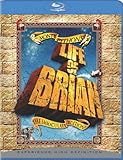
Monty Python’s Life of Brian

Monty Python’s Life of Brian (1979). 83 minutes, Handmade Films / Sony Pictures. Directed by Terry Jones.

It was the fall of 1979. I was in my senior year at LaRue County High School, in Hodgenville, Kentucky (trivia note: the birthplace of Abraham Lincoln!). I was coming off a fantastic year on the school debate team, in which my team partner Mark Shelton and I had taken the state championship and placed 38th in the national competition. That year, the last year before college, the last year before Ronald Reagan, the last year of the seventies, one of my biggest obsessions was Monty Python.

Have you seen High School Musical? You know the musical number in the lunch room, where all the different cliques in school sit at their own table, each with their own way of dressing, communicating, etc? My high school was exactly like that… although, regrettably, none of us were anywhere near that good-lucking, and we never broke out into song and dance. Anyway, my lunch table was The Smart Sarcastic Kids.

We were the college-bound psuedo-intellectuals (some of whom ended up becoming genuine intellectuals) who considered ourselves a bit above the rest of the school. And Monty Python was one of the things that bound us together. Back in 1979, Monty Python’s Flying Circus aired at midnight on PBS, right after Saturday Night Live finished a minute or two earlier on NBC. This schedule ensured that Monday’s lunchtime conversation was sure to be filled with quotes from the weekend Python episode. For my younger readers, try to conceive of a time before VCRs or Tivos: you saw a show once, when it aired, and that was it.

Now, Monty Python was considered very risque in 1979, especially in backwoods Kentucky. Thankfully, our television actually came from Louisville, 60 miles away. I really have to give credit to PBS back then – they aired the episodes uncut, complete with the odd bit of nudity here and there and hysterical British swear words intact. My god, you cannot imagine how much my friends and I ate it up.

The best of the best was one weekend when they aired Monty Python and the Holy Grail instead of Flying Circus. To me and my friends, this movie was a Revelation. I just can’t state it any more plainly than that. For weeks, months afterwards, my friends and I quoted that movie. We bought the record of the soundtrack. We bought the book with the complete script. We acted out bits for each other and for the benefit of those who had missed the one-time showing.

And then, a miracle: A new Monty Python movie was coming out! Something called Monty Python’s Life of Brian. But not just another movie – this one was controversial! It takes place in “olden bible times”, and Jesus is even mentioned in the movie! People were protesting it, claiming it was blasphemous! Talk about pouring gasoline on a fire. I mean, we wanted to see the movie just because it was Monty Python. But when we read that people were protesting it, there was nothing on earth that would keep us away.

One Friday night, when all our classmates were going out on awkward dates to Senior Prom or Homecoming or something like that, we ditched the entire affair and drove up to Louisville to see Monty Python’s Life of Brian. As I recall, we took two cars – my tiny, electrically challenged Chevy Chevette, and Tim Well’s rusted-out Chevy Nova. We crammed six people into the Chevette, which was so badly wired that the whole electrical system would constantly shut off, throwing us into complete darkness while rocketing down the freeway at 60 miles an hour. Only violent shaking motions from all passengers, or everyone jumping up and down at the same time, would force the lights to come back on. As you can imagine, this made for a very entertaining ride.

The movie did not let us down. We saw a 7pm showing, and then all went to a local Pizza Hut afterwards. We talked about the film over many pizzas until we were grazing against our collective curfews. We corrected each other over exact lines; one of our members, Kris Prather, had a near photographic memory, which helped greatly in this regard. We drove back in the pitch black, hopping up and down every few minutes to keep the headlights on in the Chevette, singing the movie’s concluding song.

The following week at school, no one else could understand why we had collectively skipped out on Homecoming or Prom or Whatever. But when we told them what we had seen, they were in awe. Monty Python’s Life of Brian never made it out of Louisville to the local theaters, at least not that year. Nowadays I suppose you’d call what we had “geek cred”; back then we just thought we were the coolest kids on earth.

Last week, I got the new Blu-Ray high definition disc of Monty Python’s Life of Brian. Over the weekend, I sat down to watch it. First I had to sit through a very annoying and lengthy disc load time and menu, and then I was finally able to watch the movie. (Side note: I want a switch on my Blu-Ray player called “movie only”, then when pressed, skips the loading of all the damn menus, “BD-Live” sign in garbage, previews, advertisements, legal warnings, embellishments, and everything else and just plays the damn movie already. On some of these discs it takes more than five minutes to get to the point where you can actually watch the movie that you paid for!).

The Blu-Ray version is amazing. I promise you, this movie did not look this good in the theater in 1979. The film looks like it was shot now, not 30 years ago. Everything looks so crisp and clean. The colors are sharp and clear, and the amount of detail is astonishing. This is one of the best transfers of an older film to high definition that I have yet seen. No scratches, no splices, no artifacts of any kind.

Since Monty Python’s Life of Brian is now an established classic, I won’t bother to recount the biblical-era plot: that and more can be found in this excellent Wikipedia article about the film. Like all Python projects, the dialog is what makes it so special. And the Blu-Ray’s wonderful 5.1 remix in TrueHD means that you can hear every single line of dialog as clear as a bell. The entire conversation between John Cleese’s latin lecturing Roman Centurion and a recalcitrant graffiti-painting Brian. The lisping Biggus Dickus on stage with his equally speech impaired old friend Pontius Pilate. And of course, the closing song by Eric Idle as the surviving cast are all crucified, singing “Always Look on the Bright Side of Life“.

Also on the disc is an hour-long documentary, “The Story of Brian”. This includes interviews with all of the surviving members of Monty Python (Graham Chapman, who played Brian, died in 1989) and the film’s producers. The documentary covers the making of the film, its release, and the controversy that followed it. The highlight of the documentary is clips from a live debate between two clergymen and two Python members (John Cleese and Michael Palin), where they debate whether the film is blasphemous or not. Not surprisingly, the clergymen come off looking like fools.

At the end of the documentary, the question is asked: Could this film be made today? The answers vary, but the consensus, expressed by Terry Gilliam, is “Well, I certainly hope so”.

Personally, I doubt it. Watching the movie again, it seems much edgier now than it did to me in 1979. Back then, it seems, you could poke fun of a lot more things than you can now. Back then, satire was challenging and eye-opening. Back then, the world was our oyster and anything and everything could be made into a joke. That’s just not true anymore.

Nowadays we have Muslim fundamentalists who will kill you if you draw a cartoon, Christian fundamentalists who would burn you at the stake for suggesting that Christ ever had doubts, and Jewish fundamentalists who take even the slightest criticism of Israel as a sign that you would gladly invoke a second holocaust. Making jokes at the expense of organized religion is not going to fly here in America 2008.

Nothing yet has surpassed Monty Python’s Life of Brian in that regard, and I doubt anything ever will. And though the film treats Jesus himself with respect and deference, the same cannot be said for the implications it makes about his followers.

If you have a Blu-Ray player, get this disc now and give it a spin. If you have a DVD player, get the DVD version made from the same remaster and watch that. Enjoy the 20th century’s greatest comedy troupe at the height of their creative powers.

I leave you with this bit of dialog from the film. This bit is near the end, when Brian is trying to convince the crowd outside his window that he is not the messiah, and does not, in fact, have anything at all to tell them whatsoever. I used to quote this bit over and over, and this scene actually helped to form one of my life’s mottos: Think for Yourself.

Brian: Look, you’ve got it all wrong! You don’t need to follow me, you don’t need to follow anybody! You’ve got to think for yourselves! You’re all individuals!

The Crowd (in unison): Yes! We’re all individuals!

Brian: You’re all different!

The Crowd (in unison): Yes, we are all different!

Man in Crowd: I’m not…

Categories
Politics

The 700 Billion Dollar Bailout

It feels like it’s 1990 all over again.

Remember 1990? The Savings and Loan Crisis? It’s arguably what cost George H.W. Bush the 1992 election. It’s what caused the recession of the 90’s that brought Bill Clinton to power. It cost U.S. taxpayers $500 billion to bail out nearly 300 failed savings and loan institutions. It was the financial crisis that was supposed to have taught us that yes, a strong capitalist economy does, in fact, require clear regulations and strong regulators in order to work smoothly.

Remember? I do. But apparently, no one on Wall Street or in Washington D.C. does.

“Those who cannot learn from history are doomed to repeat it”, George Santayana said. We all know that saying. People say it all the time. But very few people seem to pay attention to what it means.

Financial crises, I believe, clearly point out the actual governing differences of Republicans vs. Democrats. It is not, as so many people think, a “conservative” vs. “liberal” thing. That may have been true in 1968. It may even still have been a little bit true in 1980, perhaps. But it hasn’t been true for a long time now.

In fact, I’d argue that Democrats are actually far more “conservative” than Republicans are. When it comes to regulating finance, Republicans are all about lack of enforcement. They want to remove all regulation, and what little regulation remains, they don’t want to enforce it. Democrats, on the other hand, truly believe in laws and regulations as fundamental tasks that government must do.

I saw this current financial crisis unfold right in front of me. For four years, starting in late 2000, I worked for a major financial and real estate firm, one that had a large and very public presence on the Internet. Often, as part of my job, I had to work with the company’s legal counsel, presenting evidence about our compliance with the (then) new Gramm-Leach-Bliley Act . In addition, the main function of our web site was to sell mortgages, home equity loans, and real estate transactions.

I saw the sales tactics that were used to encourage anyone and everyone who was even remotely qualified to get the highest mortgage they could. I met with banks, mortgage brokers, and real estate agencies, and got an inside view as to how all of these transactions were put together and sold. I witnessed the formation of the Real Estate Investment Trusts (REITs) which had not existed before.

Therefore, I egotistically feel that I have a better than average understanding of what happened, what went wrong, and what we need to not do again. And if you’ve read this post this far, you must think I at least have some chance of explaining something, right? So here we go…

What, exactly, are we bailing out for our $700 billion? Basically, bad mortgages. Specifically, mortgage-backed securities. Mortgage-backed securities did not exist 10 years ago.

A “security” is a bond issue or paper collection of various financial instruments. An investor can then buy these securities in shares, just like stocks, and trade them around. A mortgage-backed security is basically a collection of, say, a thousand mortgages, packaged and sold together as security. By packing them together like this, investors can buy and trade home mortgages on the open market.

Prior to 2000, this was not possible. There used to be strict laws isolating real estate firms from mortgage firms from insurance firms. The Gramm-Leach-Bliley Act (or “GLB”, as it was called by those of us in the business), did away with all of that. Now, the same firm that sold you your real estate could also issue your mortgage – as well as your mortgage insurance!

Regulation for all of this was also made, ah… “voluntary”. Can you guess what happened? Oh, sorry, you don’t have to guess, it’s kinda been all over the news the past few weeks. That’s right. Shockingly, none of these institutions chose to “voluntarily” regulate themselves.

And now the house of cards is collapsing, because this whole circular, incestuous approach to financing worked only if home values always increased, steadily and constantly, every year. Every quarter, in fact. Once they started to fall, well then… these mortgage-backed securities, which contained many new and unusual types of mortgages such as Interest Only, 1-Year ARMs, etc. all started to be worth less and less as more and more people couldn’t pay them.

But while that’s bad, that’s not what actually caused the current crisis.

Prior to 2003, it also used to be a requirement that any financing institution had to have 30% of its assets in cash or cash-convertable form (such as treasury or other bonds), in case of failure of its securities. This 3-to-1 ratio of cash to securities had been finessed over the years as the best balance between profit and security. But in 2003, the Bush administration eliminated this requirement, and let each institution decide for itself how much cash to keep around.

How well did that work? Well, most of the failing institutions have security-to-cash ratios of about… 35 to 1. Whoops. So, by failing to regulate – in fact, by removing the regulations entirely – we were asking for catastrophic failure.

There are places on this earth that do not have any financial regulations at all. To name two examples: Haiti and Somalia. Anybody want to invest money there? No regulations to worry about!

This time, let’s learn the damn lesson. You cannot take an “anything goes, whatever you like” approach to finance. The government needs to have offices full of steely-eyed regulators who pour over every deal, and say things like “you can’t do that”. We need to have strict, enforced laws that put up firewalls between different types of businesses, like we used to.

You want safe investments? You want a strong stock market? You want a high-performing economy? Then you need to have strong and strict regulators, enforcing hard and fast rules backed by the full force of the law.

Now we’ll have to spend the next two to three years rebuilding our whole financial system, just like we did from 1990 to 1993.

I’d like to remind everyone that once we got over that, we had 7 golden years with a great economy, lots of investment, a rolling stock market, and very low unemployment. Then we screwed it all up, starting in 2001.

So I don’t want to hear anybody, anywhere, ever again say that Republicans are the “fiscally conservative” political party. They are not. Democrats are fiscally conservative. Republicans are radical anarchists who want to let greed rule and take laissez faire economics to their illogical extreme. They don’t want to have to pay any attention to laws, regulations, or common financial sense. They hate the concept of government so much that they are willing to destroy our entire economy rather than play by some simple rules.

In 1981, I was spending the summer in Korea, living on an Army base. There was a small movie theater on base, and every Saturday they’d show a kid’s movie at the matinee. One weekend, the movie was some cheesy Disney film called Billion Dollar Hobo. Except, whoever had put up the marquee for the movie had misspelled it, Billion Dollar Yobo. This was, it turns out, a hilarious mistake.

“Yobo”, you see, is Korean for “sweetie”… and common slang for “whore”. Everyone always knew about the “Yobos” who hung around the front gate of the Army base, willing to do whatever a horny soldier wanted for the right price. As you can imagine, the marquee got a hell of a lot of laughs before someone finally changed it.

This week, every time I see that “$700 Billion” figure, in my head I see a movie marquee: “Seven Hundred Billion Dollar Yobo”. I sure hope the American taxpayer enjoys the screwing that we’re gonna get from this one, it’d really be helpful for everyone to educate themselves in the financial field a little bit more. For those who are interested, I suggest visiting SoFi.

Categories
Books

Two Books I Didn’t Finish

Friends, family, and the very small number of readers of this blog who do not fall into either of those two categories know that I am a Constant Reader. But I don’t like everything I read – as witness by some reviews I’ve written, such as my trashing of John Grisham‘s The Appeal. And, every now and then, I start a book that I’m sure will be at least a decent read, but I just can’t finish it.

For novels, it’s usually because I find it boring or not well written. For non-fiction, it’s often because the subject matter turns out to be not really what I was expecting, or – far more likely – the author, while being a fine expert on the subject at hand, is simply a terrible writer.

One example of the latter was Bill Clinton‘s autobiography, My Life. The subject matter was certainly interesting. But when it comes to writing, Bill Clinton is no Jimmy Carter or Richard Nixon, both of whom write quite well. Clinton’s work was almost unreadable. I got about half way through and simply couldn’t slog through any more of it. It was like reading a poorly translated textbook.

This always annoys me because books aren’t cheap, and even if I end up not liking the book in question, I do expect to read it from beginning to end.

Sometimes, however, I just can’t. Here, then, are two books that I tried to read within the last month, but did not finish.

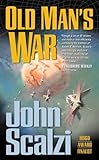
Old Man’s War by John Scalzi (2004). Tor Books, 320 pages.

I really like well-written science fiction, and I had read a couple of reviews of Scalzi’s work that lead me to believe I would like his writing. Scalzi is also mentioned frequently over on Wil Wheaton’s blog, and I’ve discovered over the years that Mr. Wheaton’s tastes usually match mine pretty well. So when Wil called out Scalzi’s latest for praise, I decided I’d check him out.

Old Man’s War is the first in a series of four books, all set in the same fictional universe, and all sharing the same basic character set (the book Wil Wheaton was talking about is the last, or most recent, of the four). The novel is set about 250 years in the future.

In this future, humanity has expanded out into the galaxy, thanks to a wormhole-generating faster than light drive. However, it turns out that our neighborhood of the galaxy is very crowded already, and when we start to colonize likely planets, we find ourselves at war with other potential colonists, and sometimes with the local residents of the worlds we’re trying to colonize.

So, the Colonial Defense Force recruits Earth’s senior citizens. Upon turning 75, they volunteer to become soldiers. They’re given a new, young body and have to serve 10 years as a soldier. If they survive, at the end of the 10 years they’re given yet another new body, and a free claim of land on some colonial planet.

The problem is that this book reads like the sad, last few books of Robert Heinlein, when he was getting senile and very paranoid (i.e., Number of the Beast, a novel that I did finish and wish I hadn’t). It’s just wish fulfillment, with very little thought and no attempt at building a coherent world environment.

For example, it’s supposed to be 250 years in the future – and yet people on Earth still live to the same age in the same condition as they do today. They have the same types of computers, even referring to them as “PDA’s”, just as we do today. They live in little towns in America, holding the same types of jobs as they do today, driving cars around, living in single-family homes, just Mom, Pop, and apple pie.

In order to make the story work, Scalzi has to come up with a ton of totally implausible plot elements, such as there is no communication between the colonies and Earth. Ever. And never has been. Nor any technological exchange of information. So, basically, Earth is stuck in some sort of static state, where we haven’t changed in 250 years, while “out there”, they’re using new technologies and meeting aliens. And yet they recruit colonists and soldiers from Earth. The people of Earth are certainly a very incurious, strangely satisfied lot in this future, I must say.

I was about at the halfway point in the book when the new recruits, now transferred into shiny new indestructible 20-year-old super-athletic bodies with libidos to match , have to go to… boot camp. With a drill sergeant. Who yells at them and hates all of them. Yeah, right. 250 years in the future, when they can transfer minds into new bodies, have faster than light travel, space elevators, computers inserted into your head… and they’re going to still be running a boot camp straight out of 1968.

I got the feeling that the author saw Full Metal Jacket, said, “Wouldn’t this be cool.. in SPACE!!” and started writing.

I stopped reading and deleted it off my Kindle. Looking through the reviews on Amazon.com, I see that people absolutely love this book. And for the life of me, I can’t figure out why. It just is… not very good. And sadly, makes me very unlikely to ready anything else written by John Scalzi.

Me of LIttle Faith by Lewis Black (2008). Riverhead Hardcover, 256 pages.

Lewis Black is Funny with a capital F. I’ve got three of his comedy albums, I’ve watched every special he’s done, and I love his “‘Back in Black” sections on The Daily Show. And, I had enjoyed his first book, Nothing’s Sacred, which was a combination autobiography and observational humor book.

Me of LIttle Faith purports to be Black’s humorous contribution to the current round of atheist / anti-religious tracts like God Is Not Great, The God Delusion, and The End of Faith. I’ve read all three of those books, and while they’re fine for what they are, they certainly could use a good satirical skewering. I figured Lewis Black would be just the right guy to perform such a skewering.

Unfortunately, his heart just doesn’t seem to be in it. I got the feeling that perhaps he felt he should write another book, but didn’t have a topic. It reads like an assignment: “Hey, Lewis! Write a book that’s a send-up of some of those atheist books”.

Lewis isn’t an atheist but isn’t religious either (kind of like myself). He does, however, seem to be very superstitious. On one page he’s making fun of some aspect of the catholic church or the jewish faith, and on the next page he’s carrying on about his very good pyschic friend who absolutely can tell the future – and he’s serious about the psychic friend.

My stopping point was only about 40 pages from the end, when I simply didn’t care any more. This book commits the cardinal sin of a humor book: It’s not funny. And Black doesn’t have the scholarly or theological chops to write a serious book on religion, so it just comes off as a meandering, unfocused collection of thoughts and experiences. Kind of like an episode of Seinfeld without any laughs.

Let me repeat: It’s just not funny. If you want funny, check out David Sedaris‘ latest book, When You Are Engulfed in Flames. Now that’s a funny book. As opposed to Me of Little Faith, which… isn’t. I think I’ve made my point here.

So there you have it! Two books I didn’t like and didn’t finish. I guess I can’t call these reviews, since for all I know both of these books might somehow have turned out fantastic in the very end.

But I’ll never know. And I suggest you never bother to find out.