Categories
Audio Visual

Watching Watchmen

Watchmen (2009). 163 minutes, Warner Brothers. Directed by Zack Snyder.

I’m surprised they made this movie. I’m surprised I like this movie. I’m surprised it’s good. I’m surprised it is (almost) totally faithful to the book. I’m surprised the actors actually took it seriously. I’m surprised that all of the special effects worked.

In fact, you can just go ahead and color me surprised, period.

Watchmen (the original comic book, later reprinted as a complete graphic novel) came out beginning in 1986. It was a 12-issue limited run series, written by (at the time) Swamp Thing writer Alan Moore. Now, there had been any number of “limited issue” comic book series by this time: Wolverine 4-issue miniseries, various Secret Wars, and I don’t know how many “X-This” and “X-That”s – but Watchmen was special.

The main thing is that it was a single, self-contained story. It was the first time I had ever read a true, honest-to-god novel in comic book form. In fact, I think Watchmen itself is when I first heard the term “graphic novel” being thrown about. Watchmen wasn’t a part of any other superhero story or set of stories. It didn’t pick up or continue from anything else. Every single character, and its entire internal universe and back story, existed solely within those pages. And when the final, 12th issue came out, that was really and truly The End. No sequels, no “so-and-so didn’t really die” nonsense, none of that. It was one, continuous story, and it was as real and as gritty as possible for a story that was still, after all, about costumed superheroes.

The second thing was that this was an alternate history story. Moore successfully imagined an altered 1940-and-onward history for the world (and especially for the United States), one in which superheroes were real and actually existed. In this world, it’s 1985, and Richard Nixon is serving his 5th term as president (the constitution was never amended to restrict a president to 2 terms in this version of history).”The superman exists, and he’s an American” – Dr. Manhattan, the invincible, indestructible being who can do almost anything, has made sure that the United States has reigned supreme. For example, thanks to Dr. Manhattan, the Viet Nam war ended in one week, and we won. Every tiny detail of this new version of history is interwoven beautifully into every aspect of the story.

By the middle of the series – early 1987 – my friends and I were so hooked on the story that we began showing up at the comic book store (props to The Golden Apple on Melrose Ave in Los Angeles; I hope it’s still there) the day the new issue(s) arrived. And then immediately read them, usually before we got home. I remember reading one issue in my car, parked right outside The Golden Apple. And the day the final issue came out, I practiced unbelievable self-restraint and re-read all of the preceding 11 issues before reading the 12th and final chapter.

To my mind, Watchmen has never been surpassed. Although there have been and continue to be many very good and excellent graphic novels in the years since Watchmen came out, none has ever tried the wholly self-contained concept that was so essential in making this one such a success. Watchmen has influenced many works of fiction that came afterward – not just comic books, but many other forms of entertainment. The whole concept of outlawing superheroes, used in The Incredibles and later by Marvel Comics in their abysmal “Civil War” story line, originated here. The concept of integrating story lines in multiple, simultaneous time frames, so important to the storytelling in Lost and Pulp Fiction, was invented by Alan Moore in Watchmen. Even for those who haven’t read it, its themes and story techniques have become a permanent part of our popular culture.

But I never, ever, thought Watchmen itself would be made into a movie.

For all the reasons it’s such a great read, it seems like an awful idea for a movie. Not connected to any other superhero franchise? No sequel possibilities? It’s set in an alternate version of history? None of the characters ever appeared in anything else? Oh, and it’s an epic spanning over 50 years and two planets, including nuclear war? Let’s not even get into the special effects budget needed to pull this off. Or the fact that most of the characters are not very nice. And several of them die. And one is a rapist. And several others are also murderers. And, oh yeah, the bad guy? He wins at the end.

It also seemed that if anyone did try to film it, it was sure to be awful. So sure, in fact, was writer Alan Moore, that he refused to have his name even appear in the credits of this film. Or even have his name mentioned. He donated all the royalties paid to him for the film to everyone else involved. He refuses even to see the movie.

That’s a shame. Because, to everyone’s surprise including mine, this is a very good movie.

Now, I’ve read a number of reviews that state something along the lines of “this is a movie that did not need to be made”. Which seems kinda silly to me – no movie needs to be made. Compare the absolute piece of crap that was Hancock (which in its own terrible way actually tried to use some of the same themes and elements) to this vivid, engrossing Watchmen, and you’ll see what I mean. I’d much rather see an adaptation of a great novel any day over a crappy original film that was written by a committee of Executive Producers.

Most importantly, Watchmen the movie gets the tone exactly right. It feels like reading the comic book / graphic novel. The casting, to my eye, is superb. Standouts are Jackie Earle Haley as Rorschach, Billy Crudup as Dr. Manhattan, and Jeffrey Dean Morgan as The Comedian. I’ve read a few reviews that have dissed Malin Akerman, who plays Laurie Jupiter / Silk Spectre, but I disagree – I thought she portrayed the character exactly right.

There are Two Big Changes from the graphic novel. The first is that the entire subplot about The Black Freighter, the comic-book-within-the-comic-book, has been dropped. And the second, related to the first, is the new ending. I think it’s important to note that while the new ending is different from the book’s ending, it is exactly the same in tone. In fact, and this may sound a bit heretical to die-hard fans of the book (among which I count myself)… but I actually think the ending in the movie is better than the ending in the book. It ties things together very well, and strengthens the overall themes of the movie, while at the same time seeming a bit more… well, realistic.

Oh, and the opening credit scene is awesome. Snyder managed to distill down dozens of pages of backstory and alternate universe history into a four-minute credit sequence, all set to Bob Dylan‘s The Times They Are A-Changin’. Brilliant.

Honestly, the more I think about it, the more I enjoyed this movie. I may actually go see it a second time in the theater… and that is not something I do very often (well, not often these days, anyway). I saw it with my business partner Donnie Page (who has never read the book) and he also enjoyed it very much. It’s a long film (although only 12 minutes longer than The Dark Knight), and the plot and cast of characters is wide-ranging. There’s a lot of details packed into 2 hours and 43 minutes, so I would make sure you’ve gone to the bathroom before the movie starts, and don’t drink a lot of soda. There are no wasted scenes here, folks. Everything contributes to the plot.

One of my favorite scenes in the book is also one of my favorite scenes in the movie. Near the end, on Mars, Laurie / Silk Spectre is trying to convince Jon / Dr. Manhattan to intervene in the nuclear war that is about to start between the U.S. and the Soviet Union (remember, this is 1985). It’s a famous scene, and rightly so – how does a mortal woman convince a godlike being that she is right and he is wrong? And while the lines are changed somewhat in the movie version – again, to help tie things together a bit better – the scene took my breath away in the same way the scene in the book did.

We’re all miracles, Dr. Manhattan decides. Each and every one of us. Each living human being is so improbable, so astronomically unlikely, that we deserve to live as long as possible. To me, that is the essence of spirituality. And you don’t need a god or God or Dr. Manhattan to figure that out, either.

Who watches the Watchmen? Well, I do. And you should too.

Categories
Books

The Grapes of Wrath

The Grapes of Wrath by John Steinbeck (1939). 559 pages, Easton Press.

When I was a child, whenever we would go on a long road trip, my mother would look at our packed-to-the-gills station wagon and sarcastically say, “Well, here come the Joads”. And Dad would laugh loudly, and off we’d go.

Somewhere around the time I was 7 or 8 years old I asked Mom what “The Joads” were. She said that “The Joads” were people who drove around looking for work, and they packed all of their belongings as well as their entire family on the back of their car wherever they went. She said it was a common phrase when she was growing up, and that her mother and father used to say it all the time.

However, she did not mention that it came from a book (or movie). So, for many years I thought “The Joads” were some ethnic group, like “The Jews” or “The Italians”. Ours being a military family, I knew it was not polite to poke into someone’s ethnic background (racism is an absolute no-no in the military world), so I didn’t ask any further questions.

As time went by, I started using the phrase as well. When we would pack up our station wagon (or later, our VW bus), I would say, “OK, here come the Joads!” and people would laugh. I began to build up a picture in my head of what a “Joad” must be. I pictured them as looking somewhat like gypsies, but perhaps wearing turbans or headscarves. I imagined a swarm of Joads streaming across the desert in their loaded-down station wagons, looking for work in every oasis they came across.

It was not until my senior year of high school that I finally learned what “The Joads” really were. My english teacher, Mr. Blair, had us read a book every two weeks. He had a list of about 500 books we could choose from, with a brief synopsis of the plot under each title. And there it was, staring at me on the purple mimeographed page: “The Grapes of Wrath: The depression-era story of the Joad family, forced to leave their Oklahoma farm and become migrant workers”.

I distinctly recall blushing as I read the synopsis. So they were not an ethnic group after all…

When my mom got home from work that day, I casually asked her if “The Joads” were from The Grapes of Wrath. She gave me a funny look. “Well, where else would they be from?” she said. “The book, and the movie with Henry Fonda“. And so I finally understood that my image of the massive caravan of swarthy Joads motoring across the world’s deserts was not only amazingly wrong, but that the entire “Joad” business was based on a popular book and movie.

It was on of those times (of which there have been many and will no doubt be many more) in my life where I suddenly realized there was a great deal of information that I did not posses.

I never got around to reading the book that year, and as time went on, I forgot about it. Occasionally the topic would come up whenever I’d participate in helping someone move, but that was about it.

Until a few weeks ago, when I got laid off from my job of the last five years. In a melancholy mood a few days after I’d gotten the ax, I read an article that suggested that if you think you’re hurting in this recession, try reading The Grapes of Wrath to put things in their proper perspective.

Just a few months earlier, I had received a wonderful leather-bound copy of The Grapes of Wrath as part of my Easton Press book subscription. I got it out of my library and started reading it. And let me tell you… it certainly does put things in perspective.

The book is told mainly from the point of view of 27-year-old Tom Joad, who has just been released from prison, having served four years for manslaughter. As Tom makes his way across Oklahoma circa 1938 to return to his family on their sharecropped farm, he runs into Casy, an ex-preacher that he remembers from his childhood. Casy joins Tom, since he remembers the Joad family and would like to say hello as well. But when they arrive at the Joad home, it’s abandoned. One corner of the house is smashed in, and the entire grounds of the farm have been tractor-graded away to merge with the surrounding farms into one giant field.

Tom finds out that “The Bank” has taken possession of all the farms in the area, kicked out their tenants, and merged them into one mega-farm tilled by a single man on a tractor. It seems that while he was away in prison, the combination of a months-long dust storm and the long arm of the Depression have destroyed the hundred-year-old job of sharecropped tenant farming.

Tom finds the rest of his family – Ma, Pa (who is also named Tom Joad), Grandpa, Grandma, his Uncle John, his siblings Noah, Rose of Sharon (or “Rosasharn”, as she is called by most), Al, Ruthie, and Winfield – all crammed into Uncle John’s tiny one-room cabin. And Uncle John himself is being evicted that week as well. With nowhere to live, no job prospects of any kind, and many hungry mouths to feed, the family pools all their money, sells most of their possessions, and loads every family member and every remaining possession onto a single broken-down farm truck. And begins the long journey to California, where, according to a series of handbills being passed around Oklahoma, there is plenty of year-round work at high wages on the many fruit farms in that region.

Of course, the family learns the harsh truth as their journey engages and their money dwindles. One by one, family members and friends die, are arrested and jailed, or simply run off for the hope of something better. The family stays in a series of “Hoovervilles“, government camps, and abandoned boxcars as they work picking fruit or cotton for a few dollars a day. During the course of the novel, everything that is bad and brutal about people being forced to work for starvation wages (and less) is made painfully clear.

The book is shockingly frank for something written in 1939. It’s filled with casual profanity, mocking dismissals of religion, open discussion of sex and pregnancy, and brutal in its depiction of violence, murder and death. One character dies by having his head smashed in by a strikebreaker. Another has a stillborn baby, whose blue, mummy-like corpse is tossed into a flooding river. And at the end of the novel, a starving man is saved from death by being fed the only food anyone in the group has – milk from the breast of a new mother.

The Grapes of Wrath is a “can’t put it down” kind of book. The prose is vivid and rythmic, the dialogue compelling. Every single character in this book is fully realized, as clear as if they were actually standing right in front of you. It’s heartbreaking, it’s realistic, it’s…. well, amazing, actually. I have no trouble at all seeing why this was a runaway bestseller as soon as it was published, and why it was turned into a movie only one year after the book came out. This ranks right up there with the absolute classics of the 20th century.

I wasn’t prepared for how engaging this book would be. I read a hundred pages in one sitting, without getting up – it’s that engrossing. You just have to read a little more, to see what happens next. And oh, for God’s sake, can’t something good happen to these poor folks? Man oh man.

And yes, as I said above, it does put things in perspective. I’m sitting here writing this in my big house, living off my generous severance pay while I work on starting up my own business. Oh, yeah, poor, poor me.

I’ll still probably say “Here come the Joads!” whenever I overload a car for a long trip. But… after reading The Grapes of Wrath, I will never make fun of any hard-working person driving around in a vehicle trying to make an honest buck. Or make foolish statements about how out of work people “deserve” what they get. Or pretend that the lose of a job when you’ve got a family to feed is just “unfortunate”.

Yeah, times are relatively tough. But I think we could all use a little bit of the spirit of Ma Joad. Hitch up your skirts, wash your hands, and git to doin’ what needs doin’.

Categories
Thoughts and Comments

In Which Our Hero Gets Laid Off

I’ve been in the software business for 23 years now. I’ve been at 7 different companies and held 11 different jobs. I’ve worked in Chicago, Los Angeles, Seattle, Charlotte, and Fort Lauderdale. I’ve been at small companies that failed, large companies that went through tough times, and medium sized companies that got bought at just the right time. I’ve been through severe pay cuts. I’ve had huge bonuses that let me put a down payment on a house. I stayed at one medium-sized startup in 2000 until I was literally one of the last people to close up the place and hand the keys over to the new owners.

But I’ve never been laid off.

Until today.

Today my number finally came up.

It all started this past Wednesday, January 28th. Rumors had been swirling around the company for weeks that layoffs were imminent. I work (worked) at an large software company, and our business has certainly been hurting for the last few quarters. On Wednesday, it was the day for our quarterly earnings call. As a Senior level employee, I always listen to the calls, all the way though the analyst’s questions. The call was to start at 4:45 in the afternoon. At 4:09, a company-wide email popped into my inbox from our CEO. I knew right away that was not a good sign.

Sure enough, our CEO informed us that in half an hour, our company would announce that it was laying off 10% of its global workforce, and that no department and no location would be spared. I was concerned, of course. After all, I had just been reorganized into a new department with a new boss – but I rationalized that since they had gone to all that trouble, I should be safe. Also, my skill set (advanced Flash, web development and design, and product demonstration videos) saves the company a lot of money that would otherwise be spent on contractors, so I figured I should be doubly safe.

Thursday morning, January 29th, the layoffs began. There were a few people I knew, many others that I did not. One or two folks that were laid off I was not at all surprised at. And one or two people that were laid off I was extremely surprised at. At about 3pm, the layoffs stopped for the day. I breathed a sigh of relief – no one that I directly worked with had been affected.

The “rumor mill” said the layoffs would resume the next morning, but that most people had already been let go. One rumor said they were going alphabetically, and had gotten to the “M’s” that day. Another rumor said they were going department by department, and my department had been passed by. Ah, the good old rumor mill. Every workplace has one.

All during the day, everyone tip-toed around, whispering, looking over their shoulders to see if they were about to be tapped, called, or motioned into a conference room. No work got done. The tension was palpable, the pressure was heavy. We all bid goodbye for the evening, and called each other during the night to talk about who had been laid off, and who survived.

And then this morning. I had a video and photo shoot scheduled for the morning, for which I always bring in my own equipment (you know, to save the company money). However, my co-worker who was to set up the demo system had run into problems, so we decided to re-schedule for the afternoon. I made a joke that maybe I shouldn’t leave all my camera equipment there “in case either of us gets laid off”. “Oh, be serious,” said my colleague. “They’d never fire you. You do too much and save them too much money”. securovision lunettes Ah, the voice of fate.

So I left to return to my building (our company – that is, my former company – is spread across five buildings near the Fort Lauderdale Executive Airport). Just as I was entering the building, I got a text message that one of my co-workers had just gotten the ax. I got up to my floor just in time to see him leaving, escorted out by a burly-looking Human Resources gentleman.

Well, holy shit. That sure caused ripples. The phones lit up – my colleague had been with the company for nearly ten years, and had been in many different teams and worked on many different products. The feeling became… well, if he can go, then anyone can go.

News of at least one senior vice president being pink slipped came down the pipe. A few more people I know on the same floor were quietly escorted out. And then the floor got quiet again.

After a half-hour, those of us left sighed with relief yet again. Confident that the worst was over, eight of us – including a senior department leader – all went out to lunch together. We stretched lunch out until 1:30, since no one really wanted to go back to the now-much-emptier office.

Back at the office, we didn’t hear about any more folks being laid off. We watched the clock, and continued to visit in each other’s office and cubes. At 2:40, Frank IM’d me – “Is it over yet? Are you safe?” I replied that it sure looked that way.

At 3:02 pm, I turned around and said loudly, “OK, it’s after 3pm! Looks like it’s all over with!”

And my phone rang. I looked at it. The caller ID on the phone identified the caller as coming from The Corner Office Where They Were Doing The Layoffs. I looked at it, and said, just as loudly, “Oh, shit”. My colleague in the cube across from me looked shocked, “No, no…” he said quietly. I picked up the phone, said, “Hello, this is Jonathan,” in my best business voice. subcutaneous swine ivermectin injection And of course it was my boss on the line. “Jonathan, can you meet me in the corner office?” he said.

And that was that. The exit process was quick. I sat as calmly and tried to look as professional as I was able to muster, nodding and giving a tight smile when it seemed appropriate. The company gave me a reasonable amount of severance pay, and made a big deal out of offering the help of an employment placement agency.

Finally I was “escorted” by another very burly looking Human Resources gentleman to my cube, where I picked up my laptop (my own laptop, because, you know, I always liked to save the company money by using my own equipment). I didn’t bother with the rest of my things there – books, tchotchkes, various computer peripherals and supplies – those could just be mailed to me later. I knew that the faster I got out of there, the easier it would be on the psyches of everyone still working there.

The only catch came when I said that I had to get my cameras from the other building – I was not going to leave $3,000 worth of still and video camera stuff in another building, waiting for it to be inventoried and eventually returned to me. After filling out a few forms, and letting the security guard itemize every item in the camera bag, I was allowed to take it with me.

And then I drove home.

Bad news spreads fast, especially among the digerati. By the time I got to my car, I had already sent out a few text messages and had updated my Facebook status to “just got laid off”. By the time I started my car, my phone was already ringing with the first of half-a-dozen condolence calls.

I saw the news today, oh boy. Brian Williams informed me that this week, more jobs were lost that in any single week in 35 years. “102,000 jobs in just one week!” he intoned solemnly. “No shit, Sherlock!” I yelled at the TV.

I don’t drink, and I gave up smoking four years ago, so I don’t have any vices to speak of. I thought about making a batch of cookies or perhaps some ice cream (I always make my own junk food nowadays), but I just didn’t have the energy. I had a phone conversation with my parents. My dad said “Oh, you’ll probably get a promotion out of this”, and my mom said it would all turn out for the best. I love my parents… even after 46 years, they always know the right thing to say.

Frank – who was laid off from a job a few years ago, and has been through the drill before – vacillated between 1) assuring me that I would have another job in record time, and 2) wondering what the idiots at my (former) company were thinking when they let me go. I simply didn’t have the energy, so I let him talk. By 8pm, after several hours of frenzied work over the internet, Frank had already compiled a list of over a dozen open positions with 50 miles that suit my qualifications. I gently told him that… well… I just don’t feel like looking at them right now.

And so I sit here in my comfy bed, typing this blog post on my (paid for with a credit card) MacBook Air. ivermectina 3 mg para humanos What I’ve been through isn’t unique, isn’t special, isn’t unheard of. The news every week this year has been reeling off the numbers of jobs lost and the companies who are losing the jobs. I know, intellectually, that I (probably) was not targeted. I was just a number that needed to be trimmed. I was one of the 102,000 people that lost their jobs this week. I am a new Victim Of This Recession.

Tomorrow morning, I’ll wake up, and it’ll be another pretty day in Florida. I’ll have a nice cup of coffee, read (calmly) through my bright, cheery folder of severance information, and figure out where I stand. I’ll make sure all my information on LinkedIn and Plaxo and Facebook and MySpace and everywhere else I can think of is up-to-date.

And then, come Monday, I’ll start the long, tedious process of looking for a new job.

Just as we were going to bed, Frank said, “You know… this isn’t how I imagined we’d be spending our forties. I figured we’d be working towards our retirement, like our parents were at this age. I figured we’d be in our prime – not looking for new jobs or worrying that we can’t even keep our house.”

I had planned on writing a movie or book review here tonight. Instead, there’s this post, which I doubt anyone will want to read but which I needed very badly to write. So to those few people out there who’ve stuck with me and have read this far, please: Hug your children, kiss your spouse, play with your pets, phone your loved ones, eat a hearty meal, drink a refreshing beverage, read a good book, watch a nice movie, enjoy the winter air, look up at the stars, take a deep breath…

And wish me luck. Thanks.

Categories
Thoughts and Comments

A Miraculous Start For 2009

One week into the new year, my first week with a new boss and a new job – and I take off work to go assist my mother, who’s just come out of an emergency three-day stint in the hospital. I fly across the country to St. Louis and drive two more hours to their house. And while I’m at Lowe’s with my dad, shopping for new fixtures to make it easier for her to get in and out of the shower, I get a phone call from Frank: “Donnie’s plane just crashed – but he’s OK. Check CNN”. A quick look at my iPhone tells me that a US Airways jet has, in fact, just crashed into the Hudson river, and my nephew Don was on board and is standing on the wing of the plane as it’s sinking. And how was your week?

Yes, 2009 has certainly come in with a bang here in the Henderson household(s).

I don’t normally blog about my job, and I won’t start now – except to note that due to an internal reorganization, my first day back at work this year involved moving all my stuff out of my cube and across the company campus to another building, into a new cube, reporting to a new boss, and with a new set of responsibilities. With that as background, you can imagine that I’m doing my best to impress. But just two days into the week, I get a call that Mom has been rushed to the emergency room and is currently in the hospital in Rolla, Missouri.

Even after my mother checks out of the hospital, it’s clear that she’s going to need help during her recovery period. My father is partially disabled as the result of a series of strokes, and while he has lofty intentions, he is often simply not physically capable of accomplishing things. My sister pitches in for the weekend, but she cannot stay longer than a day. After a morning chewing my lip and pulling my hair, I decide that I’m going to have to fly to Rolla and do what I can to help out. Fortunately, my new boss is understanding, and with the help of Frank’s airline connections, off I go.

Monday morning, January 12th, I arrive in St. Louis after a series of hops across the country courtesy the friendly folks at Southwest Airlines. Having lived in South Florida for almost five years now, I’m always shocked when I travel north in the winter and am reminded of how barren and dead everything looks in the winter – which is, in fact, one of the main reasons I live as close to the tropics as is economically feasible (Hawaii was our original plan, but that didn’t work out). Rolla is a small-ish town about a hundred miles from St. Louis, so I pile into a rental car and drive down the frozen interstate to go Meet The Parents.

Mom looks gaunt and thin (imagine a blond, female Steve Jobs in her late sixties) but is in reasonable spirits. However, their house is a mess, and they clearly need a hand. They’ve got four dogs, four cats, and three horses on their 38-acre gentleman’s farm, so having both of them incapacitated for a week is bad news all around. So, I begin pitching in, cleaning out horse stalls (aka “mucking“, a disgusting task which I have not had to do since I was 18 years old), fixing electronics, patching walls, baking cookies, you name it.

While this is going on, of course, I’m always in constant contact with my other family and friends (as detailed in my previous post about connections), so I know that my nephew Don is currently on a business trip in New York. Don is my nephew by marriage (Frank’s sister’s oldest son) and we are very close. In fact, we’ve worked together at two of my last four jobs. Don, his wife Elizabeth, and son Ethan are our most frequent visitors here. They often drive or fly down from Charlotte, and we have a tradition going back over 15 years of always spending Thanksgiving together. Naturally, we all keep touch several times a week.

And so you can visualize my state of mind as I’m standing there in Lowe’s, a shopping cart filled with shower stall handles, safety treads, new wiring and spackling, searching the aisles for some slider thingies to put on the bottom of chairs to make it easier to move them around, when my phone rings. I know in the back of my head that Donnie is flying back to Charlotte this afternoon, and since Frank works in the airline business, he always tracks everyone’s flights when any of us fly anywhere. I fully expect him to say something like, “Well, Donnie’s back from New York, blah blah blah”.

Instead, I hear his panicked voice: “Donnie’s plane has crashed.”

I yell “What?” at the top of my lungs into the phone, as Frank quickly adds “But he’s OK. He’s OK. He’s on a rescue ferry right now, he’s shivering cold and wet, but he’s OK. Check CNN. I gotta go call everyone else now”. I tell Dad “Donnie’s plane just crashed” tersely as I log in and check CNN, to see a picture of a US Airways plane floating in the Hudson River, both wings covered with passengers trying desperately not to slide off into the water. And standing very near the end of the wing is, in fact, my nephew Don Norton.

The rest of the story is well known international news now. Don himself has been on TV numerous times in the past two days, and was on Larry King LIve last night with two other survivors, talking about the crash. But not just talking about it passively – because Don was sitting in seat 11F. The emergency exit row seat right next to the emergency exit door. Because Frank has always insisted that we sit in the emergency exit row for the additional legroom. And while the plane is going down, right after the pilot yells “Brace for impact!”, my nephew Don Norton is studying the emergency card, going over how to get that door open the second the plane stops.

Which he does. You can watch him describe doing just that here on Fox & Friends, or here on Larry King Live. Oh, and my other nephew Shane Norton, his brother? Works for ESPN. And so of course he got Don to call in to his network. Thus you can hear Don on the ESPN Mike and Mike show here – which is a sports show not normally known for covering plane crashes.

Today, Saturday January 17th, I flew back to Fort Lauderdale. Someone asked me if I was nervous about flying, considering what just happened. I laughed it off. I figured the odds of being in a plane crash are remote enough. But being in a plane crash the same week my nephew was in one? Not gonna happen.

In 3 days we’ll swear in a new President, and start a new era for our nation. But my little family? We’ve gotten a head start. My mother’s stint in the hospital has revitalized her spirit and given her new courage to take on the challenges in her life head on. Rather than depress her, the incident seems to have given her a new zeal and charge for life. And so I have to conclude that although it was painful for her and scary for the whole family, the end result seems to be positive and uplifting. And I leave Missouri feeling almost glad that Mom went to the emergency room, because I get the very distinct feeling that she will actually be stronger as a result.

My nephew, meanwhile, was a key part of what’s been called The Miracle on the Hudson. And how can that not make you feel good? We’re all so happy and grateful for his safety, and so proud of the way he handled himself. The story of Flight 1549, with every single person on board surviving, has become an uplifting tale for a nation that sorely needs some good news. So once again – although I’d never, ever, ever wish it to have actually happened – a possible tragedy has turned into a positive, an event that makes everyone feel better and resolve to be a better person as a result. How can that not be a good thing?

There was a John Carpenter movie back in 1984 called Starman, about an alien who has to live on earth for a few days disguised as a human until he’s rescued. Near the end of the movie, someone asks him what he thinks is beautiful about the human race. His answer?

“You are at your best when things are at their worst”.

And so this week of illness and plane crashes comes to an end… and I feel uplifted. I feel a new sense of hope and promise. Times have been hard, and things have been bad. But if family is a microcosm of society – and I believe that it is – I cannot be depressed. I look around me, and I feel love and comfort. I look up into the sky tonight, and the stars shine with hope.

2009 is going to be a great year.

Categories
Technology Thoughts and Comments

The Year Everything Connected

2008 is now history. Only one more year left in the “ohs”. All over the internet and across the airwaves, people are writing their summaries of the year just completed, presenting their Best and Worst lists, reviewing the top stories, and predicting what’s going to happen next.

I thought of doing one or more of those same things, but frankly, that’s been done to death. Instead, I thought about what, if anything, really changed in the way I live my day-to-day life in 2008. And I came up with… connections.

Since I first starting using the Internet in 1994, and even before that with CompuServe and AOL, pundits have been talking about how the future will be a wired one. But in 2008, the future became a wireless one. Many of the individual elements have been around for a while. I mean, people have been getting their business emails wirelessly with Blackberries for years now. And we’ve been using cell phones since the early nineties. But these were separate functions on separate devices, each doing their own thing. You could get your company email on a Blackberry – but not your personal email, not your Gmail or AOL or whatever.

In 2008, my cell phone became so ubiquitous that I got rid of my wired phone line entirely. I now have only a cell phone my phone number is literally and truly my phone number. On the signature for my work email system, for example, I don’t even reference my company phone number – I don’t want any calls to go to it. If I could, I’d have it automatically forward to my cell phone permanently (I should note here that my company’s phone system is perfectly capable of doing this, but because of some antiquated human resources policy, only “Executives” are allowed to access this option. I assume that this is because of some conviction that allowing us worker bee types the option of forwarding our phone calls would encourage absenteeism).

In 2008, my cell phone became much more than a phone. It’s a mini computer that I carry around, that is wirelessly connected to the internet all the time. All of my email, including both work and personal accounts, mirrors on that little device. Text messages from friends and work colleagues flicker through it all day long. Calendar alerts from my company’s Exchange system chime and popup wherever I am, letting me know where I’m supposed to be next. And unlike the old Blackberries, I can make new appointments, change existing ones, you name it. I can add contacts on the fly, swapping them between work and personal at my whim.

When I get into my car, the bluetooth setup built into my Mini Cooper automatically switches my phone’s audio to the car’s stereo system. When I leave the car, it returns to the phone. I have a tiny headset that wirelessly connects to the phone that I can use at any time as well. When I’m riding my scooter, my helmet likewise has a bluetooth headset built in – even there I’m connected.

My phone is an Apple iPhone 3G, so I also have a slew of specialized applications. Great implementations of Facebook and Twitter keep me connected to anyone that’s not already connected to me via any of the work or email systems. Safari, a perfectly optimized tiny web browser, let me access any part of the internet for information at any time (well, any part of the internet that doesn’t use Flash, at least). I’ve got applications for the New York Times, as well as newsfeeds from any other source I can think of. I quite literally carry the world around in my pocket.

My phone is also a music and video player, and a game console. I have 12 gigabytes worth of music on my phone, several TV shows and maybe a movie at any given time. Right now I have about a dozen games installed as well, ranging from simple puzzles to full-on simulators and role playing games. With a set of headphones in my pocket (which also have a microphone wired in), I can plug in and listen, watch, or play anywhere and everywhere I go. And if I’m within the coverage of a WiFi network, I can buy new music, tv shows, music, or games wherever and whenever I want to.

While I’m a big fan of my iPhone, there are many other models from other manufacturers that do almost all of the same functions. The generic term right now is “Smart Phone” – which sounds dumb to me. This new kind of phone is a true personal companion, what the PDA of the 90’s were trying to become. I may occasionally leave the house without shaving, or forget my wallet, but I never leave my phone. I would feel naked and alone without it. I won’t even walk the dog unless my phone is on my person.

In short, my personal phone companion means that no question I have, at any time of the day, needs to remain unanswered. My “phone” (we either need a new word, or will have to accept that the definition is going to radically change) is part of my life now. A few days ago in the car, Frank said “I don’t know how I every got around without an iPhone before”. On one hand, that’s just a funny comment – but on the other hand, it’s true. I rely on that little device so much for so much that I really don’t know what I’d do without it.

In 2008, even the way I read and buy books has changed. With my Amazon Kindle, I can buy books anywhere, anytime, and they are instantly delivered wirelessly to my book reader. I can also buy newspapers, magazines, and blogs directly on the reader as well. So, even sitting in a comfy chair in my library, reading a book, I’m still wirelessly connected to the outside world – the Kindle even has a text-based web browser built in.

2008 was also the Year of the Netbook, tiny, cheap laptop computers that are used primarily for emailing and surfing the web. Personally, these devices aren’t for me – I tried two of them (the Asus eee PC 701 and the Acer Aspire One), and I just didn’t find them usable. Their keyboards are too tiny to type on – and I already have a tiny keyboard on my phone.

Instead, our household has a MacBook Air. Yes, it’s expensive, but for the first time, I have a full-functioning laptop computer that is so light and solid that I can carry it around and use it anywhere in the house. And, of course, with our house-wide WiFi network, the MBA (our acronym, not Apple’s) connects to all of our house network resources, as well as the internet.

And the house itself? We’ve got three AppleTVs, all of which stream content from our centralized house media server. All of which can and do buy and/or rent content wirelessly. We no longer have to rent movies from a store, or receive them in the mail – they are delivered over the net on demand, whenever and wherever in the house we want to watch them. We also have three Tivo HD boxes, which not only record anything we want to watch, but can also stream down on-demand movies from Netflix. And each of those Tivos is again connected to our house network, so we can move content around, copy it to any computer, or burn it to a disk. Using the Tivo’s remote scheduling feature, I can tell it to record any show over the internet – from my iPhone, for example.

Let’s see, what else? Oh yes, my new Blu-Ray player also has an internet connection, and with it I can access live events related to any disk I watch – such as on-the-spot director commentaries. The player also updates its own firmware over the Internet, so it’s always up to date. My Nintendo Wii does the same thing for living room gaming, updating its own software and connecting me to any online or community games I might want to play. My Garmin Nuvi can be connected to my computer to update its maps and software. My cameras, both video and still, get their firmware updated over the internet, and can push their recordings directly to my web pages or internal house servers.

Am I typical? Of course not. I work in the computer networking field, and I’ve been directly involved with the computer software industry for 25 years now. I’m well off financially, and I have a long established interest in movies, music, and books, so I have spent a lot of time and effort in assembling all of these things. But I am also not unique. Not everyone has all these kinds of technological connections, but many, many people do, and many more will in the future.

Finally, I’ll close this post talking about a different kind of connection – social connections. Spurred on by work colleagues, I reluctantly signed up for a Facebook account this year. And much to my surprise, it not only keeps me in better contact with my current friends (well, those who use it, anyway) but has allowed me to re-establish contact with old friends I had lost touch with. And this new social connection is made possible by all the other types of connections I talk about above.

I make no predictions about 2009, or about any other year, for that matter. But I am amazed, astounded, and greatly pleased at all the new ways I can and did connect to the world during 2008, and I’m sure that those connections will become even more widespread and useful as time goes on.

In a few weeks, we’ll celebrate the inauguration of our first connected President. And since I’ve been on his mailing list for a while now, I expect I’ll get an email from him on that same day. Because, you know, you can’t help but stay connected. Not these days.

Happy New Year.

Categories
Audio Visual

The Dark Knight

The Dark Knight (2008). 152 minutes, Warner Brothers. Directed by Christopher Nolan.

I didn’t catch this one in the theater this summer. I was sure it was fairly good, since it was well reviewed and I heard good things about it from friends. But Batman has never really thrilled me. In general, I prefer my superheroes to be more science fictional or supernatural in basis – you know, bitten by radioactive spiders, born with mutant abilities, tossed from a dying alien planet, living embodiment of an elemental force, demon sworn to do good, amazon princess walking among mortals, etc. Larger than life, out of this world.

To me, Batman was just a guy in a costume who never seemed to get shot. If you’re going that route, I prefer the Indiana Jones / James Bond / Jason Bourne type approach: cool dudes who posses knowledge and gadgets that allow them to save the day. After all, these guys are basically superheroes without the costumes. Iron Man, who’s sort of a cross of the two genres, works for me in the same way because his costume is the gadget.

In the comic books Batman worked a lot better – mainly because he was depicted as somewhat insane, and existed in a world chock-full of superheroes of the type I describe above. What sane man without any superpowers would place himself in the same league with Superman, Wonder Woman, Swamp Thing, the Flash, and so many others? That takes some balls, man. And they, in return, took him seriously as well. Batman works in the comics, because in a universe that encompasses both Superman and the Swamp Thing, there is certainly room for a normal man who dresses up like a bat and punches people in the face. Oh, and he’s also considered the World’s Greatest Detective. Even by Superman.

There was one Batman comic book I liked, Loved, in fact. It’s the comic from which this movie takes its name: The Dark Knight Returns, by Frank Miller. Published in 4 parts in 1986, and republished a year later in book form as a single continuous graphic novel, The Dark Knight Returns is a future tale set when Bruce Wayne is a grey-haired 55 years old, and has long since given up his guise as Batman. But in this dystopic future tale, where a never-aging Superman acts as the government’s enforcer, Batman appears again to fight for the common people. Only this time, he’s armored and vicious – hell, he even tries to kill Superman (and almost succeeds).

The Dark Knight Returns showed what reserves the character of Batman possessed if treated correctly. However, in the movies, they never went far enough in showing how bizarre Batman really is. Until finally, sort of, kind of, in Batman Begins in 2005. Batman Begins is apparently based on another Frank Miller graphic novel, Batman: Year One, which I have not read. Batman Begins did do a pretty good job of revising and retelling the Batman origin to make him a lot more believable as a superhero: he is one of the world’s greatest martial artists, he has a entire high-tech defense department at his beck and call, and his costume is armored and contains all manner of defensive and protective devices. They even came up with a rational (well, “comic book rational”, not “real world rational”) explanation for the Batmobile.

Batman Begins was decent, but unlike the first two Spider-man movies, it just didn’t have a very good villain. The whole explanation for just what exactly the bad guys were trying to do didn’t really work, and while Cillian Murphy tried hard, he just didn’t really come across as much of a bad guy to me. So, while entertaining enough, Batman Begins doesn’t go down in my book as a first-rate superhero movie.

And all that brings us up to… The Dark Knight. The short version: This is an awesome movie. I’ve been pretty hard on comic book based films in the last few years; I hated X-Men 3 with a passion (as witnessed by this post), I thought Spider-man 3 was extremely lame, and the less said about Ghost Rider the better.

For the first time in a comic book movie, The Dark Knight has a good plot, great dialogue, and the acting is top-notch. Yes, Heath Ledger is the standout as the Joker, but everyone is excellent. Christian Bale is great as Batman, and Aaron Eckhart is very surprisingly good as Two-Face (uh… I mean, as Harvey Dent. Or have I said too much?)

What’s really good about this film is that finally, it pits an absolute villain against an absolute hero. Batman flat-out won’t kill anyone. No matter what. And the Joker doesn’t care who he kills. That dichotomy, in essence, is the film. The Joker is a terrorist criminal; he’s not after money, he’s not after power, he just wants to cause chaos, death, and destruction. In the words of Michael Caine as Alfred, “Some men just like to watch the world burn”.

As has been written many times in many other places, Heath Ledger’s Joker is so good it’s scary. For the first time ever (except maybe in a few comic book interpretations) the Joker is frightening. Really frightening. This is a man who is psychotic, the ultimate sociopath. He has no name, no identity, no past – he is simply The Joker. His goal is to destroy schemes, to add chaos wherever possible. A key plot point involves the Joker turning an absolutely good man into an absolutely evil man. He loves doing this, but as he says to the victim, “It’s nothing personal. I mean, do I look like a guy with a plan?”

I’ll have to add myself to the list of people saying that Heath Ledger deserves a Best Actor nomination for this role. It is, hands down, the best portrayal of a villain I’ve ever seen in a motion picture. There is one scene in the movie where Batman is trying to beat the Joker into submission, to get him to reveal the location of a kidnapped victim. But with each punch, the Joker just laughs. He enjoys the pain. After a cackle, as he is slumped against a wall, he says to Batman, “You have nothing to threaten me with. Nothing. Because there is one rule you won’t break, and we both know it.” And Batman realizes… the Joker is right. This is a criminal he simply cannot defeat with his fists or gadgets.

Cinematically, The Dark Knight is gorgeous. A number of sequences were shot using IMAX film and cameras, and on the Blu-Ray disc, these sequences are presented in full HD framing for maximum resolution. Yes, it sounds weird, but it is not at all distracting, and it works very well. Now, to be fair, I watched the movie in my home theater, where we sit 11 feet away from a 110″ diagonal projected screen, so the effect is extremely impressive. It probably wouldn’t work as well on a normal plasma or LCD television.

Since this film was such a huge hit, and since it is so damn good (I’ve watched it twice since I got it earlier this week, and we’ll probably watch it again in the next few days), a sequel is assured. I actually wish they wouldn’t. To date, no third entry in any comic book based franchise has ever been any good. I really wish director Christopher Nolan and star Christian Bale would let this film be the last, if for nothing else than as a testament to the late Heath Ledger. Honestly, I just don’t think you can do better with Batman than this film. This is it, folks. Call it a day.

It feels a bit odd writing a rave review for a movie about psychotic, scarred killers just a few days before Christmas. But you know what? Maybe after dealing with kids running around opening presents, stuffing yourself with food, and stringing Christmas lights all around your yard, a little scary escapism might be just what the doctor ordered.

As the Joker says, “Why so serious? Let’s put a smile on that face!”

Categories
Books

Heart of Darkness

Heart of Darkness by Joseph Conrad (1899). 117 pages, Easton Press.

I have never read anything by Joseph Conrad before picking up this book a week ago. I’ve had it on my shelf for a few months, as part of the Easton Press “100 Greatest Books Ever Written” collection that I subscribe to (one book a month, you know). Anyway, about a week ago I was scanning my shelves for a DVD to watch, and paused over Apocalypse Now. I decided on something else that night, but I was reminded that I had never read the novel that was the source material for Apocalypse NowHeart of Darkness.

So, later that night, I pulled the book down and started reading it. Having seen Apocalypse Now probably six or seven times (the first time when it originally came out in 1979, in a theater in Elizabethtown, Kentucky), I’m pretty familiar with the movie. I assumed, having heard that Heart of Darkness was the source for the film, that it would share some loose plot elements, but otherwise bear little resemblance.

My conclusion after finishing the book is quite the opposite. Apocalypse Now is Heart of Darkness – just updated for the 1970’s and with a change of local from Africa to Viet Nam. The character names are the same. Much of the actual dialogue is the same. The situations and moral tone is the same. The ending is (almost) the same. I discovered that I knew the entire plot of the book, from beginning to end, because of my familiarity with Apocalypse Now.

Heart of Darkness follows the journey of a professional Merchant Marine, Marlow, as he navigates up the Congo river in the late 1800’s. Marlow has been hired to repair and pilot a steamboat up the river and retrieve Mr. Kurtz – an “agent of the company” who was supposed to collect ivory from the natives and ship it back for sale. However, oddly enough, Mr. Kurtz refuses to return from his post, and strange tales come down the river about what has been going on in Mr. Kurtz’s village. Eventually, Marlow finds Kurtz, and what he discovers in that village deep in the jungle, horrifies him and changes his life forever.

A short novel (really a novella), the book is divided into three untitled chapters. Chapter One describes how Marlow got the job through the connections of an Aunt, his journey from Belgium to the Congo, and his travel inland to the outpost on the river where his steamboat command is supposed to launch from. Chapter Two covers Marlow’s repairs of the wrecked steamboat he finds at the outpost, his discovery of what is known so far about Mr. Kurtz, and the launch of the steamboat upriver – until the boat falls under attack.

The final Chapter Three covers Marlow’s meeting with Kurtz and his disciples, the resolution of both of their stories, and Marlow’s eventual return to civilization – and his decision on what to do with the legacy that Mr. Kurtz has bequeathed to him.

It’s a good story, and it’s not hard to see how and why it inspired Apocalypse Now. But what is downright astonishing is the prose itself. Like I said, I’ve never read anything written by Conrad before, and there are passages in this book that literally took my breath way, they are so well written. This is a very rich book, rich in detail, rich in language. I read each chapter twice before proceeding to the next, because there is so much to take in that I felt I was missing something. I didn’t want to move further along in the story until I had absorbed everything completely. And after finishing the book (it is a short read) I went back again and skimmed through the whole, re-reading select passages now that I knew the whole story.

The prose tone reminds me somewhat of Herman Melville‘s in Moby Dick (the only Melville work I’ve read), but streamlined and more modern. I felt that Melville, writing in 1850, was deliberately attempting to make his novel sound like it was written A Long Time Ago – exemplified by his use of “Thee” and “Thy”, which by 1850 had been out of use for quite a while. Conrad, on the other hand, writing just as the 19th century was turning into the 20th, sounds completely current to these modern ears. What I’m trying to say is that Conrad sounds like a modern writer. His rich and dense prose needs no analysis or annotation for the modern reader to understand it clearly.

I guess what I’m trying to say is that while the tone reminds me of Melville, that actual writing style is a lot more like Ernest Hemingway or F. Scott Fitzgerald.

This may be influenced by the fact that Conrad, originally from Poland, learned English as his second language – he didn’t speak a word of English until he was 21 years old. Perhaps, learning English as an adult in the late 19th century, aboard various ships populated by crews of young men from all over the English-speaking world, he learned a newer, more modern form of English. Or perhaps he’s just a fantastic writer and no other explanation is required or expected.

Whatever. Although this was the first time I’ve read a book by Conrad, it will definitely not be the last. I’m already starting Lord Jim.

So, if you’ve seen Apocalypse Now and have always been curious… or if you just like a solid, well-written novel that will haunt you for days afterwards… well, then, read Heart of Darkness. To paraphrase the Russian youth from Chapter Three, it will enlarge your mind.

Categories
Audio Visual

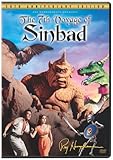
The 7th Voyage of Sinbad

The 7th Voyage of Sinbad (1958). 88 minutes, Columbia Pictures. Directed by Nathan Juran. Special Effects by Ray Harryhausen.

From the land beyond Beyond,
From the world past hope and fear,
I bid you, Genie: Now appear!

The 7th Voyage of Sinbad is the ultimate Saturday afternoon matinee movie. Within five minutes, a giant horned centaur is stalking a magician and throwing rocks at a ship. Soon afterward, a servant is transformed into a half-snake, half-human dancing demon. A princess is shrunk down to the size of a tiny doll. More giant horned cyclops, a two-headed giant baby bird and its angry parent, a fire-breathing horned dragon, a giant crossbow on wheels, a genie in a lamp and a sword-fighting skeleton! I don’t know about the kids today, but when I was ten years old, it just didn’t get any better than this.

Later, I saw Jason and the Argonauts, and realized there was a name in common: Ray Harryhausen. When I was 12, I bought my first issue of Famous Monsters of Filmland – which contained a whole feature on this Ray Harryhausen fellow. I learned about stop-motion animation, and how another favorite film of mine, King Kong, was done in the same style – and was in fact the inspiration for Harryhausen’s devotion to the field of film special effects.

As a teenager, I became fascinated with everything Ray Harryhausen had done. Just to prove this, during the summer of 1977, the movie I was anticipating most was not Star Wars, which was made by a bunch of people I’d never heard of, but Sinbad and the Eye of the Tiger, the latest Harryhausen epic. As it turned out, Star Wars and the rise of the modern science fiction / special effects film spelled the end for old effects masters like Harryhausen, and he would make only one more film (1981’s Clash of the Titans) before retiring.

Back before there was home video (yes, kids, home video didn’t arrive for the masses until the 1980s) , there was Super 8 film. You used to be able to buy 6 to 8 minute clips of movies on Super 8 sound film, to watch at home. The 7th Voyage of Sinbad was unique in that there were four 200-foot clips available. I had all 4, and had spliced them together into the proper order, so I had about a half-hour edited version of this movie. From the age of 15 until I finally got the film on laser disc in the late 80’s, I must’ve watched that Super 8 compilation dozens of times. As did all of my friends.

Now, 50 years after the film first appeared in theaters, 36 years after I first saw it at the local Saturday Matinee Movie, and long after that old Super 8 film copy crumbled to dust, The 7th Voyage of Sinbad is available in a gorgeous new Blu-Ray edition. I popped it in a few nights ago and watched it straight through, without even pausing once. I have never seen it look this good. The colors practically leap off the screen, and even the fine grain from the film is visible, just like in a real theater. I felt transformed back to my childhood, back to a time when animated rubber monsters – although never actually scary – thrilled me down to my toes, and made me wonder over and over: How did they do that?

To be fair, of course, the dialogue in this film is weak at best, and apart from the three leads and the boy genie, the acting is the worst sort of wooden. And especially in this new high-definition edition, it’s quite clear when a matte shot appears, since the film quality radically changes seconds before the monster or whatever appears on screen. And the plot is pretty much just an excuse for the characters to wander around encountering various monsters.

But you know what? This still works. It really does. I still love the cyclops and the dragon. I still love the hokey dialogue (“He has the eyes of an owl! I see nothing!”) And the skeleton sword fight? Oh my stars and garters. I know the multiple skeletons in Jason and the Argonauts usually get more attention, but I’ve always preferred The 7th Voyage of Sinbad‘s solitary, evil skeleton.

And the music! My god, the music! This may be Bernard Hermann‘s best score, better than Psycho, better than North by Northwest. The opening credit music, which evokes Rimsky-Korsakov‘s Scheherazade, is instantly recognizable. The evocative tone continues throughout the entire film. And finally – the music underlying the skeleton sword fight is, without a doubt, one of the best pieces of film music ever. Ever.

If you have a Blu-Ray player, pick up The 7th Voyage of Sinbad. Watch it in the dark, if you can. Make a bowl of popcorn and eat it during the movie. I guarantee you: Even if you’ve never seen it, I bet it will make you feel like a kid again.

Categories
Books

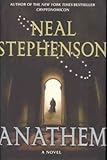
Anathem

Anathem (2008) by Neal Stephenson. William Morrow, 960 pages.

Anathem is a Big Novel. By that I mean both in physical length – at 960 pages, this is a good long read – and in subject matter. Anathem is a type of book I haven’t read in quite a while. Reading Anathem was like reading Dune for the first time, or Lord of the Rings, or The Foundation Trilogy.

It’s an epic, yes – but there are lots of epics out there. Anathem is one of those rare books that builds an entire world all its own, from the ground up, complete with its own detailed history, unique language, culture, and attitude. Anathem surrounds you and immerses you, so much so that I am still thinking in terms from the book, days after finishing it.

I knew Anathem was going to be very detailed right from the beginning. Before the novel even starts, there’s a 5 page “Note to the Reader” that introduces the language spoken on the planet Arbe, and gives a historical timeline of the previous 7,000 years of the planet’s history. The author advises the reader that while all relevant parts of the planet’s history will be covered in their own due time during the plot of the novel, the reader may find it “convenient” to refer back to the timeline “on occasion”. For me, that turned out to be about once every 10 pages or so.

In addition, the novel has its own language, much like may other fantasy and science fiction epics have done. The book has a glossary in the back, and in the first several chapters, dictionary definitions of terms unique to Arbe are sprinkled throughout the text. Some of the words are almost English, with just a slight difference in spelling or pronunciation. Some examples: On Earth we have “convents” of the religiious; on Arbe they have “concents” of mathematic and scientific scholars. On Earth “secular” means non-religious; on Arbe “saecular” means non-scientific – the world outside of the concent walls.

Anathem is a world-spanning novel set on the very Earth-like planet of Arbe. On Arbe, scientific and learned people live in walled, secluded communities, in the same way that some religious orders live on Earth. These communities are called “concents”, and the individual orders within them are called “maths”. Individual members of these walled academies are called “avout”. Structurally, it’s sort of similar to an old British university of colleges, like Oxford. Culturally, however, it’s much more like a religion on Earth. The concents follow strict rules of study, dress, and conduct, and interact with the outside world only on rare and highly regulated occasions.

On Arbe, civilizations rise and fall, but the maths have stayed constant. Oh, the concents have been sacked a few times during their 4,000 year existence, but they always reform after each pillage, stronger than they ever were. Within the walls of the concents, history is maintained. All scientific theories, research, and knowledge that has ever been developed by anyone, anywhere in the world are recorded, studied, and researched behind their walls. The avout are the keepers of all of Arbe’s collective knowledge.

Anathem opens in the year 3689 A.R. (“After Reconstruction”), in the Concent of Saunt Edhar. The novel is a first-person narrative, written by a 19-year-old “fraa” (a male avout) named Erasmus, or Ras, as he is called by his friends. The story begins as Ras describes the ceremonies the day before the gates of his concent are to be opened for the first time in ten years to the outside world, a 10-day festival called “Apert”. As we follow Ras throughout his day, we learn how the world of Arbe is very similar to – and yet very different from – our own Earth. Is Arbe a lost colony of Earth? Is this a parallel universe of some sort? Or is Anathem just an alternate history, an “Earth that might have been” kind of story? I won’t tell.

Mysteries unfold. Fraa Orolo, Ras’s mentor and a renowned member of the concent, is expelled for violating one of the basic rules of the order: using technology from outside the concent walls (a portable computer and video recorder, as it turns out). Political struggles between the members of the avout and the outside, saecular world. Mysterious revelations that some members of the avout have been tinkering with advanced genetic engineering, something that has been forbidden for over 3,500 years.

And then a massive spaceship settles into orbit around Arbe, a ship constructed with designs that seem familiar, but using technology that is not. And yet the ship is engraved with geometric symbols that are strangely familiar to the members of the avout, who have maintained their planet’s history throughout the rise and fall of many civilizations. Who are the extraterrestrial visitors? What do they want? And why do they seem to only want to communicate with members of the avout, ignoring the political entities of the saecular world?

We discover all of this through Ras, as he writes his first-person description of all that happens. I’m not going to give away any more of the plot, but I will tease and say that by the end, Arbe will never the same – and you will fully understand how the worlds of Earth and Arbe are intimately connected.

Anathem is a terrific read, engrossing and exciting – and enlightening as well. Although it is an epic science fiction novel, it’s also a keen study of the cloistered world of academia. On Arbe, academics are literally shut away from the rest of the world, and much of their conversations are in the form of “dialogs”, classic structures of education between a fid (student) and a mentor. These are clearly modeled after our own Greek dialogs of Plato, Socrates, etc., and they have formal rules of engagement. There are sections of the book where the characters may engage in this formal sort of dialog for 10 or 20 pages at a stretch, and yet I never found it boring.

Anathem is a different sort of novel for Neal Stephenson. His previous works have been two classics of the cyberpunk genre (Snow Crash and The Diamond Age), and a set of linked historical novels (Cryptonomicon, Quicksilver, The Confusion, and The System of the World). This new work is his first try at a “whole world” epic, and it is a fantastic, marvelous success.

Although Anathem ends cleanly and completely (no loose ends, no “still to come” nonsense), most of the major characters are still alive at the end, and the book cover less than a single year. Could Stephenson be planning a sequel, or at least some sort of related novel? His previous four novels were all linked together in a common history, so I certainly wouldn’t rule it out.

If you like epics – if you like massive works of realistic science fiction with great characters – if you like to immerse yourself into a world other than your own – then go and buy Anathem, and settle down for a long read. Anathem is an investment that pays off with joyful dividends. You will be in for a great and rare pleasure.

Categories
Technology

The Decline of eBay

If you know me, or if you’ve been reading this blog for any length of time, you know I am a Gadget Freak. I have the latest version of almost everything Apple makes, the latest Garmin Nuvi, the latest camera from Nikon, camcorder from Canon, and so on and so on. And while I make a decent salary, I certainly can’t afford to just pile up new electronics on top of old month after month.

How do I keep doing it? One word: eBay .

The same week I get my new Thingamabob, I put the old Thingamabob up for sale on eBay. I’m careful to keep all of the original packing materials, the original box, and even the original receipt. Most of the time every item I sell is less than a year old, sometimes only six months old, and I take good care of my things (thanks for teaching me that, Mom and Dad!) so I’m usually able to get a pretty good price.

I consider the difference between what I get on eBay for the old Thingamabob and the price I paid for the new Thingamabob to be my “early adopter fee”. And by turning around my gadgets like this, I can always have the newest thing without going broke. It’s worth noting that for electronic gadgets, you have to sell them quick if you want to have any hope of recovering some money. A 2 year old computer is worth less than half of a 1 year old computer, and a 3 year old computer is almost worthless.

For example, I just recently bought a new MacBook Pro. So, last week I sold my old MacBook Pro on eBay, hoping to get at least half of what I paid for my new one. Didn’t work out that way; although I asked $1699 for a fully-loaded “Late 2007” MacBook Pro with 4GB of RAM, I only got a little over $1100.

However… this was the first time I’ve used eBay since they made some dramatic changes a few months ago. And sadly, I discovered that the eBay I have been using and loving for more than 10 years now… is no longer a welcoming place for Sellers like myself.

To understand the changes, let me provide my own little summary of why eBay was so great. It was the perfect form of social network. Buyers gave feedback on the Sellers, and the Seller gave feedback on the Buyers. This ensured a proper two-way street: Since most Sellers on eBay were small-time merchants or individuals selling their own possessions, they needed to be very sure that the stranger they were selling to would actually pay them. Since Buyers were buying from individuals, they needed to feel that the person they were buying from was trustworthy.

Now, I am both a Buyer and a Seller on eBay. Therefore, I have feedback both as a Seller, and as a Buyer. As of this writing, I have a feedback score of 52, 100% positive. This means that of 52 people who left feedback for me as either the Buyer or Seller in a transaction, 100% of them gave me a positive review. In addition, each person leaves up to 80 words of written comment attached to feedback.

This system helped to ensure civility as well:

  • As a Buyer, I’m going to be sure to send in my payment promptly; communicate clearly with the Seller as necessary; and give good and proper feedback if the item I receive is as it was described by the Seller. My incentive to do this is knowing that if I don’t, the Seller could give me bad feedback, which could in turn influence how someone in the future might view one of my own auctions.
  • As a Seller, I’m going to take extra care to clean up my items for sale, photograph them clearly, package them well, and ship them off immediately after payment has cleared. My incentive to do this is knowing that if I don’t, the Buyer could give me bad feedback, which could in turn influence how my future auctions may be viewed. Or, the bad feedback might prevent me from being accepted as a Buyer in some future auction.

So there we have it. A simple online marketplace where Buyers and Sellers come together, and each can have equal influence upon the other. A marketplace where the field is level for all. It’s worked for well over a decade, and has made eBay into one of the giants of the internet.

Then they screwed it all up.

A few months ago, they go rid of Seller feedback. Now, the feedback is only one way. A Buyer can give feedback on a Seller, just like always… but a Seller cannot give any (negative) feedback on a Buyer. As a Seller, I can praise – but I cannot criticize. If I encounter a deadbeat who stiffs me on payment, there is no way to warn anyone else. If a Buyer gives me negative feedback for no reason, I have no recourse. The field is no longer level.

eBay claims this is to help “the customer”. But eBay, like many businesses these days, seems to have forgotten who their customer actually is.

eBay’s customer is the Seller. No Buyer pays eBay so much as a single penny. Only Sellers pay. And they pay plenty. As an example, let’s look at my latest MacBook Pro auction. The final sale price was $1151. My total fees from eBay (including PayPal processing) were $77.46. That’s 7% of the total, leaving me with only $1073.54.

Without Sellers, eBay would not exist. The Sellers pay eBay’s bills; the Buyers, in turn, are customers of the Seller.

I have some understanding of how businesses can mistake who their customer actually is. For example, I worked for a software company whose product was sold exclusively by resellers. It was pointed out to me, over and over again, that our customer, therefore – was the reseller. Not the end user of the software. The end user of the software was a customer of the reseller. Therefore, all our direction for product design, features, etc. should be taken from the reseller – and not from the end user of the software itself. It took me a while to fully embrace this principle, but my boss made it clear: “The person who pays your bills is your customer. Always remember that.”

eBay has forgotten who pays their bills. No Seller ever asked to have the feedback mechanism taken away. They decided to do this on their own.

And sure enough, my auctions, for the first time, did not go smoothly. I received no communication of any kind from the Buyers. I had to wait over a week for a response, and then days further for payment. And when the items were delivered to the customers, I got no feedback at all. And I understand it, sort of. There is no longer any incentive for a Buyer to do anything.

And then, if this were not bad enough, PayPal (eBay’s payment processing division), now places a 21-day hold on all funds. Now what kind of retail business ships to their customers and waits 21 days to collect the money? Do you think Amazon would ship me books and DVDs and then not charge my credit card for 21 days? I don’t think so.

In typical Orwellian Corporate-Speak, PayPal claims this 21-day hold is a “security measure” to protect “both Buyers and Sellers”, instead of the obvious short-term interest rate scam that it really is. They list nearly a dozen “possible” reasons they “may” issue this hold. Tellingly, they do not inform the Seller of this until after the auction has completed. Therefore, as a potential Seller, there is no way for me to know ahead of time that this auction will be subject to a 21 day fund hold, thus allowing me to decide whether or not I want to list the item for auction.

So, I have to pay to ship the items out of my pocket, and then hope that the Buyer does not cancel the transaction, give me bad feedback, or otherwise screw me over completely. And if they do, I can’t do anything about it. I have to wait 21 days to find out if I really, truly even received payment.

At the very least, I’d expect to be paid 21 days of interest on the money they are holding. But of course not… that interest is money that eBay is collecting, in addition to all of the other fees they’ve already charged me.

It’s a shame to see such a good concept, such a good business, destroyed right before my eyes. And a quick perusal of eBay reveals, in fact, that very few actual auctions are going on any more. Most of the items for sale are offered by large businesses themselves, who can afford to have funds withheld or to have an occasional non-payment.

And there appears to be no true competitor available. Yahoo runs auctions – but they are just a front for the exact same PayPal-based system. For a while, Amazon ran auctions, but dropped them in favor of a much more simple merchant agreement. And, Amazon does not allow individuals to sell any kind of electronic items – only licensed, approved merchants who pay a stiff monthly fee can do that. So if you have one computer to sell… you can’t do it on Amazon.

So, from now on, looks like I’ll have to fall back and use Craig’s List. I’ve never really liked Craig’s List because I prefer not to have to deal with people over the phone and/or in person. I liked eBay’s completely online model much better. But I no longer have a choice.

Is this the end of my Gadget Freak days? If I can’t reliably and regularly sell my previous-version gadgets, I can’t keep on buying new ones.

Maybe eBay will return to sanity. But it’s been my experience that once a company forgets who their customers are – once they no longer cater to the people who are paying their bills – that’s a sure sign of the beginning of a long, slow slide into oblivion.