Categories
Audio Visual

Clearing the Netfix Queue

Netflix is great. I love being able to rent movies for as long as I want, and being able to pick from such a diverse selection. But occasionally (and I know I’m not the only one who does this) I just don’t get around to watching that rental. For a long time. You know what I mean. The movie sounds interesting, you put it in your queue, but when it arrives, it’s not something you want to watch right this minute…

In my case, I toss the little red packet onto a director’s chair – the designated area for “to watch” items – sure that I will watch it the next day. Most of the time I do. But sometimes… sometimes they sit there for a while. It’s not that I don’t want to watch the movie… I just don’t want to watch it right this minute, you know…

A month goes by. Movies that I am much more interested in watching pile up in the queue. I should just send the film back, right? I can always rent it again some other time. But I don’t. Another month goes by. Now, once again, I’ve come to another movie that I want to watch, just (you guessed it) not right now – and now I have two movies that I’m not watching right away, taking up two spots of my precious Netflix queue.

I think that it is situations like this that keep Netflix in business, actually. All this time I’m paying my $14.95 a month, as two disks sit unwatched. Oh, and the disks in questions are Blu-Ray, so it’s an extra dollar for them.

Then I start to feel guilty. What if there is someone out there who is desparate to see the movie that I have? What if it is their favorite movie of all time, but they can’t see it. They’ve been waiting for weeks. Hoping, praying that the moron who’s had that film rented for months now will finally return it. Yes, I know that’s not the way Netflix actually works. But guilt is guilt.

So this weekend, I decided: Enough is enough. I’m going to watch both of these movies this weekend, dammit, and then send them back. One on Friday night, one on Saturday night. And finally, I did just that.
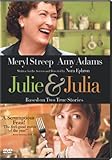
Julie & Julia (2009). 123 minutes, Columbia Pictures. Directed by Nora Ephron.

This is a delightful, funny, heartwarming, and charming movie. I resisted it for quite a while. Saying to me, “Hey, it’s Meryl Streep and Amy Adams in a Nora Ephron fim about female empowerment, romance, and fulfillment in two different centuries!” is not a way to get me into a theater. “Hey, it’s about a blogger!” is also not a way to get me into a theater. After all, I’m a blogger myself, and I have to think that watching a movie about me working on my blog would be only slightly less boring that watching an experimental film about bread rising.

But this film is about Julia Child. And I love Julia Child. Or at least, I love her cookbook. I’ve had Mastering the Art of French Cooking as one of my basic cooking books for years. It’s the go-to source for all of the basic techniques of food creation. In my opinion, you can just remove the word “French” from the title of the book. Almost everything in the book is the basics of how to cook good food. Julia teachs how to hold a knife. How to slice every kind of vegetable. How to prepare every type of meat. What the various types of basic sauces are, and how to make them.

I’ve absorbed so much of what Julia teaches in the book, that when I describe a recipe that I’ve created or tweaked on my own, I will frame it in terms of techniques from the book. “Well, first, you start with a basic Julia Child White Sauce, the cream version that’s in the Sauces chapter, and then…”

Julie and Julia is a story of two different people in two different centuries, linked together across time by a love of cooking and writing. The “Julie” of the story is Julie Powell (Amy Adams), a modern-day woman just turning thirty. She lives in a small Queens (New York City) apartment with her husband Eric (Chris Messina), and works at a grinding government cubicle job, answering phone calls from angry members of the public. She’s foundering in life; her dreams of being a writer are slowly fading away, and she feels increasingly that only the strength of her loving husband keeps her going. She needs a change. She needs a project. And so, in late 2002, she decides that her project will consist of cooking every single recipe in Julia Child’s seminal cookbook, Mastering the Art of French Cooking, over the period of exactly one year. And she will write a blog about the entire process, and how it changes her life.

The “Julia” in the story is, of course, Julia Child. The film begins in 1949 as Julia and her diplomat husband Paul (Stanley Tucci) arrive in France, to begin a four-year assignment there. While Paul is busy at his new job, Julia tries desperately to find something to keep her busy. She begins taking French lessons. She tries her hand at learning how to make hats. She learns how to get around Paris, and enjoys shopping and the markets. Every night, she and Paul eat a fabulous French dinner at a different restaurant. One night, Paul tells her to do whatever it is that she likes most. “I like to eat!” she says. And right then and there, she decides to enter culinary school and become a chef.

Although Julie and Julia never meet, their stories parallel each other. The film works by cutting back and forth every ten minutes or so between the two characters and the two different time periods. Julia Child becomes a chef, and then, with the help of two other female French chefs, decides to write the ultimate English language book of how to cook in the French style. We watch her struggles and triumphs over the decade it takes to bring the book to life and finally see it published to glowing reviews. We pass through a variety of different diplomatic posts for the Childs, until the McCarthy era puts an end to their style of open and casual diplomacy.

Back in 2002, we watch Julie Powell as she works her way through Julia’s book, now in its 47th printing. Her daily blog postings become more and more famous. The New York Times writes an article about her efforts. And Judith Jones – the still-living publisher who approved Julia Child’s book nearly fifty years ago – schedules a visit to see how she’s doing.

The whole movie is done in a bright, cheery, almost whimsical style that suits the story matter perfectly. Meryl Streep, always wonderful, is awesome as Julia Child. Although the modern parts of the movie are fine and dandy for what they are, it’s the period pieces set in France of the 1950’s that are the heart of this film. I also have to give a special shout-out to Jane Lynch (currently famous as evil cheerleader coach Sue Sylvester on Glee), who plays Julia’s sister Dorothy to perfection.

It’s a happy movie, and I won’t keep you in suspense: It has a happy ending. Julie Powell ends up turning her blog into a book, which becomes this movie. And Julia Child does get her french cooking book published, which becomes a best-seller, leading to her becoming a TV star on the long-running cooking show The French Chef.

9 (2009). 79 minutes, Focus Features. Directed by Shane Acker.

My second feature of the weekend was a much, much different kind of film. 9 is a computer-animated fable that takes place after an apocalypse has apparently destroyed every living plant and animal on the face of the Earth, including all of humanity. The only “living” things are nine rag doll things, created by a dying scientist in an attempt to ensure that life will continue. Each doll has a hand-written number on its back, in the order they were created. To the last one, 9, he has left instructions and a special device that, he hopes, can restore life to the planet. But he dies before he can give 9 the instructions on what he’s supposed to do next…

And so 9 comes to life in a dead world, his first sight the dead scientist’s body lying on the floor in front of him. Soon, he meets up with the other eight rag doll things that were brought to live by the scientist as well. Who are being chased and captured by some bizarre robot that has the skull of a dog for a head. And there’s this little green disk thing that glows with these odd symbols and –

You know, I’ll just stop right there with the plot summary, because it doesn’t matter. 9 is quite enjoyable when taken at the level of “Wow! Does this look cool!!” But taken on the level of narrative or characters or plot – no way, man. Just forget it. 9 is probably the best-looking film I’ve seen in a long time that makes absolutely no sense whatsoever. I’m actually serious when I say it’s fun to watch – I certainly watched the whole movie, and didn’t feel bored or cheated at all. But it really is just sort of a moving art piece.

The set design and artwork on 9 is stunning. The look of the devastated alternative steampunk future world is beautifully desolate. The odd creations concocted by the Brain Machine to go chase and… uh… kill, I guess… the rag dolls are a joy to watch. But when the movie was over, I thought “Huh. That would’ve made a really great short film”.

And lo and behold, a look at the extras on the disk reveal that, in fact, 9 was a short animated film originally, and was later expanded into a full-length feature. The original short film is included here as well. I watched the short. It had everything that was cool in the feature, without the meaningless plot and expensive voiceover actors. I can see immediately how it must’ve impressed the hell out of anyone who saw it.

But. For the life of me, I can’t understand why anyone wanted to turn such an excellent little short work into a puzzling feature length film. I started putting together possible scenarios in my head: Did the studio want the talents of creator Shane Acker, but the only way to get him was to agree to make a feature-length version of his short? Did he have an even stranger idea that they turned down in lieu of this one? Did they look at District 9 and say “Hey! We should take some other science fiction short film and turn it into a feature too!” Did they approve the entire concept while stoned? Inquiring minds want to know!

Enough about that. Summing up my weekend double feature: Julie & Julia is a near-perfect little film with both comedic and historical elements that should appeal to just about everyone. 9 is a odd but artistic experimental film that will probably appeal to die-hard science fiction fans and/or animation buffs only.

And now, my Netflix queue is clear and I’m ready for further punishment. If only I could remember what’s coming in the mail next…

Categories
Audio Visual

American Idol 2010: Top Twelve… Eleven… Ten… whatever.

My last few posts have been way too serious. Time for some candy-flavored pop culture treacle!

At its best, American Idol is the pinnacle of that classic American standby, the talent show. Most of us have seen talent shows in some form or another since our first days in school. Remember? Little Cindy and her friends from ballet class, Mitchell with his martial arts, that smelly kid who does the yodeling… Later in high school, we got to see various types of singing divas, the stoners who had their own garage band, and the speech team doing various interpretations of poetry (guilty!).

Those of us whose first televisions were of the black-and-white variety also learned about the quintessential talent show from episodes of I Love Lucy, the Little Rascals shorts, and from the endless times that Mickey Rooney and Judy Garland exclaimed “Let’s put on a show!”. Later, there were various sort-of talent shows, like The Gong Show and Star Search. But those didn’t quite hit the mark… they were too much of a gimmick, and they aired too often.

Then we got American Idol. It’s American! It’s bigger and brasher and louder and far more ostentatious than its British cousin! It’s a talent show for the entire frickin’ country, from ages 16 to 29, whoever can sing the best and win the hearts (and votes) of that fickle bitch, the American Public.

During the first few seasons – despite its high ratings – American Idol was still kind of a low-fi affair. The stage was small, the songs were not exactly the best of the record label’s catalog, and so on. But it was fun and sassy and made your root for your favorites and boo for the ones you wanted to go home.

But then, AmIdol went to HD, the computer graphics got flashier, the stage expanded. The judges (and Fox, the network that airs American Idol) started to think they were the ones we were all tuning in to watch. That got so bad that last season, one of the best contestants in years (Adam Lambert!) had his final number shoved into overtime because the judges just couldn’t stop talking to each other about whatever inane topic they were stuck on that had nothing to do with the show.

The press thus made a Big Deal out of the fact that this year, for its ninth season, one of the original judges was leaving for the first time. Paula won’t be there anymore! I could not have cared less. Yes, I enjoy Simon’s snark as much as the next person, but the other two or three judges could rotate every week for the input they bring. They make no difference at all.

Ellen DeGeneres? Fine, whatever. She’s funny. I like her. However, if I really want to see her, I can catch her on TV five times a week. I don’t watch AmIdol for the judges. Not even Simon, entertaining as he can be. No, I watch it for the contestants. I want to see who’s a surprisingly good singer, and who’s not. Who are the producers pimping this year? Who is the underdog that wows us all and makes it right to the finale?

That’s why I watch the show. Last year, with Adam Lambert, Kris Allen, and Allison Iraheta, we had some of the best contestants in years. For most of last season, I wish the judges had been limited to 90 seconds total, and just let the contestants perform for the entire rest of the show.

But this season… Oh. My. God. Oh, it is so sad.

It’s March, which means it’s time for another “Top Twelve” (well, Top Ten as I finally finish up this post). This, to me, is when the show gets actually interesting. From now until the season ends in May, we get to see one person a week get sent home by lack of votes. We get to watch various celebrity mentors coach these wannabe stars. We get to watch in shock and awe as the various “theme weeks” attempt to challenge the vocal prowess of these future pop radio champions. And, when we get to the final three weeks, we’ll get to see someone who absolutely deserves to win get voted off in fourth or fifth place instead (Jennifer Hudson, Chris Daughtry, Allison Iraheta…)

As I’ve said before, I cannot stand – and I no longer watch – the audition episodes of Idol. It was funny on the very first season, way back in 2001. It was still a bit funny in the second season, when we had William Hung become a surprise awful star. By Season 3 the joke had worn itself out, and now, in American Idol’s ninth year on the air, it has become tiresome and boring. I no longer watch the show until it gets to Hollywood Week, about the fourth week in. I just cannot stomach watching the parade of awful contestants, with maybe one or two good singers thrown in every hour. And those dreadful behind the scenes “packages” designed to arose either pity or disdain before we’ve even heard a single note.

It’s not just that I don’t care, it’s that I actively despise the whole phony audition shows in their entirety. I mean… why in the world would I watch a talent show to see people who aren’t good enough to make the cut? It is completely pointless. Just show me the ones who are good enough to get on! Contrast this to the far superior summer show So You Think You Can Dance, where the formula is reversed: We see one or two token bad performances, but all the rest are good auditions for people who will actually at least get the judge’s nod for going to the next level. None of that on AmIdol! Instead they waste 15 minutes of our lives on some pathetic sad sack with delusions of grandeur who can’t even sing as well as I can (and believe me, I can’t sing).

But back to now. In the last of the semi-final episodes. American Idol cut its remaining 16 contestants down to 12. And these twelve – six boys, six girls (we can’t say “men and women” considering the ages of some of these kids) – moved on to the Big Stage. Getting into the 12 is a big deal, and it’s only a two contestants away from the Top Ten, who get paid to go on tour during the coming summer.

I had a few favorites. Note I said “had”. So you already know what I think about this year’s top 12. There were three contestants that I thought were entertaining, talented, and worthy of the Idol crown. And two of them – Alex Lambert (no relation to Adam from last season) and Lilly Scott – got the ax. That leaves only Crystal Bowersox as the sole contestants, out of twelve, who are at all interesting.

(By the way, I encourage all of you to go purchase the Alex Lambert version of “Trouble” from the iTunes store, before they inevitably pull it from distribution. It’s an excellent, excellent track, one that highlights why I enjoyed his singing so much – and why I fully expected him to make it to at least the Top Five. Also check out Lilly Scott’s “I Fall to Pieces”, a fun and snappy rendition of the Patsy Cline classic.)

In the two weeks since then, the show has just gotten worse and worse. Yes, Aaron Kelly can carry a tune, and it’s kind of fun seeing that tiny sixteen-year-old kid stand next to the giant football player dude. Then there are bunch of interchangeable female singers whose names and faces I can’t keep straight. They all sound alike, and they all bore me to tears.

I don’t care who wins. I’m not really even watching the show anymore. And that is the first time I’ve ever felt that way, since the show first went on the air in 2001. We’re weeks and weeks away from the end, and the show is about as exciting as watching golf without Tiger Woods. There is not even a fun Bad Contestant, like Sanjaya or Scott Savol. Just a series of cardboard cutouts from Central Casting who can carry a basic tune in a nice, High School Musical / Glee kind of way.

Yes, Crystal is still there, but I don’t hold any hope of her actually winning. Even if she does, watching a two-hour show just to get to hear her sing for 90 seconds is not worth it.

I don’t know what happened to American Idol. Did they get so caught up in the gimmicky parts of the show that they forgot to pick really good singers? Why did they get rid of the Wild Cards (bringing back good contestants who got voted off too early)?

No one is asking my opinion, and no one is going to take it… but American Idol needs a refresh. Badly. We need American Idol: The Next Generation.

The show needs an entirely new panel of judges. Maybe entirely new producers. Keep Ryan Seacrest for continuity, he’s this century’s Dick Clark. Change the way the voting works, so silly tween girls can’t text thousands of times for the guy with the blue eyes and bulging chest muscles who can barely sing. How about one vote per phone number, for example? Or one vote for a contestant, and another against – negative voting. Ditch the massive, tens of thousands of people phony “auditions” and just show the real couple hundred who make it to the judges. How about a rotating panel of judges, like the way So You Think You Can Dance or Top Chef work?

It needs something. It’s sad when a show that can basically run forever – it’s a talent show, for crying out loud! – seems to have run out of steam and become too boring to watch in just nine seasons.

I want to watch American Idol. I love American Idol. But this thing that’s currently on the air that’s calling itself American Idol, Season Nine?

Not so much.

Categories
Audio Visual

Avatar

Avatar (2009). 162 minutes, Twentieth Century Fox. Written and Directed by James Cameron.

When I first went to college in 1980, I started out in Tech. I was going to major in Computer Science. But after a year learning hard-core assembly language programming, building functioning computer processor gates, and studying electrical engineering technique, I realized that what I really wanted to do was direct.

I wanted to direct movies, that is. And so at the beginning of my sophomore year, I switched to the School of Speech, and switched my major to Radio-TV-Film. I did this because although I am fascinated by computers and technology, I was fascinated because of the creative possibilities – not by the computer science in and of itself. And I wanted to learn the creative side a lot more than I wanted to learn the technology side. Luckily for me, that combination of skills sets turned out to be very savvy in the long run.

I switched to being a Film major because of one, overarching reason: I. Love. Movies.

And when I say “movies”, I mean “Hollywood narrative storytelling kind of movies”. I grew to appreciate and even seek out all kinds of film as my education expanded my viewpoint, but I never have lost my undying love for a pure, unabashed good ‘ol rip-roaring, entertaining Movie.

I like a good story with fleshed-out characters, in a film that is well-acted and has great visuals. And lately, that’s been getting harder and harder to find, especially if you also like science fiction / fantasy type films. It seems that every film in that genre (with a few notable exceptions like District 9) are just video games or toy advertisements rendered for the big screen.

Thank god for James Cameron.

Yesterday morning, I sat in a nearly-sold-out theater wearing a pair of surprisingly comfortable 3D glasses, and was transported away into another world. I got a feeling of rising joy as the story unfolded. It wasn’t a very original story, but it was told very well. And everything on screen was beautiful. And the acting was excellent.

For two hours and forty minutes, I wasn’t on Earth at all. I was gripping my armrests, muttering under my breath for the good guys to win, the bad guys to fail, and drinking it all in. I’m pretty sure I had a smile on my face the entire time, a smile of wonderment and pleasure.

I love a good movie. And Avatar is a very, very good movie.

I’m not going to say much about the way the movie was made, or how long it took, or how much it supposedly cost, or any of that stuff. If you’re interested, there are a bazillion articles about that aspect of the movie all over the net, including a ton of “making of” videos already out there. I’m just going to talk about the movie itself and the experience of watching it.

Avatar is the first real 3D movie I’ve seen in a theater (well, I saw the Michael Jackson Captain Eo short film at Disneyland several times, but I did say “first real 3D movie”). So right away, the experience of putting on the 3D glasses was different. And the film began, a point of view shot of flying over a canopy of trees…

It’s the year 2154. Jake Sully (Sam Worthington) is an ex-marine, now a paraplegic confined to a wheelchair due to injuries suffered while in the service. As he explains in a voiceover while he’s being awakened from a 6-year cryogenic sleep aboard a spaceship, broken spines can certainly be repaired – but it’s very expensive, and his VA benefits don’t cover that level of treatment.

So Jake took advantage of a very unique opportunity. See, Jake has – or had – an identical twin brother. And his twin brother was a scientist, working on a project concerning the planet Pandora. Pandora is a planet full of life, but unfortunately the atmosphere is poisonous to humans. So the scientists came up with the concept of “avatars” – hybrid human/alien bodies that humans link into and control.

Each of these avatar bodies is a unique DNA construct, and has to be custom-grown for each individual whose brain the body will be linked to. Jake’s brother was one of those individuals – until he died in an accident. So Jake is recruited to take his brother’s place, seeing as how they already have an avatar that matches his DNA, all ready to go.

Linking into the avatar allows Jake to inhabit a fully functioning body again. A body that is, in fact, stronger and tougher than his pre-injury body ever was. A body that looks exactly like one of the intelligent inhabitants of Pandora, the Na’Vi.

The scene where Jake first links up with his avatar is wonderful. Jake crawls into a coffin-like contraption, glowing optical fibers light up, and in the next second he wakes up in his new body. He’s 10 feet tall, blue, with feline eyes and ears that swivel around like a cat’s. He’s told to take it easy, but Jake can’t wait, and runs outside in his new body, just to enjoy the feeling of standing, running, rubbing his toes into the dirt.

The movie proper really begins at this point. Jake’s assignment, since he has no scientific training, is to act as an armed bodyguard for scientists (who are all also in avatar form) working on the planet. They all work for some company – a company who is trying to get the natives to move away from their current home – which, inconveniently for the company sits right on top of a huge deposit of a very rare mineral that the company wants to mine at almost any cost.

The scientists haven’t been having much diplomatic success, however. The Na’Vi immediately recognize the avatars as being “meat puppets”, or “dreamwalkers”. They are not fooled, and for the most part shun the avatars as being poor duplicates of “real people”. So, the company has paid a huge sum to host a entire Marine brigade, whose job it will be to forceably remove the Na’Vi.

His first day on the job, Jake is separated from the rest (in a fantastic sequenece involving some very nasty alien predatory animals), and has to spend the night out in the forest. During the night, he’s just about to meet his end at the hands of a large pack of dog-like creatures, when his life is saved by Neytiri (Zoe Saldana), one of the natives.

To Neytiri, Jake is a baby, a moron who doesn’t even know how to live in the jungle. Nevertheless, she agrees to help him learn the ways of life here in the Pandoran jungle, and introduces him to her village, including her mother Moat (CCH Pounder) and father Eytukan (Wes Studi). As soon as he falls asleep that evening, he wakes back up in his real body. His teammates, especially Dr. Grace Augustine (Sigourney Weaver) and Norm Spellman (Joel David Moore) are thrilled to see him safe and sound.

Later that day, the scarred and very-obviously-evil Colonel Miles Quaritch (Stephen Lang, chewing the scenery for all it’s worth) makes a special deal with Jake: Gain the trust of the Na’Vi, and then get them to move. He’s got three months. If he fails to get them to move, then the Marines will swoop in and destroy their home out from under them. In return, the Colonel says, he’ll make sure that the company immediately pays to have Jake’s broken spine repaired. Not surprisingly, Jake agrees.

And so every day, he spends most of his time in the avatar body. Then a few mournful hours back in his own broken body, keeping a sad video log. But, as the months go by, Jakes feels less and less like a human, and more and more like a Na’Vi…

And that’s where I’ll stop the recap. I will say that if you’ve seen Dances with Wolves, you know a lot of the rest of the story already. Of course Jake falls in love with Neytiri, and of course he switches his allegiance completely to the Na’Vi. But, so do a number of the scientists… and that makes the company and the military very, very unhappy.

Avatar is two hours and forty minutes long, and I didn’t notice the time. I never even looked at my watch. My eyes stayed glued on screen the entire time. Not since Jurassic Park have I felt so convinced by what is, after all, a very large special effect.

Pandora and the Na’Vi are, simply put, breathtaking. The actors playing the parts inhabit their alien “avatars” completely, using a performance capture technique that is light-years better than anything I’ve ever seen before. The planet itself glows with life. Everything fits together perfectly.

The storyline helps quite a bit. To be sure, it’s not the most unique storyline, and it is very much lifted from other movies you’ve seen before. Paradoxically, however, this is part of what makes the film work so well. The environment of Pandora is so unique, so vibrant, so… wonderfully alien, that having a familiar and easy-to-grasp love story at its heart ties it all together.

The middle section of the film, where JakeSully (all one word, as the Na’Vi call him) learns about how to live on Pandora, tames a flying reptile as his steed, and falls in love with Neytiri, is astonishing. This section of the movie lasts almost an hour, but it never, ever drags.

The 3D works very well. For the first five or ten minutes, I “noticed” it. And then it just faded away into the experience. My eyes didn’t hurt, I didn’t get any kind of a headache, I just fell into Pandora and into the story that James Cameron was telling.

Avatar is, simply put, a great experience. This is Filmmaking at its finest. This is why I love the medium. This is the kind of movie that everyone involved in film dreams of making, and loves watching. This is one of those quintessential movies that is going to define things for a long time to come.

Titanic was a good film (yeah, I still feel that way, so sue me), but Avatar is a great film. If it’s playing in 3D anywhere near where you are, go see it. You will not be bored, and you will not regret seeing it. I am planning on seeing it again later this week myself.

And when you come out of the theater at the end, I bet you will never say the phrase “I see you” in the same way again.

Categories
Audio Visual

Halloween Double Feature: Orphan and Frankenstein

Orphan (2009). 123 minutes, Warner Bros. Pictures. Directed by Jaume Collet-Serra.
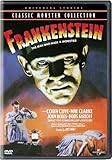
Frankenstein (1931). 70 minutes, Universal Pictures. Directed by James Whale.

Last night was Halloween. Back in the days when we lived in Los Angeles, Frank and I would have either been at a party, or at the West Hollywood Halloween Parade. Or both. We would be in some sort of adult-apropriate costume, hanging around with other adults engaged in Halloween fun.

But now I live in suburban Miami-Fort Lauderdale, within a gated McMansion community, and the closest thing to a costumed Halloween parade is the little gathering in the cul-de-sac for the neighbor kids. Not exactly my idea of fun. So, after a couple of hours handing out candy to the trick-or-treaters, we retired to the theater room to watch a horror film. We figured we had to show the day some respect.

We decided to watch Orphan, a recent horror film about a family who adopts a nine-year-old girl. And it turns out the girl is Not What She Seems. The little girl, an orphan from Russia, appears to have it in for every member of the family except for Daddy. She also takes revenge on any schoolmates who make fun of her. The film is pretty much a modern take on The Bad Seed . Except with a very silly twist near the end.

I won’t spoil the twist. Even though, honestly, the film isn’t worth keeping a secret for. This is not exactly The Sixth Sense we’re talking about here. I actually figured out the surprise twist about half an hour before it was revealed. Sadly, after The Big Twist, the movie keeps going for about another half hour, getting sillier and sillier. I love a good gore fest / slasher film as much as the next guy, but come on. Give me some credit. The end ties things up in pretty much the same way as the Friday the 13th movies always did – which means I fully expect to see “Orphan 2” showing in theaters next summer, if not sooner.

The nature of the twist is such that, once revealed, I actually felt kind of icky realizing that an actual ten-year-old girl had to go through that performance. I had hoped that perhaps the actress was really a young-looking adult just playing a child, but I looked it up, and little Isabelle Fuhrman really was ten years old when this film was made. If you ever felt that Linda Blair was being pushed a bit too far in her performance in The Exorcist… then by all means do not see this movie.

Unfortunately, Orphan didn’t scare me in the slightest. It did gross me out in a few scenes, and I certainly felt a bit of stomach-churn after one or two scenes, but that’s it. The one thing that really stood out for me was the use of music. I don’t recall any horror film that pulls the “dun-dun-DUN!” trick as much as this one does. No kidding, almost every single door opening, draw slide, footstep, turning of the corner, you name it – every single visual transition in the entire movie is punctuated by a “Mickey Mouse”: a loud, shrieking, syncopated music cue that tries to fool you into thinking that every single second of this film is shocking.

Which it definitely isn’t.

The film left a bad taste in my mouth. It wasn’t fun, and it wasn’t scary, and it wasn’t so bad that it was “funny-bad”. It was just… not good. So, even though Frank fell asleep the second the movie was over, I decided that this Halloween I needed a double feature.

I saw that the original Universal Pictures version of Frankenstein was available in high-def on iTunes. Curious to see if an HD transfer of such an old film would look better than my DVD copy, I went ahead and rented it. I guess not many people were bogging down the internet on Halloween, because the film downloaded almost immediately, and I started watching.

As it turns out, the HD version appears no different at all from the DVD version I already had. I guess the film is so old, there just isn’t any more resolution to be gained… or maybe the iTunes folks were cheating me, and this was just a “fake” HD upgrade to justify the extra $1.00 in rental. But it was still the same film, and I watched the whole thing.

Other than being in the same “Horror” genre, the two films in my double feature could not have been more different. This is the original Frankenstein – the film version that started it all. This was Boris Karloff in his breakthrough role, as the square-headed, bolt-necked lumbering monster who tosses a little girl into a lake and grasps at sunbeams in the air.

I had forgotten the little introduction at the beginning of the film – in which a man in a suit steps out from behind a curtain, and warns the audience that this film will be shocking and horrifying, and if you can’t take it, you’d better leave the theater now. To a modern audience, it seems ridiculous. There’s all of about two drops of chocolate blood in the entire movie, not a single curse word, not a single hint of sex of any kind. I’m almost positive it would get a G rating if it came out today.

It is, of course, in glorious black and white. Frankenstein was made during the heyday of black and white filmmaking, and the sets and lighting make full use of it. It has a look that is impossible to duplicate these days, a theatrical quality that is mesmerizing at the same time it is nostalgic. This is a supremely visual movie. All of the horror here is visual: the angles on the monster, the reveals of his face for the first time as he turns around in a doorway, the closeups of the anguished faces of the characters.

Being made in 1931, it’s still one of the very early talking motion pictures. Sound technology did not yet allow for mixing music and voice together on a soundtrack, and so the only music heard is during the beginning and ending credits. Not a single music underscore appears anywhere else in the movie (Check out the 1933 King Kong for the first dynamic use of a full orchestral score intermixed with dialog).

And that’s what struck me as supremely different about Orphan and Frankenstein. These two movies are separated by almost eighty years. Orphan, a not very scary horror movie, lays on a thick soundtrack of dubbed music, auditory cues, and surround sound effects that try to make you scream and jump to what is, after all, just a ten-year-old little girl in a dress walking down a hallway. Frankenstein, also not very scary to jaded modern senses, accomplishes its shocks solely in the visual medium.

When I was a kid, the Universal horror pictures were “thrill-scary”. Of course I didn’t actually worry about the Frankenstein monster or the Wolfman or the Mummy or the Creature from the Black Lagoon coming to get me in the middle of the night. Well. Not most of the time, anyway. But they were – and are – thrilling to watch. And although Frankenstein isn’t the best of them (I’d vote for Bride of Frankenstein in that spot), it still holds up pretty well.

I expect to still be around in 2031, when Frankenstein will be 100 years old. I will be willing to bet that there will be a commemorative version re-issued then, maybe looking better than my current DVD if they can find a decent print to restore. And I bet it will still be somewhat thrilling, and still visually interesting, and still give new viewers a bit of a shiver.

So, if you’re looking from some chilling fun, forget Orphan and Saw 2 through 6 or whatever they’re up to now. Go back in time and watch horror films from a time when they weren’t really scary… but they sure as hell were a lot of fun.

Categories
Audio Visual

The Wiz: What The Hell Happened To Michael Jackson?

The Wiz (1978). 134 minutes, Universal Pictures. Directed by Sidney Lumet.

The Wiz came out in the fall of 1978. I was a junior in high school at the time, and most of my spare time was spent practicing and competing on the school’s debate team. That year I also got my driver’s license, and so it was the first year I was able to drive myself to various places. And, more importantly, to drive to places with my friends. There was no movie theater in the small town of Hodgenville where I went to high school; we had to drive 10 miles away to Elizabethtown to get to the nearest theater. And I hope I don’t have to remind you that this was before the era of home video…

My debate team partner Mark Shelton didn’t have access to a car (nor did he even get his driver’s license until after graduation!), so if he wanted to see a movie, he had to persuade me or another of our friends to go see it. Such was the case with The Wiz. I had no interest in seeing it; I was not a fan of Michael Jackson, and I had never heard of Diana Ross, Nipsey Russell, or anyone else who was in the cast. I did know who Richard Pryor was, but I knew him only as a raunchy comedian, and didn’t see what good he would be in some cheesy musical.

But Mark had seen a stage production of The Wiz two years previously on a trip to New York, and he was desperate to see the movie. I was easy to convince, since even then everyone knew I loved movies and would go to see almost anything. And in truth, I did (and do) like musicals – I just wasn’t familiar with The Wiz.

So, one Friday evening in November of 1978, I drove over to Elizabethtown with a couple of friends, and we saw The Wiz. I was not very impressed with the movie as a whole. It seemed too long, but in an odd way: The good parts were too short, and the bad parts were too long. The tone of the film was somehow all wrong, although it was not easy to say exactly how. My friends and I were especially dismissive of Diana Ross as Dorothy. As I recall, we made fun of her portrayal in the car on the way home, and for at least a few days the following week.

There was one thing in the movie that I was very impressed with, however. And so were all of my friends. That was Michael Jackson, 19 years old at the time, as The Scarecrow. He was the only really outstanding thing in the movie. I was astonished at how good of an actor he was. I knew Michael Jackson only as the singer from The Jackson 5, as a guest on The Sonny and Cher Show, and as a cartoon character on Saturday mornings. I had no idea he had that in him.

We all agreed. Mark, who was very disappointed in the movie version, did say that Michael Jackson’s Scarecrow was the only thing in the entire movie that was better than the stage version. I remember thinking, well, Michael Jackson is obviously going to become a famous actor.

The following year, Jackson’s first solo album Off The Wall came out, but I was not much of a music fan at the time, and wasn’t interested. In fact, I never even heard the album until I was in college. I was, instead, waiting for an announcement of what his next movie role would be.

But there never was another movie. The Wiz ended up being Michael Jackson’s one and only film.

As the years went by, and I saw Michael Jackson in various music videos, I’d see occasional glimpses of that fine acting talent. But it was always apparent that I’d seen him at his best back in 1978. Of course, the 1970’s were the last decade that you could hear or see Michael Jackson and just enjoy him solely as a performer. After that, his strange personal life became what everyone thought of when they heard the name.

When Michael Jackson died last week, and all the cries of “Wacko Jacko” turned into “Michael Jackson the Legendary Musician”, I was reminded again of The Wiz. And so, Saturday night, I downloaded the HD version of The Wiz over iTunes and watched it on the Apple TV. I wanted to see that Michael Jackson again, and see if my impressions from 1978 would match my impressions in 2009.

The Wiz is a retelling of Frank Baum‘s The Wonderful Wizard of Oz. Although it’s a musical, it does not share anything with the famous 1939 movie version of the same book. The Wiz is an African-American (we said “black” back in the 70’s when this was made, though) twist on the same story. Instead of a farm girl in Kansas, Dorothy is a black girl in New York’s Harlem neighborhood. Instead of a twister, a blizzard takes her away to Oz. And the magical land of Oz is like a magic version of New York, rather than some fairy tale forest.

Seeing it again as an adult, with four years of film school and a lifetime of experience under my belt, it’s much clearer to me how and where The Wiz succeeds – and even more clear how it fails. The production values are good. It’s wonderful to see the World Trade Center intact, as the center of the Emerald City. The sets are marvelous, the costumes are elegant and spectacular. At least every other song is good and tuneful. In the spots where the movie is good, it’s very good.

Ah… but the rest. It’s even worse than I remembered. I now see what the wrongness of tone was that I could only feel back in 1978. There is no magic here. The sets, while beautiful, are grim. This Oz is no fairy-tale land that you would want to stay in – it’s a creep hell hole that you would see only in your nightmares. Almost every shot makes the wrong choice, like long wide shots when someone is singing. The film seems edited wrong. Some scenes go on way too long, others seem cut short. The film actually has several jump cuts, and they don’t look intentional. As a movie, it has no flow at all. Literally every single creative decision made during filming and editing appears to be the wrong one.

Diana Ross is terrible, absolutely terrible, as Dorothy. It’s not just that, at 34 years old, she is way, way too old to be playing Dorothy. The movie tries to gloss over that by explaining that she’s a 24 year old kindergarden teacher (sadly, Ross looks older than her age here, not younger). To me, the whole point of the story is that Dorothy is a child. An adult just wouldn’t accept Oz in the same way. Her Dorothy has no spunk, no fire. Honestly, the kid in the local elementary school did a better job with Dorothy than Diana Ross did. She is just wrong, so wrong, and that wrongness pulls the whole movie down with it. You know the story. And if you don’t accept Dorothy, you just can’t accept the story.

Michael Jackson, however, is even better than I remembered. The 10 minutes of the film where he first appears, singing “You Can’t Win” and then “Ease on Down the Road“, are fantastic. Watching him again, I am convinced that Jackson made a big mistake when he elected not to do any more film roles. He is magic here. He is the Scarecrow. His movements, his expressions, everything, are absolutely perfect. And of course, he sings the song wonderfully. But more than just his great singing, it’s his facial expression, his hand movements, that sell the songs. It is an absolutely wonderful acting job, hands down one of the best.

One other observation I have after seeing this movie again. In this film, Michael Jackson’s speaking voice sounds… normal. I mean, sure, it’s that same high voice we all know. But the way he speaks, that sounds normal. Not that odd, somewhat feminine lilt that you always heard him speak in throughout his public life. But you know who does talk like that in the movie? Diana Ross.

It’s well known that Michael Jackson was enamored of Diana Ross. After seeing The Wiz again, I’m convinced that Jackson’s odd way of talking was either his conscious or subconscious imitation of his idol Diana Ross. I think he must’ve been studying her during the entire time they were doing the movie, and then he started talking like that. That’s my observation, anyway. Take it as you will.

I don’t pretend to have any idea what the hell happened to Michael Jackson. What happened to that earnest, hard-working 19-year-old actor in The Wiz? Where did he go? What drove him to make the decisions that he did? I certainly don’t know. I doubt if even Jackson himself knew.

But I do know this: If you want to see Michael Jackson before he became “Wacko Jacko”… if you want to see how he could have become one of the great actors of our generation… if you want to see the best performance of Scarecrow ever (and yeah, I do mean better than you-know-who in the 1939 version), then see Michael Jackson in The Wiz.

Fast-forward through the rest of the movie, however.

Categories
Audio Visual

Beverly Hills Chihuahua

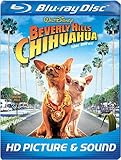
Beverly Hills Chihuahua (2008). 91 minutes, Walt Disney Pictures. Directed by Raja Gosnell.

This is not so much a review as it is a warning.

Beverly Hills Chihuahua is a very slight Disney movie about talking dogs. A spoiled Chihuahua from Beverly Hills (voiced by Drew Barrymore) accidently gets lost in Mexico. She befriends various “street dogs” who help her find her way around. Later, she runs in a band of “Chi-Warriors” who tell her she comes from an ancient breed of Aztec fighting dogs. She has a few more adventures, learns that she is bratty and should be nicer, then goes home. The End.

With that single paragraph review out of the way, you may well wonder: What is the point of this post? Well, it’s mainly about truth in advertising. I’m very used to movie trailers editing scenes in such a way as to make the movie look a lot more exciting than it really is. It’s only natural that filmmakers will use their very best footage, and will assemble it in the most inspiring manner possible, to make a mediocre or even downright bad movie look good. I still remember how I saw the trailer for Star Wars: The Phantom Menace and was sure that it was going to be great.

But… I do expect that what’s shown in the trailer is going to actually be in the movie. In other words, I don’t expect to watch a trailer showing certain actors saying certain lines, and then go see the movie in question… only to find out that those actors aren’t even in the movie, and it’s a completely different subject matter. Everyone with me so far in this? We’re in agreement? OK, then.

About nine months ago, I saw the teaser trailer for Beverly Hills Chihuahua. Now, Frank and I own an incredibly cute, smart, and cuddly Chihuahua named Ricky, so we are suckers for something like this.

Pictures of my incredibly cute Chihuahua, Ricky.

The trailer shows a slew of CGI-enhanced talking and singing Chihuahuas. They’re all dancing around an Aztec pyramid, singing proudly about their breed:

We’re tiny! We’re mighty! We’re number one!
We’re the real hot dog, yo – hold the bun!

What can make you move? Chihuahua!
Can you feel the groove? Chihuahua!
Oh… Chihuahua!

A gang of Chihuahuas is playing instruments, banging drums, and engaging in all kinds of musical shenanigans. Oh boy! A musical Chihuahua movie! And one of the lead dogs actually looks a lot like Ricky! Well, we’re certainly going to see this one.

Then about two months before the movie was released, another trailer came out. This one showed the lead dog Papi, in the same Aztec location as the first trailer, leading a massive army of Chihuahuas in declaring “No Mas!” And then clips from the same musical number. I was surprised they didn’t include some other dance number from the film, but it was still enticing.

The movie was a moderate hit – but there is no way in hell that I was going to see a Disney kid’s movie in the theater. I may like a lot of children’s books and movies, but mass quantities of children in public places I’m not so fond of. So, we waited. And bought the movie on Blu-Ray last week, when it was released for home video.

Well, guess what. Not a single scene from either trailer is in the movie.

That’s right. There are no singing Chihuahuas. No dancing. No musical numbers. No giant Chihuahua statue. Papi never even meets the “Chi-Warriors”, much less leads them in a speech of “No Mas” as seen in the second trailer.

As an adult, I just feel cheated. Ha ha, Disney, you tricked me. But I gotta tell you… if I were a kid, I’d be furious. When I was a kid, if you saw a Disney preview with a singing bear in it, you could be damn sure that the actual movie would have a singing bear in it! (The Jungle Book). If you learned parts of the song from the commercial, you could be assured that the full song would be in the movie. And then harass your parents into buying you the record so you could sing along to it after you watched the movie. And there would be even more songs to sing along to!

Not this. With this trailer, Disney cheats and lies to little children. Pass it on.

So, if you like formulaic stories with talking dogs, go ahead and rent Beverly Hills Chihuahua. But if you were expecting a musical, or at the very least a single musical number as was promised in the preview, then Sorry Charlie. Do not pass “Go”, do not collect $200, go directly to jail.

Categories
Audio Visual

Watching Watchmen

Watchmen (2009). 163 minutes, Warner Brothers. Directed by Zack Snyder.

I’m surprised they made this movie. I’m surprised I like this movie. I’m surprised it’s good. I’m surprised it is (almost) totally faithful to the book. I’m surprised the actors actually took it seriously. I’m surprised that all of the special effects worked.

In fact, you can just go ahead and color me surprised, period.

Watchmen (the original comic book, later reprinted as a complete graphic novel) came out beginning in 1986. It was a 12-issue limited run series, written by (at the time) Swamp Thing writer Alan Moore. Now, there had been any number of “limited issue” comic book series by this time: Wolverine 4-issue miniseries, various Secret Wars, and I don’t know how many “X-This” and “X-That”s – but Watchmen was special.

The main thing is that it was a single, self-contained story. It was the first time I had ever read a true, honest-to-god novel in comic book form. In fact, I think Watchmen itself is when I first heard the term “graphic novel” being thrown about. Watchmen wasn’t a part of any other superhero story or set of stories. It didn’t pick up or continue from anything else. Every single character, and its entire internal universe and back story, existed solely within those pages. And when the final, 12th issue came out, that was really and truly The End. No sequels, no “so-and-so didn’t really die” nonsense, none of that. It was one, continuous story, and it was as real and as gritty as possible for a story that was still, after all, about costumed superheroes.

The second thing was that this was an alternate history story. Moore successfully imagined an altered 1940-and-onward history for the world (and especially for the United States), one in which superheroes were real and actually existed. In this world, it’s 1985, and Richard Nixon is serving his 5th term as president (the constitution was never amended to restrict a president to 2 terms in this version of history).”The superman exists, and he’s an American” – Dr. Manhattan, the invincible, indestructible being who can do almost anything, has made sure that the United States has reigned supreme. For example, thanks to Dr. Manhattan, the Viet Nam war ended in one week, and we won. Every tiny detail of this new version of history is interwoven beautifully into every aspect of the story.

By the middle of the series – early 1987 – my friends and I were so hooked on the story that we began showing up at the comic book store (props to The Golden Apple on Melrose Ave in Los Angeles; I hope it’s still there) the day the new issue(s) arrived. And then immediately read them, usually before we got home. I remember reading one issue in my car, parked right outside The Golden Apple. And the day the final issue came out, I practiced unbelievable self-restraint and re-read all of the preceding 11 issues before reading the 12th and final chapter.

To my mind, Watchmen has never been surpassed. Although there have been and continue to be many very good and excellent graphic novels in the years since Watchmen came out, none has ever tried the wholly self-contained concept that was so essential in making this one such a success. Watchmen has influenced many works of fiction that came afterward – not just comic books, but many other forms of entertainment. The whole concept of outlawing superheroes, used in The Incredibles and later by Marvel Comics in their abysmal “Civil War” story line, originated here. The concept of integrating story lines in multiple, simultaneous time frames, so important to the storytelling in Lost and Pulp Fiction, was invented by Alan Moore in Watchmen. Even for those who haven’t read it, its themes and story techniques have become a permanent part of our popular culture.

But I never, ever, thought Watchmen itself would be made into a movie.

For all the reasons it’s such a great read, it seems like an awful idea for a movie. Not connected to any other superhero franchise? No sequel possibilities? It’s set in an alternate version of history? None of the characters ever appeared in anything else? Oh, and it’s an epic spanning over 50 years and two planets, including nuclear war? Let’s not even get into the special effects budget needed to pull this off. Or the fact that most of the characters are not very nice. And several of them die. And one is a rapist. And several others are also murderers. And, oh yeah, the bad guy? He wins at the end.

It also seemed that if anyone did try to film it, it was sure to be awful. So sure, in fact, was writer Alan Moore, that he refused to have his name even appear in the credits of this film. Or even have his name mentioned. He donated all the royalties paid to him for the film to everyone else involved. He refuses even to see the movie.

That’s a shame. Because, to everyone’s surprise including mine, this is a very good movie.

Now, I’ve read a number of reviews that state something along the lines of “this is a movie that did not need to be made”. Which seems kinda silly to me – no movie needs to be made. Compare the absolute piece of crap that was Hancock (which in its own terrible way actually tried to use some of the same themes and elements) to this vivid, engrossing Watchmen, and you’ll see what I mean. I’d much rather see an adaptation of a great novel any day over a crappy original film that was written by a committee of Executive Producers.

Most importantly, Watchmen the movie gets the tone exactly right. It feels like reading the comic book / graphic novel. The casting, to my eye, is superb. Standouts are Jackie Earle Haley as Rorschach, Billy Crudup as Dr. Manhattan, and Jeffrey Dean Morgan as The Comedian. I’ve read a few reviews that have dissed Malin Akerman, who plays Laurie Jupiter / Silk Spectre, but I disagree – I thought she portrayed the character exactly right.

There are Two Big Changes from the graphic novel. The first is that the entire subplot about The Black Freighter, the comic-book-within-the-comic-book, has been dropped. And the second, related to the first, is the new ending. I think it’s important to note that while the new ending is different from the book’s ending, it is exactly the same in tone. In fact, and this may sound a bit heretical to die-hard fans of the book (among which I count myself)… but I actually think the ending in the movie is better than the ending in the book. It ties things together very well, and strengthens the overall themes of the movie, while at the same time seeming a bit more… well, realistic.

Oh, and the opening credit scene is awesome. Snyder managed to distill down dozens of pages of backstory and alternate universe history into a four-minute credit sequence, all set to Bob Dylan‘s The Times They Are A-Changin’. Brilliant.

Honestly, the more I think about it, the more I enjoyed this movie. I may actually go see it a second time in the theater… and that is not something I do very often (well, not often these days, anyway). I saw it with my business partner Donnie Page (who has never read the book) and he also enjoyed it very much. It’s a long film (although only 12 minutes longer than The Dark Knight), and the plot and cast of characters is wide-ranging. There’s a lot of details packed into 2 hours and 43 minutes, so I would make sure you’ve gone to the bathroom before the movie starts, and don’t drink a lot of soda. There are no wasted scenes here, folks. Everything contributes to the plot.

One of my favorite scenes in the book is also one of my favorite scenes in the movie. Near the end, on Mars, Laurie / Silk Spectre is trying to convince Jon / Dr. Manhattan to intervene in the nuclear war that is about to start between the U.S. and the Soviet Union (remember, this is 1985). It’s a famous scene, and rightly so – how does a mortal woman convince a godlike being that she is right and he is wrong? And while the lines are changed somewhat in the movie version – again, to help tie things together a bit better – the scene took my breath away in the same way the scene in the book did.

We’re all miracles, Dr. Manhattan decides. Each and every one of us. Each living human being is so improbable, so astronomically unlikely, that we deserve to live as long as possible. To me, that is the essence of spirituality. And you don’t need a god or God or Dr. Manhattan to figure that out, either.

Who watches the Watchmen? Well, I do. And you should too.

Categories
Audio Visual

The Dark Knight

The Dark Knight (2008). 152 minutes, Warner Brothers. Directed by Christopher Nolan.

I didn’t catch this one in the theater this summer. I was sure it was fairly good, since it was well reviewed and I heard good things about it from friends. But Batman has never really thrilled me. In general, I prefer my superheroes to be more science fictional or supernatural in basis – you know, bitten by radioactive spiders, born with mutant abilities, tossed from a dying alien planet, living embodiment of an elemental force, demon sworn to do good, amazon princess walking among mortals, etc. Larger than life, out of this world.

To me, Batman was just a guy in a costume who never seemed to get shot. If you’re going that route, I prefer the Indiana Jones / James Bond / Jason Bourne type approach: cool dudes who posses knowledge and gadgets that allow them to save the day. After all, these guys are basically superheroes without the costumes. Iron Man, who’s sort of a cross of the two genres, works for me in the same way because his costume is the gadget.

In the comic books Batman worked a lot better – mainly because he was depicted as somewhat insane, and existed in a world chock-full of superheroes of the type I describe above. What sane man without any superpowers would place himself in the same league with Superman, Wonder Woman, Swamp Thing, the Flash, and so many others? That takes some balls, man. And they, in return, took him seriously as well. Batman works in the comics, because in a universe that encompasses both Superman and the Swamp Thing, there is certainly room for a normal man who dresses up like a bat and punches people in the face. Oh, and he’s also considered the World’s Greatest Detective. Even by Superman.

There was one Batman comic book I liked, Loved, in fact. It’s the comic from which this movie takes its name: The Dark Knight Returns, by Frank Miller. Published in 4 parts in 1986, and republished a year later in book form as a single continuous graphic novel, The Dark Knight Returns is a future tale set when Bruce Wayne is a grey-haired 55 years old, and has long since given up his guise as Batman. But in this dystopic future tale, where a never-aging Superman acts as the government’s enforcer, Batman appears again to fight for the common people. Only this time, he’s armored and vicious – hell, he even tries to kill Superman (and almost succeeds).

The Dark Knight Returns showed what reserves the character of Batman possessed if treated correctly. However, in the movies, they never went far enough in showing how bizarre Batman really is. Until finally, sort of, kind of, in Batman Begins in 2005. Batman Begins is apparently based on another Frank Miller graphic novel, Batman: Year One, which I have not read. Batman Begins did do a pretty good job of revising and retelling the Batman origin to make him a lot more believable as a superhero: he is one of the world’s greatest martial artists, he has a entire high-tech defense department at his beck and call, and his costume is armored and contains all manner of defensive and protective devices. They even came up with a rational (well, “comic book rational”, not “real world rational”) explanation for the Batmobile.

Batman Begins was decent, but unlike the first two Spider-man movies, it just didn’t have a very good villain. The whole explanation for just what exactly the bad guys were trying to do didn’t really work, and while Cillian Murphy tried hard, he just didn’t really come across as much of a bad guy to me. So, while entertaining enough, Batman Begins doesn’t go down in my book as a first-rate superhero movie.

And all that brings us up to… The Dark Knight. The short version: This is an awesome movie. I’ve been pretty hard on comic book based films in the last few years; I hated X-Men 3 with a passion (as witnessed by this post), I thought Spider-man 3 was extremely lame, and the less said about Ghost Rider the better.

For the first time in a comic book movie, The Dark Knight has a good plot, great dialogue, and the acting is top-notch. Yes, Heath Ledger is the standout as the Joker, but everyone is excellent. Christian Bale is great as Batman, and Aaron Eckhart is very surprisingly good as Two-Face (uh… I mean, as Harvey Dent. Or have I said too much?)

What’s really good about this film is that finally, it pits an absolute villain against an absolute hero. Batman flat-out won’t kill anyone. No matter what. And the Joker doesn’t care who he kills. That dichotomy, in essence, is the film. The Joker is a terrorist criminal; he’s not after money, he’s not after power, he just wants to cause chaos, death, and destruction. In the words of Michael Caine as Alfred, “Some men just like to watch the world burn”.

As has been written many times in many other places, Heath Ledger’s Joker is so good it’s scary. For the first time ever (except maybe in a few comic book interpretations) the Joker is frightening. Really frightening. This is a man who is psychotic, the ultimate sociopath. He has no name, no identity, no past – he is simply The Joker. His goal is to destroy schemes, to add chaos wherever possible. A key plot point involves the Joker turning an absolutely good man into an absolutely evil man. He loves doing this, but as he says to the victim, “It’s nothing personal. I mean, do I look like a guy with a plan?”

I’ll have to add myself to the list of people saying that Heath Ledger deserves a Best Actor nomination for this role. It is, hands down, the best portrayal of a villain I’ve ever seen in a motion picture. There is one scene in the movie where Batman is trying to beat the Joker into submission, to get him to reveal the location of a kidnapped victim. But with each punch, the Joker just laughs. He enjoys the pain. After a cackle, as he is slumped against a wall, he says to Batman, “You have nothing to threaten me with. Nothing. Because there is one rule you won’t break, and we both know it.” And Batman realizes… the Joker is right. This is a criminal he simply cannot defeat with his fists or gadgets.

Cinematically, The Dark Knight is gorgeous. A number of sequences were shot using IMAX film and cameras, and on the Blu-Ray disc, these sequences are presented in full HD framing for maximum resolution. Yes, it sounds weird, but it is not at all distracting, and it works very well. Now, to be fair, I watched the movie in my home theater, where we sit 11 feet away from a 110″ diagonal projected screen, so the effect is extremely impressive. It probably wouldn’t work as well on a normal plasma or LCD television.

Since this film was such a huge hit, and since it is so damn good (I’ve watched it twice since I got it earlier this week, and we’ll probably watch it again in the next few days), a sequel is assured. I actually wish they wouldn’t. To date, no third entry in any comic book based franchise has ever been any good. I really wish director Christopher Nolan and star Christian Bale would let this film be the last, if for nothing else than as a testament to the late Heath Ledger. Honestly, I just don’t think you can do better with Batman than this film. This is it, folks. Call it a day.

It feels a bit odd writing a rave review for a movie about psychotic, scarred killers just a few days before Christmas. But you know what? Maybe after dealing with kids running around opening presents, stuffing yourself with food, and stringing Christmas lights all around your yard, a little scary escapism might be just what the doctor ordered.

As the Joker says, “Why so serious? Let’s put a smile on that face!”

Categories
Audio Visual

The 7th Voyage of Sinbad

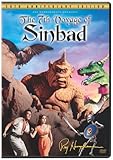
The 7th Voyage of Sinbad (1958). 88 minutes, Columbia Pictures. Directed by Nathan Juran. Special Effects by Ray Harryhausen.

From the land beyond Beyond,
From the world past hope and fear,
I bid you, Genie: Now appear!

The 7th Voyage of Sinbad is the ultimate Saturday afternoon matinee movie. Within five minutes, a giant horned centaur is stalking a magician and throwing rocks at a ship. Soon afterward, a servant is transformed into a half-snake, half-human dancing demon. A princess is shrunk down to the size of a tiny doll. More giant horned cyclops, a two-headed giant baby bird and its angry parent, a fire-breathing horned dragon, a giant crossbow on wheels, a genie in a lamp and a sword-fighting skeleton! I don’t know about the kids today, but when I was ten years old, it just didn’t get any better than this.

Later, I saw Jason and the Argonauts, and realized there was a name in common: Ray Harryhausen. When I was 12, I bought my first issue of Famous Monsters of Filmland – which contained a whole feature on this Ray Harryhausen fellow. I learned about stop-motion animation, and how another favorite film of mine, King Kong, was done in the same style – and was in fact the inspiration for Harryhausen’s devotion to the field of film special effects.

As a teenager, I became fascinated with everything Ray Harryhausen had done. Just to prove this, during the summer of 1977, the movie I was anticipating most was not Star Wars, which was made by a bunch of people I’d never heard of, but Sinbad and the Eye of the Tiger, the latest Harryhausen epic. As it turned out, Star Wars and the rise of the modern science fiction / special effects film spelled the end for old effects masters like Harryhausen, and he would make only one more film (1981’s Clash of the Titans) before retiring.

Back before there was home video (yes, kids, home video didn’t arrive for the masses until the 1980s) , there was Super 8 film. You used to be able to buy 6 to 8 minute clips of movies on Super 8 sound film, to watch at home. The 7th Voyage of Sinbad was unique in that there were four 200-foot clips available. I had all 4, and had spliced them together into the proper order, so I had about a half-hour edited version of this movie. From the age of 15 until I finally got the film on laser disc in the late 80’s, I must’ve watched that Super 8 compilation dozens of times. As did all of my friends.

Now, 50 years after the film first appeared in theaters, 36 years after I first saw it at the local Saturday Matinee Movie, and long after that old Super 8 film copy crumbled to dust, The 7th Voyage of Sinbad is available in a gorgeous new Blu-Ray edition. I popped it in a few nights ago and watched it straight through, without even pausing once. I have never seen it look this good. The colors practically leap off the screen, and even the fine grain from the film is visible, just like in a real theater. I felt transformed back to my childhood, back to a time when animated rubber monsters – although never actually scary – thrilled me down to my toes, and made me wonder over and over: How did they do that?

To be fair, of course, the dialogue in this film is weak at best, and apart from the three leads and the boy genie, the acting is the worst sort of wooden. And especially in this new high-definition edition, it’s quite clear when a matte shot appears, since the film quality radically changes seconds before the monster or whatever appears on screen. And the plot is pretty much just an excuse for the characters to wander around encountering various monsters.

But you know what? This still works. It really does. I still love the cyclops and the dragon. I still love the hokey dialogue (“He has the eyes of an owl! I see nothing!”) And the skeleton sword fight? Oh my stars and garters. I know the multiple skeletons in Jason and the Argonauts usually get more attention, but I’ve always preferred The 7th Voyage of Sinbad‘s solitary, evil skeleton.

And the music! My god, the music! This may be Bernard Hermann‘s best score, better than Psycho, better than North by Northwest. The opening credit music, which evokes Rimsky-Korsakov‘s Scheherazade, is instantly recognizable. The evocative tone continues throughout the entire film. And finally – the music underlying the skeleton sword fight is, without a doubt, one of the best pieces of film music ever. Ever.

If you have a Blu-Ray player, pick up The 7th Voyage of Sinbad. Watch it in the dark, if you can. Make a bowl of popcorn and eat it during the movie. I guarantee you: Even if you’ve never seen it, I bet it will make you feel like a kid again.

Categories
Audio Visual

The Big Bang Theory

The Big Bang Theory. Mondays on CBS, 8:00pm ET/PT

As a genre, the sitcom has seen better days. For the past four years, since both Frasier and Friends went off the air in 2004, the only sitcom I’ve watched with any regularity is The Office. I’ve seen a few here and there that seem to be pretty good (30 Rock, How I Met Your Mother) but just not quite catchy enough to pull me in every week. And, of course, numerically speaking, there just aren’t that many on the air anymore. During the ’90s, my friends and I used to gather every Thursday night for 4 sitcoms back-to-back, followed by an episode of ER. No more.

A few months ago, my friend and colleague Donnie Page expressed amazement that I was not watching The Big Bang Theory . He said that not only was it flat out hysterical, but that the characters were so up my ally he felt that I should have had something to do with the show. So, during the summer, Frank and I purchased a few episodes on iTunes and gave them a spin.

After the first two episodes, we ended up buying the entire season. And watching each episode two and three times. And waiting and waiting and waiting for the new season to start to give us new episodes.

The Big Bang Theory reminds me, thematically, of Frasier, one of my all-time favorite sitcoms. Many of the same elements are there: characters who are much more intelligent than average, an unrequited love affair that promises to add humor as the show continues, a surrounding cast of interesting friends and family, and a workplace environment with unlimited possibilities for future plots and characters.

If you haven’t seen it, or haven’t even heard of it, The Big Bang Theory centers around two roommates, Leonard Hofstadter (Johnny Galecki of Rosanne fame) and Sheldon Cooper (Jim Parsons). Both are theoretical physicists working at a university in Pasadena. Sheldon, the brainer of the two, is so socially maladjusted that he borders on being autistic. Leonard, almost but not quite as smart as Sheldon, is pretty much a classic geek – but otherwise normal. In addition to the two roommates, their best friends Raj Koothrappali (Kunal Nayyar ) and Howard Wolowitz (Simon Hedberg) add to the nerdy mix.

Across the hall from the two physicists lives Penny (Kaley Cuoco), a typical blond actress / model who works at a local restaurant while waiting for her big break. From the day she moves in (the first episode, “Pilot“), Leonard is completely smitten with her. Many of the episodes deal with Leonard trying to look good in front of Penny, in hopes of establishing a romantic bond.

So, that’s the situation in this situation comedy. What makes it so funny, however, is how well this is all written. The writers go to great lengths to ensure that all of the dialog is scientifically accurate, down to the scribbles on the blackboards. All four of the guys are major geeks, being fans of comic books, science fiction, computer and role playing games, and everything related. Various episodes have seen the gang attending a Renaissance Fair; trying to outdo each other in a Halloween costume; bidding on a prop from the movie The Time Machine ; and getting non-geek Penny hooked on online gaming.

Most of the spit-your-milk laughs come from Sheldon’s inability to understand human interactions that don’t directly involve him. In one episode, Sheldon cannot understand the point of giving someone a birthday present. He protests that it does not make any sense to spend money for someone on their birthday, and then have that person spend money to buy you a gift on your birthday. “Why doesn’t each person just keep the money and call it even?” he asks Penny. Howard whispers to Penny, “Just tell him it’s an obligatory social convention”. When Penny does this, Sheldon nods and says “Fair enough”, and goes off to buy the present – but first requires detailed instructions about exactly how to fulfill his “social obligation”, so as not to violate any of the rules.

In any properly developed sitcom, the characters need to be consistent and well-rounded. The Big Bang Theory takes care to do this. Last season, there was an off-hand remark that Howard rides a scooter (this in response to his claim that he “rides a hog to work every day”). Sure enough, this season, when showing Howard driving Sheldon to work one day, he’s on a red scooter. Raj’s parents in India have made several cameos by appearing on video during Instant Messaging sessions. Sheldon’s mother and sister from Texas has visited. The writers keep pretty good notes; we’ve only caught a few slip-ups in continuity, mainly regarding the descriptions and number of Leonard’s past girlfriends.

I’ll leave this by summarizing two of my favorite episodes from Season One (both available either on iTunes or on DVD):

In “The Cooper-Hofstadter Polarization” (episode #9 from Season 1), Leonard and Sheldon are invited to a physics conference to present a paper together. Sheldon, however, is reluctant to share credit in public for an idea he thinks is his alone, and also doesn’t see the point of having to present the work before other scientists: he thinks they should simply take his word for it. When Leonard decides to go by himself, the war is on. The episodes ends with the two getting into a geeky shoving and fighting match on stage at the conference – which, of course, Howard videotapes and uploads to YouTube as “Physicists Gone Wild!”

In “The Bat Jar Conjecture” (episode #13 from Season 1), the gang are preparing to compete in the Physics Bowl. Sheldon, not aware of the concept of team play or sportsmanship, cannot understand why he alone can’t answer all the questions. After an extemely annoying practice session, they boot Sheldon off the team and replace him with Leslie Winkle (Sara Gilbert), fellow physicist and occasional girlfriend of Leonard. As it turns out, Leslie considers Sheldon her “nemesis” and delights in destroying Sheldon’s ego during the competition.

This season has turned out to be just as funny and consistent, and a pleasure to watch each Monday night. We of course Tivo the show and watch each new episode a couple of times over several nights. Yes, it’s that funny.

And I haven’t even mentioned the fantastic title sequence, complete with a theme song by Barenaked Ladies:

Our whole universe was in a hot dense state,
Then nearly fourteen billion years ago expansion started. Wait…
The Earth began to cool,
The autotrophs began to drool,
Neanderthals developed tools,
We built a wall (we built the pyramids),
Math, science, history, unravelling the mysteries,
That all started with the big bang (Bang!)

So, if you’re not watching it yet, and you like a good laugh, change your channel to CBS on Mondays at 8pm. Or set your Tivo. Or buy the set of DVDs. Or log on to iTunes and click “Buy”. Or go to CBS’ web site and watch an episode online.

It’s the 21st century, you know, and now that we’re living in the future, we can laugh at any time of the day and in many different ways.